The Right Smartwatch for Your Wrist and Your Wallet
Health tracking, fitness focus, or notification hub -- your actual use case matters more than the spec sheet.
The smartwatch you should buy depends on three things: what phone you use, how active your lifestyle is, and whether you want a notification center on your wrist or a dedicated fitness tracker. Everything else -- screen brightness, chip speed, case finish -- is marketing noise that does not help you make a better decision.
Answer three questions about your lifestyle and this guide will match you to a specific smartwatch. Each recommendation includes honest pros and cons so you know exactly what you are getting and what you are giving up.
Not sure which platform is right? Start with our Apple Watch vs Samsung vs Garmin vs Pixel Watch comparison for a deep dive on health tracking, battery life, and ecosystems. Want to understand the full cost beyond the sticker price? See The Real Cost of a Smartwatch. And before you buy, read 5 smartwatch buying mistakes that waste money. Already know what you want? Check when smartwatch prices drop lowest.
How This Guide Works
We organized recommendations by lifestyle type, not by spec sheet. Answer three questions and you will have a specific watch to buy with honest pros and cons.
Question 1: What Phone Do You Use?
iPhone
Your best options are Apple Watch (any model) or Garmin. The Apple Watch is the only smartwatch that fully integrates with iOS -- iMessage replies, Apple Pay, Siri, AirPods handoff, and Find My integration work seamlessly. Garmin works with iPhone for notifications and fitness sync but offers zero smart features beyond that. Samsung and Google Pixel Watch do not work with iPhones at all.
Android (Samsung, Google Pixel, OnePlus, etc.)
Samsung Galaxy Watch, Google Pixel Watch, or Garmin. If you use a Samsung phone, the Galaxy Watch has the deepest integration. If you use a Pixel phone, the Pixel Watch pairs more naturally. If you use any other Android phone, both work well but Samsung has a slight edge in hardware and features. Garmin works equally well with all Android phones.
Question 2: How Active Are You?
Serious Athlete / Runner / Triathlete
Garmin, no question. The Forerunner 265 or Venu 3 offer training readiness scores, race predictions, running dynamics, multi-band GPS, and 13-14 day battery life. No other platform comes close for dedicated training. Apple Watch and Samsung can track runs adequately, but they lack the depth of Garmin's training analytics and will die mid-marathon.
Regular Gym / Casual Fitness
Apple Watch (for iPhone users) or Samsung Galaxy Watch (for Android users). Both auto-detect workouts, track heart rate zones accurately, and have enough workout types for the gym, running, cycling, swimming, and yoga. You do not need a $450 Garmin for three gym sessions per week.
Health-Focused (Steps, Sleep, Heart Rate)
Any of the four platforms work here, but the Apple Watch Series 10 or Samsung Galaxy Watch 7 have the most comprehensive health sensors. If sleep tracking is your priority and you do not want to charge every night, the Garmin Venu 3 is the only option that lasts long enough to track sleep without a midday charge.
Not Very Active (Notifications and Convenience)
Apple Watch SE (for iPhone) or Samsung Galaxy Watch FE (for Android). These budget options deliver the smart features -- notifications, calls, payments, navigation -- without paying for advanced health sensors you will not use. Save $100-200 and put it toward bands or a case.
Question 3: What Matters Most to You?
Best Overall Experience (Apps + Health + Notifications)
Apple Watch Series 10 (iPhone) or Samsung Galaxy Watch 7 (Android). These are the most complete smartwatches that balance health tracking, app ecosystem, notifications, and daily convenience. Neither excels in one area the way Garmin excels in fitness, but both are good at everything.
Battery Life Above Everything
Garmin Venu 3 (14 days) or Apple Watch Ultra 2 (36 hours). If charging a device every night is a deal-breaker, Garmin is the only answer. The Ultra 2 is the best Apple option at 36 hours but costs $799 and is physically large.
Premium Build and Durability
Apple Watch Ultra 2. Titanium case, sapphire crystal, 100m water resistance, depth gauge for diving, and the brightest display of any smartwatch at 3000 nits. It is built for outdoor adventures, diving, and harsh environments. The trade-off: $799 and a 49mm case that dominates small wrists.
Best Value for the Money
Apple Watch SE ($279 for iPhone users) or Samsung Galaxy Watch FE ($200 for Android users). Both deliver 80% of their flagship siblings' features at 50-65% of the price. You lose always-on display, some health sensors, and premium materials, but the core smartwatch experience is nearly identical.
Quick-Match Summary
| Your Lifestyle | Our Pick | Why It Fits |
|---|---|---|
| Best overall (iPhone) | Apple Watch Series 10 | Thinnest, largest display, complete health sensors |
| Premium / outdoor | Apple Watch Ultra 2 | Titanium, 36-hr battery, diving depth gauge |
| Best for Android | Samsung Galaxy Watch 7 | BioActive sensor, Wear OS 5, Google apps |
| Google ecosystem | Google Pixel Watch 3 | Clean Wear OS, Fitbit health, Assistant built in |
| Athletes / battery life | Garmin Venu 3 | 14-day battery, Body Battery, training readiness |
| Budget (iPhone) | Apple Watch SE | 80% of Series 10 at 65% of the price |
| Budget (Android) | Samsung Galaxy Watch FE | BioActive sensor, ECG at $200 |
| Runners / GPS accuracy | Garmin Forerunner 265 | Best GPS, 13-day battery, training metrics |
What We Recommend
Based on our research, these are our top picks. Prices change frequently -- click through to see the latest.
- 1.Apple Watch Series 10 (46mm, GPS) -- iPhone users who want the most complete smartwatch experience. Anyone who values health tracking, apps, and seamless iOS integration. Users upgrading from Series 6 or older.
- 2.Apple Watch Ultra 2 -- Outdoor enthusiasts, hikers, divers, and endurance athletes who need a rugged, long-lasting smartwatch. iPhone users who prioritize battery life above all else. Anyone who works in harsh environments.
- 3.Samsung Galaxy Watch 7 (44mm) -- Android phone users who want the best balance of health tracking and smart features. Samsung phone owners who want the deepest ecosystem integration. Anyone interested in body composition tracking.
- 4.Google Pixel Watch 3 (45mm) -- Google ecosystem users who want Maps, Assistant, and Wallet working seamlessly. Anyone who values clean software design over spec-sheet features. Fitbit users upgrading to a full smartwatch.
- 5.Garmin Venu 3 -- Athletes and fitness enthusiasts who want advanced training metrics. Anyone who hates charging devices every night. iPhone or Android users who want a cross-platform watch. Travelers who need multi-day battery.
- 6.Apple Watch SE (2nd Gen, 44mm) -- Budget-conscious iPhone users who want a real Apple Watch without paying $429+. First-time smartwatch buyers who want to try the Apple ecosystem. Parents buying for kids using Family Setup.
- 7.Samsung Galaxy Watch FE -- Budget-conscious Android users who want a capable smartwatch under $250. First-time smartwatch buyers on Android. Anyone who wants ECG monitoring at the lowest possible price.
- 8.Garmin Forerunner 265 -- Dedicated runners who want the most accurate GPS and deepest training analytics. Marathon and trail runners who need battery that outlasts any race. Anyone who wants running-specific metrics like VO2 max, race predictions, and training load.

Apple Watch Series 10 (46mm, GPS)
The thinnest Apple Watch ever with the largest display. The Series 10 features the new S10 chip, sleep apnea detection (FDA-approved), water temperature sensor, and an always-on LTPO3 OLED display that is 40% brighter at off-angle viewing. The 46mm model has a display area larger than the Ultra's despite a thinner case. Fast charging reaches 80% in about 30 minutes.
Pros
- Thinnest Apple Watch ever with the largest display in the lineup
- Sleep apnea detection is FDA-approved -- a genuine health feature, not a gimmick
- Water temperature sensor for swimmers and water sports
- S10 chip with faster performance and improved machine learning
- Fast charging: 80% in 30 minutes, 0-100% in about 75 minutes
Cons
- iPhone only -- does not work with any Android phone
- Battery still lasts about 18 hours -- nightly charging required
- $429 for GPS-only is expensive, cellular adds $100 more
- Incremental upgrade from Series 9 -- not worth upgrading from last year

Apple Watch Ultra 2
Titanium case, sapphire crystal, 3000-nit display (brightest of any smartwatch), 36-hour battery (72 in low power mode), 100m water resistance with depth gauge for recreational diving. The Ultra 2 is built for extreme environments -- hiking, diving, endurance running, and outdoor adventures. The Action button provides one-touch access to workouts, waypoints, or any custom shortcut. Precision dual-frequency GPS is the most accurate Apple has ever built.
Pros
- 36-hour battery life (72 in low power) -- the only Apple Watch that comfortably lasts 2 days
- Brightest smartwatch display at 3000 nits -- readable in direct sunlight
- Titanium case and sapphire crystal are genuinely rugged and scratch-resistant
- Depth gauge and water temperature sensor for recreational scuba diving to 40m
- Precision dual-frequency GPS for accurate tracking in canyons, forests, and urban areas
Cons
- $799 is very expensive -- more than double the Series 10
- 49mm case is large and heavy, not suitable for smaller wrists
- Still iPhone only -- no Android compatibility
- Overkill for casual users who do not need extreme durability or diving features

Samsung Galaxy Watch 7 (44mm)
Samsung's flagship smartwatch runs Wear OS 5 with the most advanced BioActive sensor in any Android smartwatch. Tracks heart rate, ECG, blood oxygen, body composition (body fat, skeletal muscle, water), and sleep with apnea detection (FDA-authorized). Google apps built in: Maps, Assistant, Wallet, YouTube Music. Fast charging reaches full battery in under 2 hours.
Pros
- Best Android smartwatch with the most comprehensive health sensors
- BioActive sensor uniquely measures body composition -- body fat, muscle mass, water percentage
- Sleep apnea detection is FDA-authorized, matching Apple Watch's health credentials
- Wear OS 5 with Google Maps, Assistant, and Wallet built in
- Fast charging reaches full battery in under 2 hours
Cons
- Android only -- does not work with iPhones
- Battery life is 1-1.5 days -- nightly charging required
- Samsung Health app required for advanced features like body composition and sleep coaching
- Thick bezels make the display feel smaller than the case size suggests

Google Pixel Watch 3 (45mm)
The cleanest Wear OS experience with deep Google and Fitbit integration. Heart rate tracking, sleep analysis, daily readiness score, and stress management powered by Fitbit's algorithms. Google Maps with turn-by-turn navigation on your wrist, Google Assistant voice control, Google Wallet for contactless payments. The 45mm model has a 24-hour battery with always-on AMOLED display.
Pros
- Cleanest Wear OS interface -- no bloatware, no duplicate apps
- Fitbit integration provides accurate heart rate, sleep stages, and daily readiness scores
- Google Maps with turn-by-turn navigation, Assistant, and Wallet built in
- 24-hour battery with always-on AMOLED display
- Smooth, polished software experience that feels cohesive and well-designed
Cons
- Android only -- no iPhone compatibility
- Fitbit Premium ($10/month) required to unlock detailed health insights and analysis
- Limited third-party app selection compared to Apple Watch
- No physical rotating bezel or crown -- all touch navigation
- Battery life is just 24 hours -- requires nightly charging

Garmin Venu 3
Garmin's best everyday smartwatch combines a 14-day battery with AMOLED display, advanced fitness metrics, and cross-platform compatibility. Body Battery energy monitoring shows your energy level throughout the day. Training readiness score tells you whether to push hard or recover. Sleep coach provides actionable sleep advice. Works equally well with iPhone and Android -- no ecosystem lock-in. Includes wheelchair mode and nap detection.
Pros
- 14-day battery life demolishes every Apple Watch, Samsung, and Pixel Watch
- Works with both iPhone AND Android -- no ecosystem lock-in
- Body Battery energy monitoring and training readiness are genuinely useful daily metrics
- AMOLED always-on display looks sharp and vibrant
- Sleep coach with nap detection provides more actionable sleep advice than competitors
Cons
- No cellular option -- must have phone nearby for calls, texts, and GPS assistance
- Fewer smart features than Apple Watch -- basic notification mirroring, no app store
- $450 is expensive for a watch with limited smart features compared to Apple Watch
- Garmin Connect app has a learning curve and dense interface
- No voice assistant built in -- no Siri, no Google Assistant
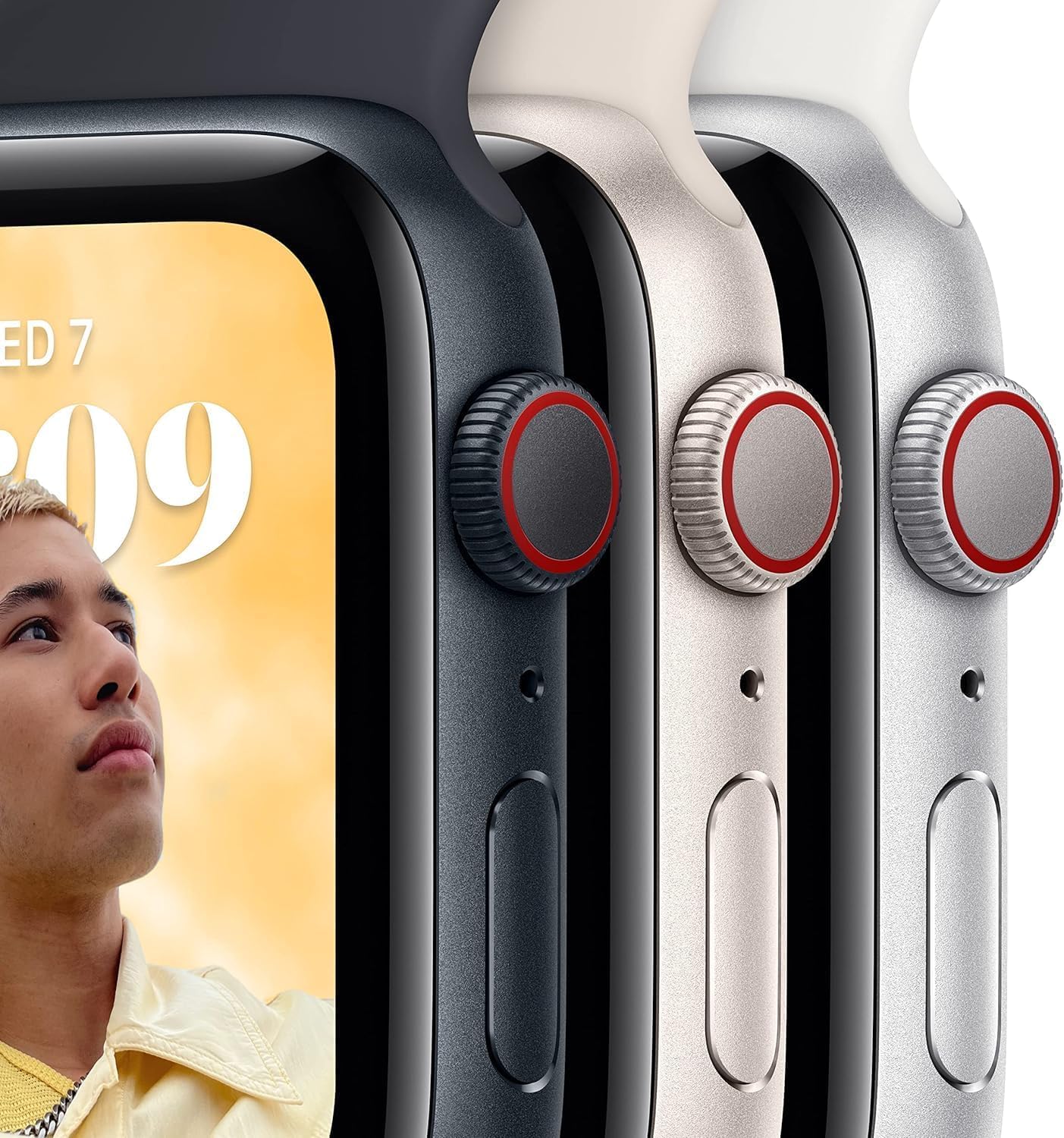
Apple Watch SE (2nd Gen, 44mm)
The most affordable Apple Watch delivers the core smartwatch experience at 65% of the Series 10 price. Same S8 chip as the Series 8, crash detection, fall detection, heart rate monitoring, and full Apple Fitness+ compatibility. You get iMessage, Apple Pay, Siri, Maps, and the full App Store. What you lose: always-on display, blood oxygen sensor, ECG, temperature sensing, and the thinner Series 10 design.
Pros
- 80% of the Apple Watch experience at 65% of the price -- the best value in the Apple lineup
- Crash detection and fall detection with automatic emergency calling
- Full Apple ecosystem: iMessage, Apple Pay, Siri, Maps, App Store
- Heart rate monitoring with high/low heart rate alerts and irregular rhythm notifications
- Apple Fitness+ compatible for guided workouts
Cons
- No always-on display -- screen goes dark when you lower your wrist
- No blood oxygen sensor, no ECG, no temperature sensing -- significant health feature gaps
- Older design with thicker bezels than Series 10
- No sleep apnea detection -- a feature available on the $429 Series 10
- iPhone only -- same ecosystem limitation as all Apple Watches

Samsung Galaxy Watch FE
Samsung's most affordable smartwatch brings the BioActive sensor with heart rate and ECG monitoring to the $200 price point. Runs Wear OS with Google apps (Maps, Assistant, Wallet), sleep tracking, and Samsung Health integration. A solid entry point into the Samsung smartwatch ecosystem without paying $330 for the Galaxy Watch 7. Limited to Bluetooth -- no LTE cellular option available.
Pros
- Most affordable Samsung smartwatch with BioActive sensor for heart rate and ECG
- Wear OS with Google Maps, Assistant, and Wallet built in
- Sleep tracking with detailed sleep stages and consistency monitoring
- Good entry point to Samsung smartwatch ecosystem at $200
- Samsung Health integration for workout tracking and health monitoring
Cons
- Older Exynos chip -- noticeably slower than Galaxy Watch 7
- No body composition measurement -- that feature requires the Watch 7
- Shorter battery life than Galaxy Watch 7 at about 30-40 hours
- Bluetooth only -- no LTE cellular option available
- Thicker and heavier design compared to the current-generation Watch 7

Garmin Forerunner 265
The Forerunner 265 is Garmin's best running-focused smartwatch with an AMOLED display, 13-day battery life, and the most accurate GPS tracking available in a consumer watch. Training readiness score, race predictor, morning report with HRV and sleep data, and running dynamics (cadence, ground contact time, stride length) make this the most data-rich running experience available. Works with both iPhone and Android.
Pros
- Best GPS accuracy for running -- multi-band satellite support for precision in urban areas and trails
- Training readiness and race predictor help you train smarter and set realistic goals
- 13-day battery in smartwatch mode -- run a marathon without worrying about dying mid-race
- AMOLED display with always-on mode is bright and easy to read during workouts
- Morning report with HRV, sleep quality, and training status starts your day with actionable data
Cons
- Focused on running and fitness -- limited as a general smartwatch for notifications and apps
- No cellular -- must carry your phone for calls, texts, and music streaming
- No contactless payments on the base model -- requires Forerunner 265S for Garmin Pay
- Garmin Connect app has a steep learning curve with dense, data-heavy interface
- $450 is expensive if you do not use the advanced running metrics regularly
Frequently Asked Questions
What is the best smartwatch for most people?
Apple Watch Series 10 for iPhone users ($400-450) and Samsung Galaxy Watch 7 for Android users ($300-350). Both offer excellent health tracking, smooth performance, and rich app ecosystems. The Apple Watch integrates better with the Apple ecosystem; the Galaxy Watch integrates better with Samsung phones. For non-Samsung Android users, the Pixel Watch 3 is also a strong option.
Which smartwatch is best for running?
Garmin Forerunner 265 ($350) for serious runners: multiband GPS (most accurate tracking), detailed training metrics, and 13-day battery life. Apple Watch Ultra 2 ($800) for runners who also want full smartwatch features. For casual joggers, any Apple Watch or Galaxy Watch with GPS provides adequate run tracking without the Garmin price premium.
Should I get a cellular smartwatch?
Skip cellular unless you specifically want to leave your phone at home during runs or quick errands. Cellular adds $50-100 to the purchase price and $10-15/month to your carrier bill. Over a 3-year ownership period, that is $400-650 in total additional cost for a feature most people use rarely. Bluetooth connection to your nearby phone handles 95% of smartwatch use cases.
Is Garmin worth the price over Apple Watch SE?
For fitness enthusiasts, absolutely. Garmin offers multiband GPS (more accurate), advanced training load analysis, recovery recommendations, and 7-14 day battery vs 18 hours. For general smartwatch use (notifications, apps, payments), Apple Watch SE is better and cheaper. The decision is: do you want a fitness tool that happens to show notifications, or a smartwatch that happens to track fitness?
What is the cheapest smartwatch worth buying?
Apple Watch SE ($250) for iPhone users -- it has the same health sensors as the Series 10 minus always-on display and blood oxygen. Samsung Galaxy Watch FE ($200) for Android users. Below $150, quality drops sharply and you are better off with a dedicated fitness band like the Fitbit Charge 6 ($100) which does health tracking well without trying to be a full smartwatch.
Can I swim with a smartwatch?
Apple Watch (all models), Samsung Galaxy Watch (all current models), Garmin (most models), and Pixel Watch 3 are all swim-proof (water resistant to 50 meters). You can shower, swim laps, and get caught in rain without concern. Do not press buttons underwater (forces water through seals) and rinse with fresh water after saltwater or chlorine exposure.
How often do you need to replace a smartwatch?
Every 3-5 years. Battery degradation is the main driver: after 2-3 years, battery capacity drops noticeably (18 hours becomes 12 hours for Apple Watch). Software updates stop after 4-5 years on most platforms. Apple Watch holds resale value best (30-40% after 2 years). Budget for a new watch every 3-4 years as part of your total ownership cost.
Not sure where to start?
Follow the path that matches where you are in your decision. Each guide builds on the last.
You can start at any stage. Each article stands on its own, but reading in order gives you the full picture. Want to know when prices drop? See our Best Time to Buy a Smartwatch pricing calendar.
Continue Reading
The Smartwatch Money Pit: Bands, Subscriptions, and Replacements
That $250 watch becomes $600-$900 over three years once you add what nobody mentions on the product page.
12 min readApple Watch, Galaxy, Garmin, or Pixel: The Honest Breakdown
Four ecosystems with completely different priorities. Your phone and your fitness goals pick the winner.
14 min readThe Smartwatch Regrets That Show Up After 30 Days
Wrong ecosystem, unnecessary cellular, and three other mistakes the return window is designed to outlast.
11 min readNever Miss the Best Price
Get buying guides and deal alerts timed to when prices actually drop lowest.
Get Monthly Deal Alerts