How to Pick a Mattress Without Losing Your Mind
Side sleeper, hot sleeper, bad back, tight budget -- find the right bed in four questions.
The mattress industry spends billions convincing you that buying a bed is complicated. Proprietary foam names, confusing firmness scales, and 90-day trial fine print are all designed to make you second-guess yourself until you either overspend on a brand name or give up and buy whatever is on sale.
It does not have to be this hard. Answer four questions about how you sleep -- your position, body type, temperature preference, and budget -- and we will match you to a specific mattress. No jargon, no brand loyalty tests, no scrolling through thirty options.
Not sure which mattress type is right for you? Start with our Memory Foam vs Hybrid vs Innerspring comparison to understand the real differences. Want to know what a mattress actually costs beyond the sticker price? See The Real Cost of a Mattress. And before you buy, read the 5 mattress buying mistakes that waste money and sleep. Already know what you want? Check when mattress prices drop lowest -- Presidents' Day, Memorial Day, and Black Friday routinely deliver 30-50% off.
How This Guide Works
We organized recommendations around how you sleep, not around product catalogs. Answer four questions and you will land on the right mattress without needing to decode marketing jargon about gel-infused adaptive memory response layers.
Question 1: What Is Your Primary Sleep Position?
Sleep position is the single most important factor in choosing a mattress. It determines how much pressure relief you need and where your body needs the most support.
Side Sleepers
Side sleeping concentrates your body weight on the shoulders and hips -- the two narrowest points of contact with the mattress. You need a softer surface that contours around these pressure points without letting your spine sag. Memory foam and plush hybrids excel here. Firm mattresses create pressure points at the shoulders and hips that cause tossing, turning, and morning stiffness.
If you sleep on your side, look for medium to medium-soft firmness (4-6 on a 10-point scale) and a thick comfort layer that cushions your hips and shoulders while keeping your spine aligned.
Back Sleepers
Back sleeping distributes weight more evenly, but the lower back is the vulnerable zone. You need a mattress that supports the natural curve of your spine without creating a gap under the lumbar area. Hybrids and innersprings with zoned support work well because they provide firmness where your hips are heaviest and give slightly under your shoulders.
If you sleep on your back, look for medium to medium-firm (5-7 on a 10-point scale). Mattresses with zoned coils or targeted lumbar reinforcement are especially effective.
Stomach Sleepers
Stomach sleeping is the hardest on your spine. A mattress that is too soft lets your hips sink, creating a downward bow in your lower back that causes pain over time. You need a firm surface that keeps your hips level with your shoulders. Firm hybrids and firm innersprings are the best options.
If you sleep on your stomach, look for firm to extra-firm (7-9 on a 10-point scale). Avoid plush pillow tops and deep memory foam comfort layers.
Combination Sleepers
If you switch positions throughout the night, you need a mattress that works reasonably well for multiple positions. Medium firmness (5-6 on a 10-point scale) is the safest bet. Responsive materials like latex and pocketed coil hybrids adapt faster to position changes than dense memory foam, which can feel like it traps you when you try to roll over.
Question 2: What Is Your Body Type?
Body weight changes how a mattress feels and performs. The same mattress can feel medium to a 140-pound person and soft to a 220-pound person.
Under 130 Pounds
Lighter sleepers do not compress mattress materials as deeply, so firmer mattresses feel even firmer to you. Choose one step softer than your target firmness. Memory foam works particularly well because your lighter body weight activates the contouring without sinking too deep.
130 to 230 Pounds
This is the range most mattresses are designed for. Firmness ratings will match your experience most closely. Choose based on sleep position and temperature preference.
Over 230 Pounds
Heavier sleepers compress mattress materials more deeply. All-foam mattresses tend to bottom out -- hybrids with tall pocketed coil systems are almost always the better choice. Look for mattresses specifically designed for heavier sleepers with denser foams and reinforced coils.
Question 3: Do You Sleep Hot?
Yes, I Wake Up Sweating
Prioritize hybrids or latex over all-foam. The coil layer in hybrids allows air to circulate through the mattress. Within hybrids, look for gel-infused foams, phase-change covers, and ventilated comfort layers. The most effective cooling mattresses address heat at multiple layers -- not just a cool-touch cover on top of heat-trapping foam.
No, Temperature Is Not an Issue
You can choose any mattress type. Focus on support, pressure relief, and firmness instead.
Question 4: What Is Your Budget?
Under $1,000 (Queen)
Online-only brands with 365-night trials and lifetime warranties sell at this price because they skip showroom overhead. You will not get premium materials, but you will get a comfortable, supportive mattress that lasts 7-10 years.
$1,000 to $2,000 (Queen)
The sweet spot. Higher-density foams, better coil systems, zoned support, and more effective cooling. Most best-reviewed mattresses fall in this range.
Over $2,000 (Queen)
Premium territory. Proprietary materials, advanced cooling, luxury covers, white-glove delivery. The improvement is real but incremental.
Quick-Match Summary
| Your Sleep Profile | Our Pick | Why It Fits |
|---|---|---|
| Side sleeper, average build | Helix Midnight Luxe | Zoned coils relieve hip and shoulder pressure |
| Back sleeper, wants support | Saatva Classic | Dual-coil system with lumbar reinforcement |
| Back pain sufferer | WinkBed | Three-layer targeted lumbar support |
| Hot sleeper, any position | Bear Elite Hybrid | Copper-gel foam + coil airflow |
| Budget side sleeper | Nectar Premier | Deep memory foam at an entry-level price |
| Budget hybrid buyer | DreamCloud Classic | Luxury feel + 365-night trial |
| Eco-conscious buyer | Birch Natural | Certified organic latex + cotton + wool |
| Money-is-no-object cooling | Tempur-Pedic ProBreeze | Multi-layer proprietary cooling |
What We Recommend
Based on our research, these are our top picks. Prices change frequently -- click through to see the latest.
- 1.Saatva Classic -- Back sleepers and combination sleepers who want a responsive, supportive mattress with a traditional innerspring feel and white-glove delivery.
- 2.Helix Midnight Luxe -- Side sleepers and combination sleepers who want targeted pressure relief at the shoulders and hips.
- 3.WinkBed -- Sleepers with back pain who need targeted lumbar support, and heavier individuals over 250 pounds.
- 4.Nectar Premier -- Budget-conscious side sleepers who want deep pressure relief at the lowest possible price.
- 5.DreamCloud Classic Hybrid -- Buyers who want hybrid coil support and cooling at a near-budget price with a 365-night trial.
- 6.Bear Elite Hybrid -- Couples who need motion isolation and edge support, and hot sleepers who want a cooling hybrid.
- 7.Birch Natural by Helix -- Eco-conscious buyers, hot sleepers who prefer natural cooling, and anyone who dislikes the memory foam sinking feeling.
- 8.Tempur-Pedic ProBreeze -- Hot sleepers with a premium budget and buyers who prefer trying in a store before purchasing.
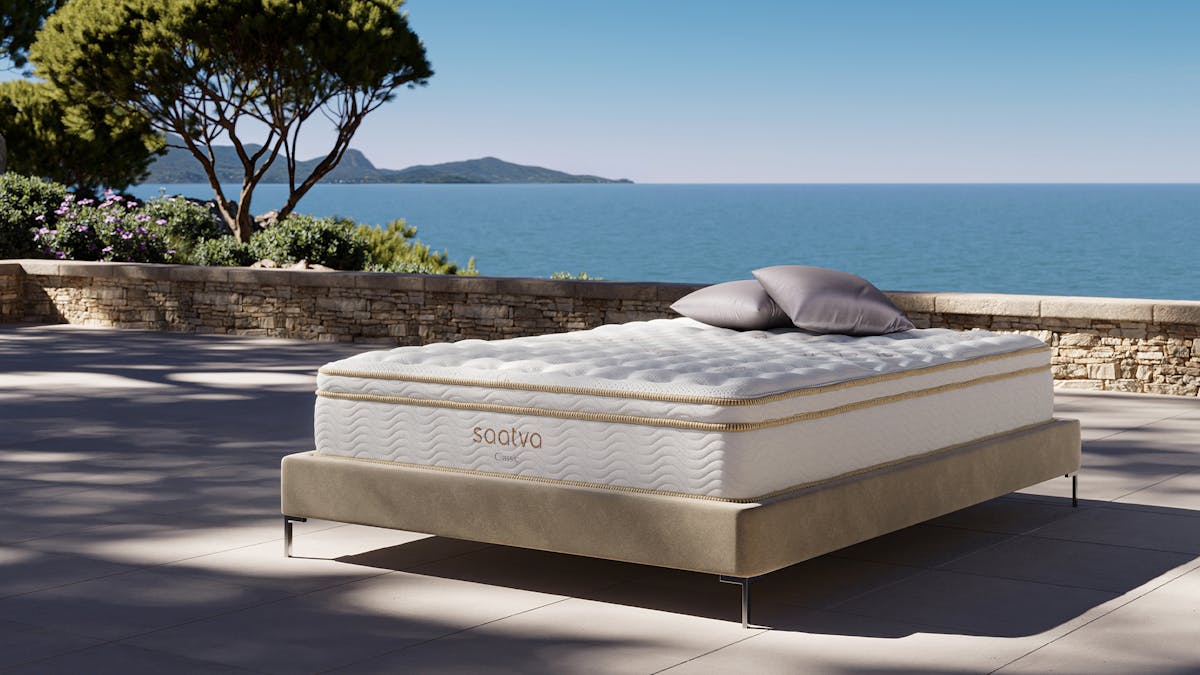
Saatva Classic
A dual-coil hybrid that feels like a high-end hotel bed. The inner layer of individually wrapped comfort coils sits on top of a tempered steel support coil base, creating a responsive, supportive sleep surface that breathes well. A Euro pillow top adds plush comfort without the sinking feeling of memory foam. Three firmness options cover every sleep position, and free white-glove delivery includes setup and old mattress removal.
Pros
- Dual-coil system provides exceptional support with responsive bounce
- Three firmness options (Plush Soft, Luxury Firm, Firm) cover every sleep position
- Free white-glove delivery with setup and old mattress removal included
- 365-night home trial -- among the longest in the industry
- Lumbar zone reinforcement specifically targets lower back support
Cons
- Only sold direct through Saatva -- cannot try in a retail store before buying
- Heavier than average which makes moving and rotating difficult
- The Plush Soft option may be too soft for stomach sleepers over 180 pounds

Helix Midnight Luxe
Designed specifically for side and combination sleepers. Zoned body-shape coils provide softer support under the shoulders and firmer support under the hips, keeping the spine aligned while relieving pressure points. A quilted pillow top adds cushioning without sacrificing support. The GlacioTex cooling cover sleeps noticeably cooler than standard polyester.
Pros
- Zoned lumbar support coils deliver targeted pressure relief for side sleepers
- Quilted pillow top adds plush comfort without excessive sinkage
- GlacioTex cooling cover breathes well and manages heat
- Individually wrapped coils minimize motion transfer for couples
- Winner of Wired, GQ, Forbes, and TIME Best Mattress awards
Cons
- 100-night trial is shorter than competitors offering 365 nights
- 15-year warranty is strong but not lifetime like some rivals
- The Luxe upgrade adds significant cost over the standard Helix Midnight
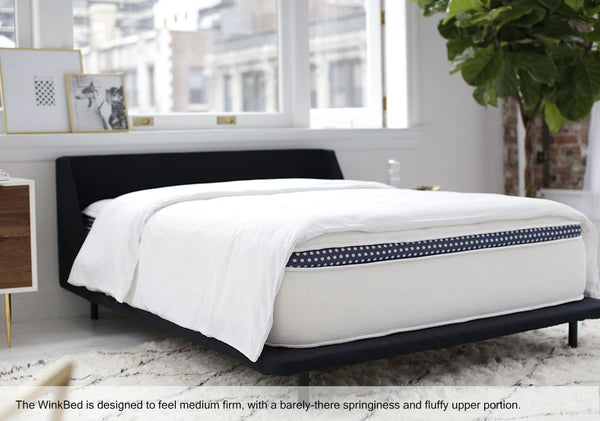
WinkBed
Built with a three-layer support system that specifically targets back pain. The gel-infused Euro pillow top provides surface comfort, pocketed microcoils contour to your body shape, and tempered steel coils deliver deep support. The WinkBed Plus variant uses a latex comfort layer designed specifically for sleepers over 250 pounds. Reinforced edge support prevents the roll-off feeling that plagues foam mattresses.
Pros
- Three-layer support system targets spinal alignment and back pain relief
- WinkBed Plus variant engineered for sleepers over 250 pounds
- Reinforced edge support provides full surface usability
- Four firmness options including the Plus for heavy sleepers
- Lifetime warranty with a 120-night trial
Cons
- 120-night trial is moderate compared to 365-night competitors
- Limited retail availability -- primarily sold through WinkBeds direct
- Higher price point without the perpetual sales other brands run

Nectar Premier
The most mattress you can get for the money. Multiple layers of gel-infused memory foam deliver deep contouring that side sleepers love, while the ActiveCool phase-change cover helps offset heat retention. The Premier adds an extra inch of gel memory foam over the base Nectar. Nectar runs near-constant promotions, so the sale price is effectively the real price.
Pros
- Deep memory foam contouring is excellent for side sleepers
- 365-night trial and lifetime warranty eliminate purchase risk
- ActiveCool cover with phase-change material helps manage heat
- Perpetual promotions make this one of the best values available
- CertiPUR-US certified foams
Cons
- All-foam construction sleeps warmer than hybrids despite cooling features
- Dense foam can make changing positions feel slow
- Edge support is weak compared to hybrids and innersprings
- May bottom out for sleepers over 230 pounds

DreamCloud Classic Hybrid
A 14-inch hybrid that delivers a substantial, hotel-like feel at a mid-range price. The cashmere-blend quilted cover provides a premium surface, and gel memory foam sits on individually wrapped coils with reinforced edge support. Foam contouring plus coil airflow makes it sleep cooler than all-foam alternatives. DreamCloud backs every purchase with a 365-night trial and lifetime warranty.
Pros
- 14-inch profile delivers a luxury feel unusual at this price
- Cashmere-blend quilted cover for a premium surface feel
- Coils provide better airflow and edge support than all-foam
- 365-night trial and lifetime warranty match the longest available
- Reinforced edge support for full surface usability
Cons
- Perpetual sale pricing makes the listed retail price feel misleading
- Heavier than average at 14 inches which complicates rotating
- Memory foam layer may retain some heat despite coil airflow
- Firmness runs slightly firmer than advertised for some reviewers

Bear Elite Hybrid
Strong motion isolation so one partner does not disturb the other, plus reinforced edge support so both can use the full surface. Copper-gel memory foam adds cooling and antimicrobial properties. A zoned coil system provides softer support under shoulders and firmer under hips. Three firmness options help couples with different preferences compromise. Good Housekeeping 2026 Bedding Award winner.
Pros
- Excellent motion isolation prevents partner disturbance
- Reinforced edge support maximizes usable surface for two
- Copper-gel memory foam provides effective cooling
- Three firmness options help couples compromise
- Good Housekeeping 2026 Bedding Award winner
Cons
- Premium pricing even with frequent promotional discounts
- The Soft option may be too soft for stomach sleepers
- Heavier than some competitors which complicates setup
- Celliant cover recovery claims lack strong independent evidence

Birch Natural by Helix
GOTS-certified organic cotton cover, organic wool fire barrier, and GOLS-certified organic Talalay latex on individually wrapped steel coils. The latex provides a responsive, bouncy feel fundamentally different from memory foam -- you sleep on top of it rather than sinking in. Talalay latex sleeps naturally cool due to its open-cell structure, no gel infusions needed.
Pros
- GOTS and GOLS certified organic materials throughout
- Natural Talalay latex sleeps cool without artificial additives
- Responsive bouncy feel makes position changes effortless
- GREENGUARD Gold certified for low chemical emissions
- 25-year warranty is among the longest in the industry
Cons
- 100-night trial is shorter than 365-night competitors
- Latex bounce may feel unfamiliar to memory foam lovers
- Premium pricing reflects organic certification costs
- Limited firmness options compared to synthetic alternatives

Tempur-Pedic ProBreeze
The most effective cooling mattress available. PureCool Plus phase-change cover absorbs heat on contact, ventilated TEMPUR material allows airflow, and SmartClimate dual cover manages moisture. Sleeps up to 3 degrees cooler (8 degrees for the LuxeBreeze variant). Deep body-conforming TEMPUR material is unmatched for pressure relief. The only pick on this list widely available in retail stores for in-person testing.
Pros
- Most effective multi-layer cooling system on the market
- Deep TEMPUR material pressure relief is unmatched
- Available to try at Mattress Firm and retail stores before buying
- Decades of material science behind the product
- SmartClimate dual cover manages heat and moisture
Cons
- Premium pricing significantly higher than every other pick
- 90-night trial is the shortest among our recommendations
- 10-year warranty is shorter than competitors offering lifetime
- All-foam construction means weaker edge support than hybrids
- Dense foam makes position changes slower than responsive hybrids
Frequently Asked Questions
What is the best mattress for side sleepers?
A medium to medium-soft hybrid like the Helix Midnight or Casper Original. Side sleepers need cushioning at the shoulder and hip to keep the spine neutral. Memory foam works too but tends to sleep hotter. Avoid anything firmer than a 6/10 -- side sleepers on firm mattresses develop shoulder and hip pain within weeks.
How much should I spend on a mattress?
$800-1,500 for a queen is the sweet spot. Below $600, you sacrifice durability and materials quality. Above $2,000, you get diminishing returns unless you need a specialty mattress (adjustable air, organic latex). The $1,000-1,200 range offers the best balance of comfort, durability, and value from brands like Casper, Helix, and WinkBed.
Is a mattress in a box as good as a store mattress?
Yes, and often better value. Bed-in-a-box brands (Casper, Helix, Nectar, Purple) use the same materials as store brands but sell direct-to-consumer at 30-50% lower prices. The trade-off is you cannot try before buying, but 90-100 night trial periods with free returns mitigate this risk entirely.
Is a hybrid mattress worth the extra money over foam?
For most people, yes. Hybrids cost $100-300 more than comparable all-foam models but sleep cooler, have better edge support, and last longer (10-12 years vs 8-10 for foam). The only case for all-foam is if you prioritize maximum motion isolation above everything else.
How long does a mattress last?
Memory foam: 8-10 years. Hybrid: 10-12 years. Innerspring: 7-10 years. Latex: 15-20 years. These are averages with normal use. Signs it is time to replace: visible sagging over 1 inch, waking up with back pain that goes away during the day, or sleeping noticeably better in hotels than at home.
Should I buy a mattress online or in a store?
Online offers better prices (30-50% less than store equivalents), longer trial periods (90-100 nights vs a 15-minute showroom test), and free delivery. The only advantage of in-store is testing firmness in person, but a 15-minute store test is a poor predictor of 8-hour sleep comfort. The trial period from an online purchase is far more informative.
What firmness should I choose?
Side sleepers: medium-soft to medium (4-6/10). Back sleepers: medium to medium-firm (5-7/10). Stomach sleepers: firm (7-8/10). Combination sleepers: medium (5-6/10). If you are unsure, medium (5/10) is the safest default -- it works for most body types and sleeping positions. Heavier individuals (230+ lbs) should add 1 firmness point to these recommendations.
Not sure where to start?
Follow the path that matches where you are in your decision. Each guide builds on the last.
You can start at any stage. Each article stands on its own, but reading in order gives you the full picture. Want to know when prices drop? See our Best Time to Buy Mattresses pricing calendar.
Best Time to Buy a Mattress
Never Miss the Best Price
Get buying guides and deal alerts timed to when prices actually drop lowest.
Get Monthly Deal Alerts