How to Buy a Bike Without Getting Upsold
Matched to your actual riding -- commute, trail, weekend cruise, or fitness -- not the shop's margin.
There are thousands of bikes on the market and every brand claims to be the best. The result is paralysis: you read reviews for hours, compare specs you do not understand, and end up buying whatever the shop has on sale or whatever a YouTube reviewer got paid to recommend.
This guide takes a different approach. Answer four questions about how you ride -- your purpose, terrain, typical distance, and budget -- and we will point you to a specific bike. No jargon, no spec sheets, no brand loyalty.
Not sure which bike type is right? Start with our Road vs Mountain vs Hybrid vs E-Bike comparison to pick your category first. Want to understand the full cost? See The Real Cost of Owning a Bike. And before you buy, read 5 bike buying mistakes that waste money. Already know what you want? Check when bike prices drop lowest -- fall clearance saves 25-40%.
How This Guide Works
We organized recommendations around how you ride, not around product catalogs. Answer four questions and you will land on the right bike without needing to decode component tier hierarchies or frame geometry charts.
Question 1: What Will You Primarily Use the Bike For?
Commuting and Errands
You need a bike that is practical, comfortable, and low-maintenance. Flat handlebars for an upright riding position and good visibility in traffic. Mounts for racks and fenders. Puncture-resistant tires. Disc brakes that work in wet weather. A hybrid bike checks every box. If your commute has hills or you want to arrive without sweat, an e-bike transforms the experience.
Fitness and Recreation
You want exercise and enjoyment, not just transportation. A fitness hybrid or a road bike maximizes your workout per hour of riding. The more aggressive the geometry and the lighter the bike, the more effort goes into speed rather than fighting the bike. If you plan to ride on roads exclusively, a road bike is faster and more engaging. If you mix roads with bike paths and light gravel, a hybrid is more versatile.
Trail Riding and Mountain Biking
You want to ride dirt trails, singletrack, and unpaved surfaces. A mountain bike with proper suspension, wide tires, and durable components is the only safe option. Hardtails handle smooth to moderate trails well and cost less. Full suspension is for rough, technical terrain with rocks, roots, and drops.
Everything (One Bike for All Purposes)
You want a single bike that handles road, gravel, paths, and light trails. A gravel bike is the most versatile single-bike solution -- drop handlebars for efficiency on pavement, wide tire clearance for dirt and gravel, disc brakes for all-weather stopping. It compromises slightly at every extreme but excels as a do-everything platform.
Question 2: What Terrain Will You Ride On?
Paved Roads and Bike Paths Only
A road bike or fitness hybrid is the right tool. Narrow tires (25-35mm) and lightweight frames maximize your speed and efficiency. No need for suspension, wide tires, or knobby tread.
Mix of Pavement and Gravel / Dirt Paths
A hybrid with 35-42mm tires handles this mix well. A gravel bike handles it even better with more speed on pavement and more capability off it. Avoid mountain bikes for this use case -- they are slow on pavement.
Dirt Trails and Singletrack
A hardtail mountain bike is the right starting point. Front suspension absorbs bumps, wide tires (2.1-2.4 inch) grip loose surfaces, and durable frames handle impacts. Graduate to full suspension only if you regularly ride rough, technical terrain.
Question 3: How Far Will You Typically Ride?
Under 5 Miles (Short Commute, Errands)
Almost any bike works at this distance. Comfort and convenience matter more than speed. A hybrid or e-bike is ideal. Do not overthink this -- even a basic bike handles a 3-mile commute without issue.
5-20 Miles (Regular Commute, Fitness Rides)
This is where bike type starts to matter. A road bike or fitness hybrid covers this distance efficiently. An e-bike makes it effortless, especially with hills. A mountain bike would work but you would arrive slower and more tired than necessary.
20+ Miles (Long Rides, Events)
Endurance road bikes and gravel bikes are designed for this range. Comfort features like carbon forks, wider tires, and endurance geometry reduce fatigue over hours of riding. E-bikes with large batteries can also handle long distances, but check the range at your expected assist level.
Question 4: What Is Your Budget?
Under $700
Solid hybrids and entry-level mountain bikes live here. The Giant Escape Disc 2 and Co-op Cycles DRT 1.1 are standout values. Avoid department-store bikes at this price -- they use heavy, unreliable components that make riding frustrating.
$700-$1,500
The sweet spot for most riders. Quality hybrids with hydraulic disc brakes, beginner road bikes with reliable groupsets, and solid hardtail mountain bikes all fall here. E-bikes enter the range at the high end with models like the Lectric XP Lite 2.0.
$1,500-$2,000
Carbon forks, better drivetrains, and more refined geometry. Road bikes, gravel bikes, and commuter e-bikes hit their stride at this level. The difference from the tier below is noticeable in ride quality and component longevity.
Quick-Match Summary
| Your Riding Profile | Our Pick | Why It Fits |
|---|---|---|
| Commuter, fitness, all-around | Trek FX 3 Disc | Top-rated hybrid, 1x drivetrain, rack/fender mounts |
| Budget commuter or first bike | Giant Escape Disc 2 | Best value hybrid, disc brakes, puncture-resistant tires |
| Road cycling, fitness, events | Giant Contend AR 3 | Endurance geometry, handles light gravel, Shimano CUES |
| One bike for everything | Canyon Grizl 6 RAW | Road + gravel + bikepacking, Shimano GRX, best versatility |
| Trail riding, singletrack | Trek Marlin 7 | Air fork, dropper post, 1x12 -- best beginner trail bike |
| Budget trail riding | Co-op Cycles DRT 1.1 | REI exclusive, hydraulic brakes, great value at $679 |
| E-bike commuter | Aventon Soltera 2.5 | Lightweight e-bike, torque sensor, integrated turn signals |
| E-bike on a budget | Lectric XP Lite 2.0 | Foldable, belt drive, 49 lbs, incredible value |
What We Recommend
Based on our research, these are our top picks. Prices change frequently -- click through to see the latest.
- 1.Trek FX 3 Disc Gen 3 -- Commuters, fitness riders, and anyone who wants the most capable and versatile flat-bar bike available.
- 2.Giant Escape Disc 2 -- Budget-conscious commuters and first-time adult cyclists who want a reliable, comfortable bike without overspending.
- 3.Giant Contend AR 3 -- Beginners who want a road bike that handles fitness rides, casual group rides, and light gravel without needing a separate bike.
- 4.Canyon Grizl 6 RAW -- Riders who want one bike for everything -- commuting, weekend gravel rides, bikepacking trips, and pavement fitness rides.
- 5.Trek Marlin 7 -- Beginner to intermediate trail riders who want a capable hardtail with features (air fork, dropper post) that punch above the price point.
- 6.Co-op Cycles DRT 1.1 -- First-time mountain bikers on a budget who want a bike with real hydraulic brakes and the backing of REI service.
- 7.Aventon Soltera 2.5 -- Urban commuters who want e-bike assistance without the bulk, weight, or aggressive styling of most e-bikes.
- 8.Lectric XP Lite 2.0 -- Budget-conscious riders, apartment dwellers, students, and anyone who needs an e-bike that folds for storage or multi-modal commuting.
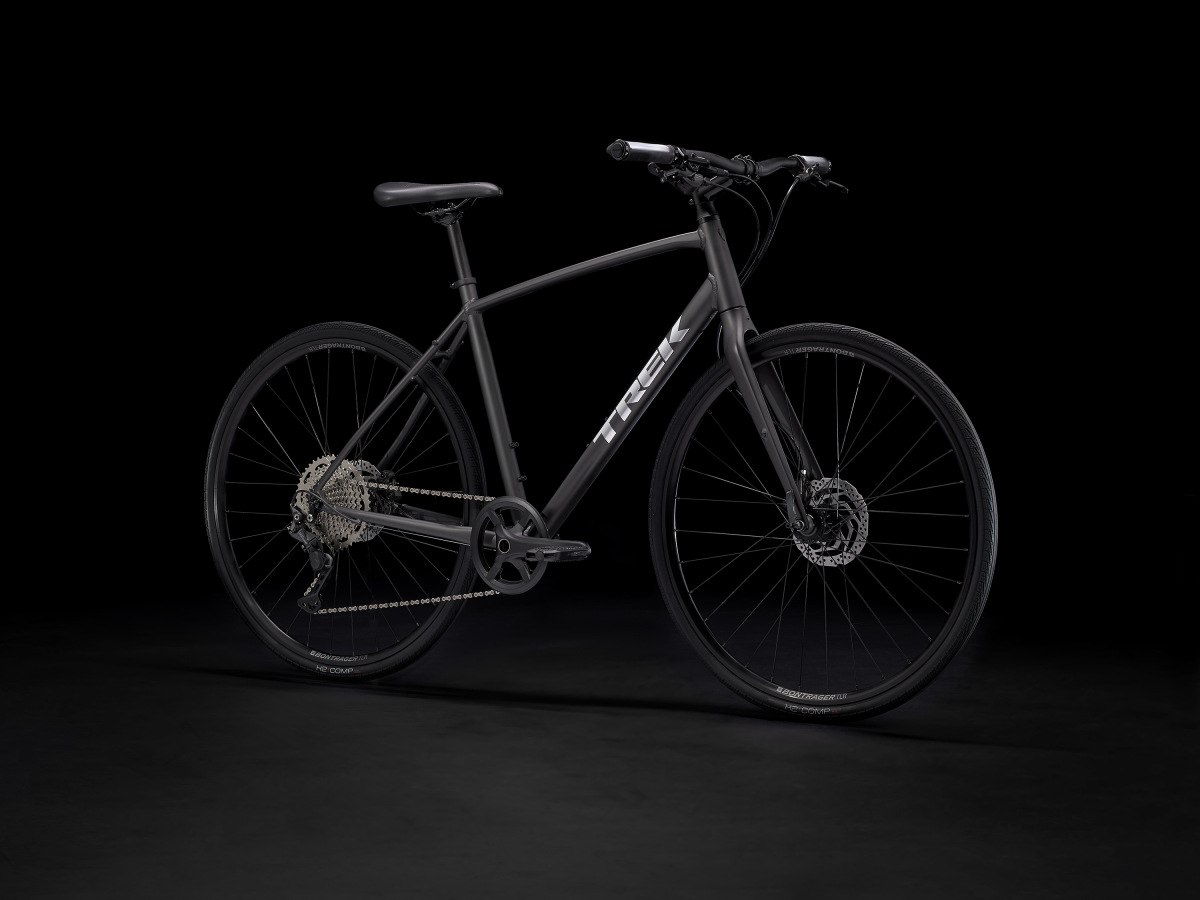
Trek FX 3 Disc Gen 3
The consensus top hybrid across BikeRadar, CyclingNews, and Cycling Weekly. The 1x drivetrain simplifies shifting and eliminates front derailleur maintenance. Carbon fork absorbs road vibration. Hydraulic disc brakes provide confident stopping in all weather. Rack, fender, and light mounts make it practical for commuting. Lifetime frame warranty from Trek.
Pros
- 1x drivetrain is low-maintenance and simplified -- no front derailleur to adjust
- Carbon fork absorbs road vibration for a smoother ride
- Hydraulic disc brakes provide consistent wet-weather stopping power
- Rack, fender, and light mounts make it a true commuter
- Lifetime frame warranty from Trek
Cons
- Higher price than entry-level hybrids due to premium components
- 1x gearing has a narrower range than 2x for steep hill climbing
- Carbon fork adds cost over aluminum alternatives
Giant Escape Disc 2
The best value hybrid under $1,000. Lightweight ALUXX aluminum frame, fast-rolling 700c wheels, and a confident upright position that feels natural from the first ride. Disc brakes work reliably in wet weather, and puncture-resistant tires reduce flat frequency on commutes. The ideal first adult bike or daily commuter for riders who want quality without overspending.
Pros
- Excellent value -- quality disc brakes and drivetrain at a sub-900 price
- Lightweight ALUXX frame is easy to carry up stairs and onto bike racks
- Puncture-resistant tires reduce flat frequency for commuters
- Upright riding position is comfortable immediately with no adaptation period
- Wide gear range handles hills without struggling
Cons
- Components are entry-level -- heavier and less refined than premium hybrids
- No carbon fork which means slightly more road vibration
- Stock saddle may need replacement for longer rides
Giant Contend AR 3
An endurance road bike with the versatility to handle light gravel. The D-Fuse composite seatpost absorbs road vibration without a heavy suspension system. Tubeless-ready wheels accept up to 38mm tires for mixed-surface riding. Shimano CUES 2x10-speed drivetrain shifts reliably and offers a wide gear range for hills. The geometry puts you in a comfortable, slightly upright position rather than the aggressive tuck of a race bike.
Pros
- D-Fuse composite seatpost absorbs vibration for long-ride comfort
- Tubeless-ready with up to 38mm tire clearance for road and light gravel
- Shimano CUES 2x10 drivetrain is reliable and covers a wide gear range
- Endurance geometry is comfortable for beginners without sacrificing efficiency
- Disc brakes with 12mm thru-axles for precise, powerful stopping
Cons
- Drop handlebars require an adaptation period for new riders
- Heavier than carbon road bikes at the same price
- Mechanical disc brakes rather than hydraulic at this price point
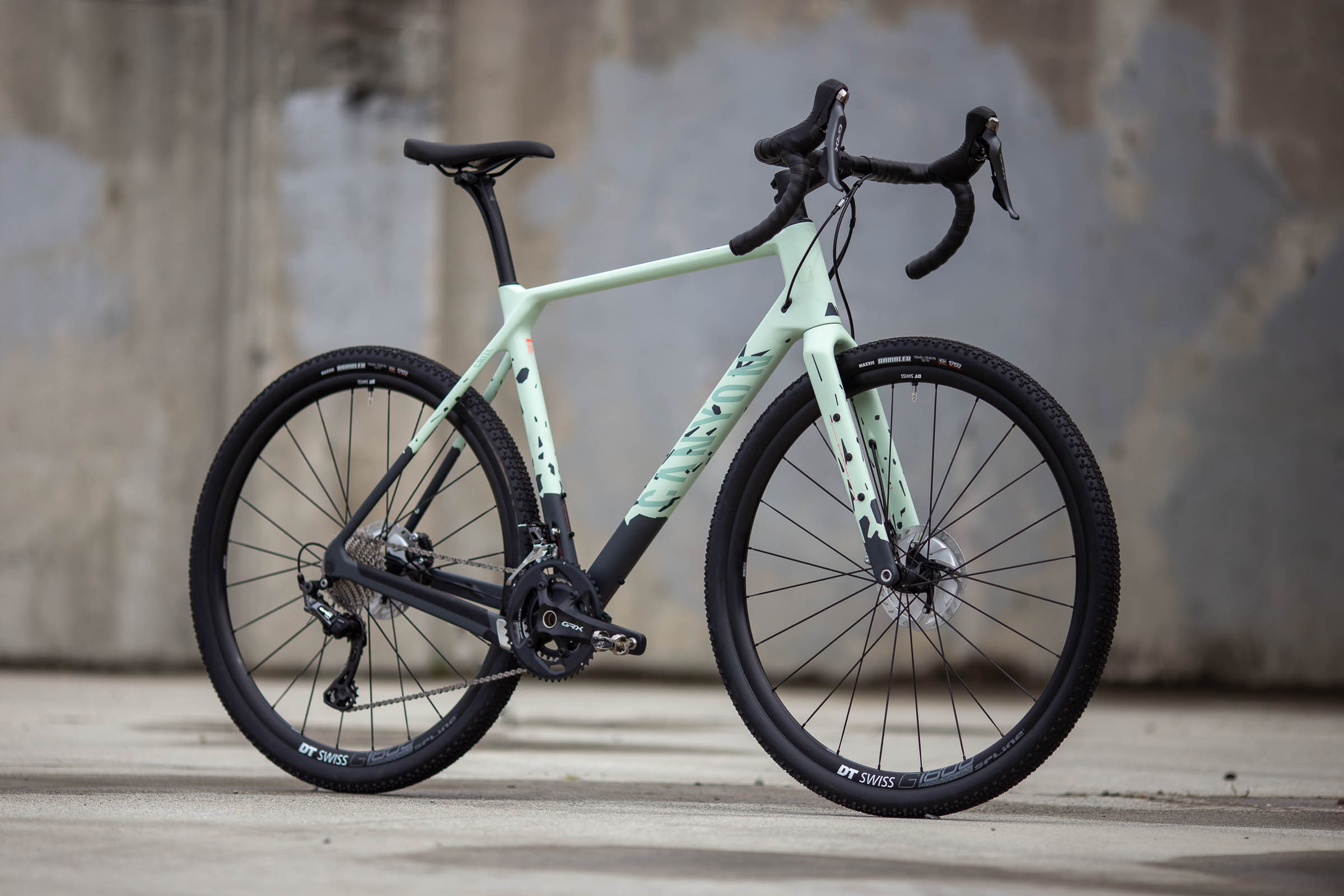
Canyon Grizl 6 RAW
The most versatile single bike you can buy. Handles paved roads efficiently, gravel roads confidently, and light trails capably. Shimano GRX shifting is designed specifically for mixed-terrain riding. Hydraulic disc brakes stop confidently in mud, rain, and dust. The frame has mounts for racks, fenders, and multiple water bottles -- ready for commuting, touring, or bikepacking without accessories bolted on as afterthoughts.
Pros
- The most versatile single-bike solution -- road, gravel, trails, bikepacking
- Shimano GRX drivetrain is purpose-built for gravel with wide gear range
- Hydraulic disc brakes work reliably in all conditions
- Full rack, fender, and cargo mounts for touring and commuting
- Schwalbe tires roll fast on pavement and grip on gravel
Cons
- Direct-to-consumer only from Canyon -- no local dealer test rides
- Heavier than dedicated road bikes due to gravel-ready frame construction
- Slower on pure pavement than a road bike of equivalent price

Trek Marlin 7
The best beginner trail mountain bike available. An air fork replaces the heavy coil forks found on cheaper hardtails, providing adjustable suspension that matches your weight and riding style. A dropper seatpost lets you lower the saddle for descents and raise it for climbs -- a feature that transforms trail riding confidence. The 1x12-speed Shimano drivetrain eliminates the front derailleur for simpler shifting and fewer mechanical issues on the trail.
Pros
- Air fork is adjustable to rider weight -- dramatically better than coil forks at this price
- Dropper seatpost included -- a feature usually reserved for more expensive bikes
- 1x12-speed Shimano drivetrain simplifies shifting and reduces trail-side mechanicals
- 29-inch wheels roll over obstacles smoothly and maintain momentum
- Internal cable routing keeps cables protected from trail debris
Cons
- Hardtail -- no rear suspension means rougher ride on very technical terrain
- Heavier than carbon hardtails at higher price points
- Stock tires may need upgrading for aggressive trail riding
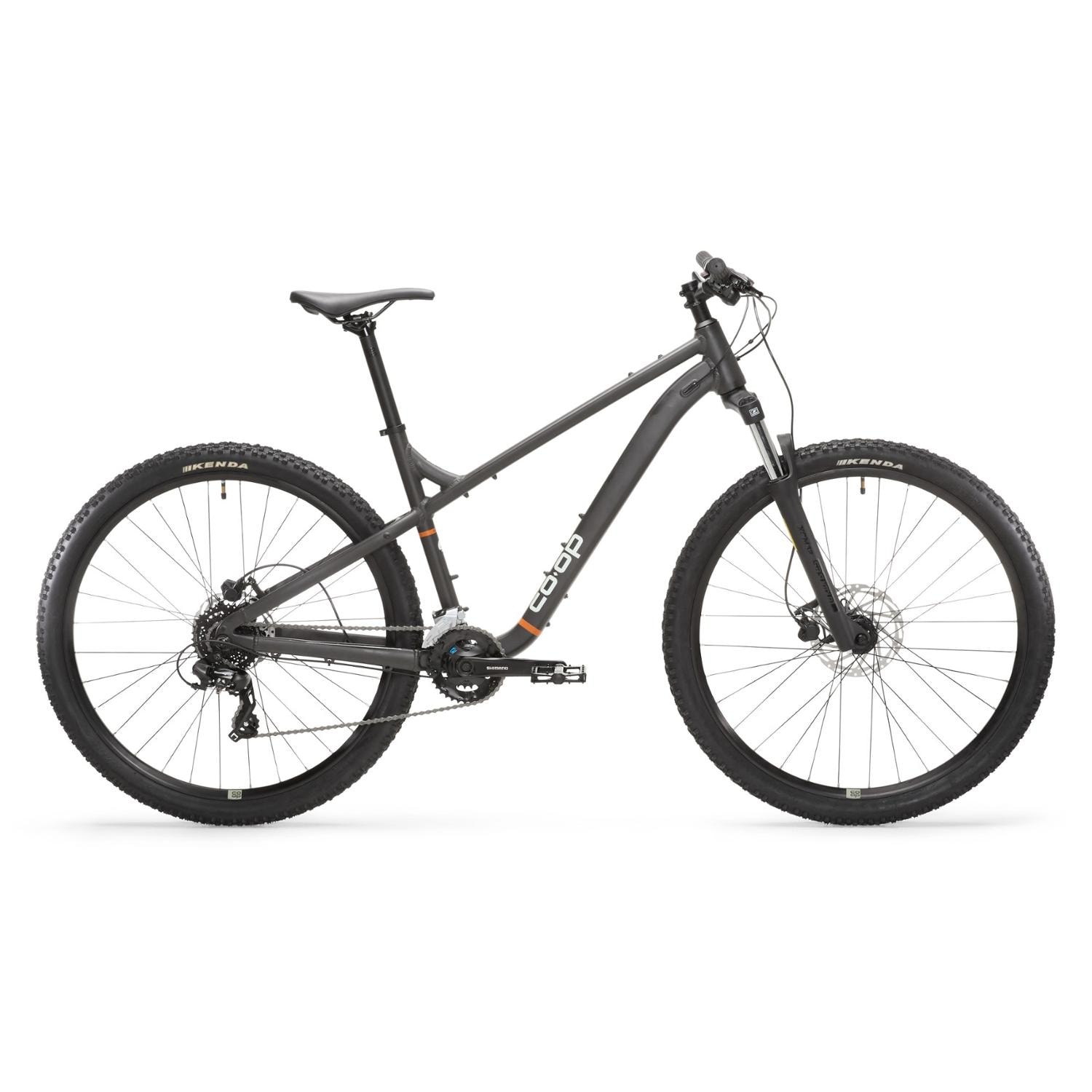
Co-op Cycles DRT 1.1
The best entry-level mountain bike for the money. Hydraulic disc brakes at this price point are uncommon and provide stopping power that inspires confidence on descents. The aluminum frame is sized specifically for the wheel diameter (27.5 or 29 inch), and the tapered head tube accepts upgraded forks when you are ready. REI includes a free first-year adjustment service -- bring it back for tune-ups as cables stretch and components settle.
Pros
- Hydraulic disc brakes are rare at this price and provide excellent stopping power
- REI includes free first-year adjustment service with purchase
- Tapered head tube allows fork upgrades as your skills progress
- Solid aluminum frame with modern trail geometry
- REI member dividend (10% back) reduces effective price further
Cons
- Coil fork is heavier and less adjustable than air forks on pricier bikes
- 2x8-speed drivetrain is adequate but not as refined as 1x systems
- Stock components are entry-level -- expect to upgrade contact points over time

Aventon Soltera 2.5
A lightweight commuter e-bike that does not look or feel like an e-bike. The integrated battery hides inside the frame for a clean, traditional silhouette. A torque sensor delivers power proportional to your pedaling effort rather than an on/off motor surge -- the ride feels natural and responsive. Integrated turn signals and a bright headlight address safety without requiring bolt-on accessories. At 46 pounds, it is light enough to carry up a flight of stairs.
Pros
- Torque sensor delivers natural, proportional pedal assist
- Integrated battery creates a clean, traditional bike silhouette
- Built-in turn signals and headlight for commuter safety
- 46 pounds is lightweight for an e-bike -- manageable on stairs
- Hydraulic disc brakes with 180mm rotors for confident stopping
Cons
- 350W motor is adequate for flat to moderate terrain but struggles on steep hills
- 46-mile max range drops significantly at higher assist levels
- Shimano Tourney 7-speed drivetrain is entry-level
- Single battery size with no long-range option available
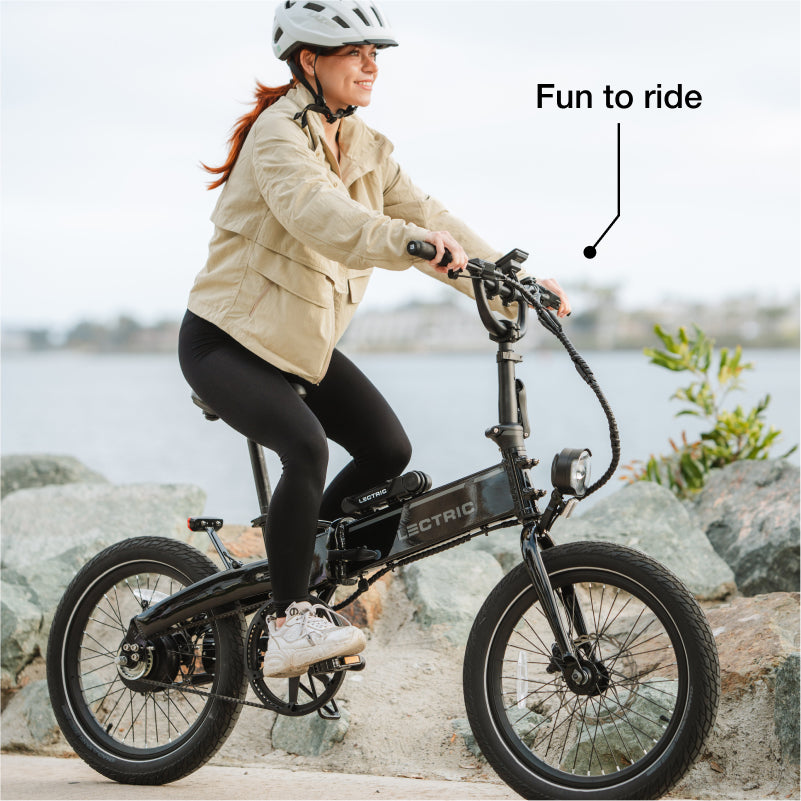
Lectric XP Lite 2.0
The best value in e-bikes by a wide margin. A Gates Carbon Drive belt replaces the traditional chain -- it never rusts, never stretches, never needs lubrication, and lasts significantly longer. The bike folds in half for apartment storage, car trunks, and public transit. Hydraulic disc brakes provide stopping power that cable brakes cannot match. At 49 pounds with the battery, it is among the lightest folding e-bikes available. The long-range battery option extends range to 80 miles.
Pros
- Gates Carbon Drive belt is nearly maintenance-free -- no chain to clean, oil, or replace
- Foldable design fits in car trunks, closets, and under desks
- Hydraulic disc brakes provide superior stopping power
- 49 pounds is remarkably light for a folding e-bike
- Long-range battery option extends range to 80 miles
Cons
- 300W motor is modest -- adequate for flat terrain but limited on steep hills
- Smaller 20-inch wheels ride rougher on bumps than full-size wheels
- Single-speed drivetrain limits efficiency without motor assist
- No suspension of any kind -- every bump transfers directly to the rider
Frequently Asked Questions
What is the best bike for a complete beginner?
A flat-bar hybrid bike in the $400-700 range. The Trek FX or Giant Escape are consistently recommended for beginners. They are comfortable, versatile, and low-maintenance. Avoid buying a road bike (uncomfortable for casual riders) or a full-suspension mountain bike (overkill and expensive) as a first bike.
What size bike do I need for my height?
Use the manufacturer size chart for the specific model. As a rough guide: 5'0"-5'4" = XS/S, 5'4"-5'8" = S/M, 5'8"-6'0" = M/L, 6'0"-6'4" = L/XL. But sizing varies significantly between brands and bike types. A test ride or professional fit is the only reliable way to confirm size. Never buy a bike that is even slightly too large -- too small is rideable, too large causes back and knee pain.
Should I buy a road bike or a hybrid?
Hybrid if you ride for transportation, casual fitness, or mixed terrain. Road bike if you ride primarily for speed, fitness, or group rides on paved roads. Hybrids are more comfortable (upright position, wider tires) and versatile. Road bikes are faster and more efficient but uncomfortable for casual riding and useless on gravel or dirt.
Is it better to buy a bike online or at a bike shop?
Bike shop for beginners -- you get professional sizing, test rides, and free tune-ups (usually 1-2 included with purchase). Online for experienced riders who know their size and can do basic assembly. Direct-to-consumer brands like Canyon and Poseidon offer excellent value online, but you forgo the shop relationship and fitting expertise.
What is the most versatile bike if I can only buy one?
A flat-bar hybrid with 35-40mm tires. It handles paved commutes, bike paths, packed gravel, and light trail riding. Add fenders for rain commuting and a rack for errands. It will not excel at any specific discipline, but it competently handles 90% of what most people actually ride. The Trek FX and Cannondale Quick are benchmark models in this category.
How much does bike maintenance cost per year?
A basic tune-up costs $75-150 at a bike shop (recommended annually). Chain replacement: $20-40 every 2,000-3,000 miles. Brake pads: $15-30 every 1,000-2,000 miles. Tires: $30-60 per tire every 2,000-5,000 miles. Budget $100-250 per year for a regularly ridden bike. E-bikes cost slightly more due to electrical system checks.
Are Walmart bikes worth buying?
No. Big-box store bikes ($100-250) use heavy steel frames, unreliable components, and come poorly assembled. They ride noticeably worse than entry-level bike shop models, require constant adjustment, and frequently have safety issues (loose headsets, poorly adjusted brakes). A used $300 bike from a reputable brand outperforms a new $200 Walmart bike in every way.
Not sure where to start?
Follow the path that matches where you are in your decision. Each guide builds on the last.
You can start at any stage. Each article stands on its own, but reading in order gives you the full picture. Want to know when prices drop? See our Best Time to Buy Bikes pricing calendar.
Best Time to Buy a Bike
Never Miss the Best Price
Get buying guides and deal alerts timed to when prices actually drop lowest.
Get Monthly Deal Alerts