Every Number on Your Tire Sidewall, Decoded
That cryptic string of letters and numbers tells you everything about what your tire can handle. Here is what each one means.
There is more useful information printed on the side of your tire than on most product packaging in your house. The problem is that it looks like an encrypted message: P225/65R17 102H, UTQG 700 A B, DOT codes, arrows, and icons. Most people ignore all of it and just ask the tire shop to put on whatever fits.
That is expensive. Understanding four key pieces of sidewall information -- size, load and speed ratings, UTQG grades, and the DOT date code -- gives you the ability to compare tires on what actually matters instead of relying on brand reputation or salesperson recommendations. It is the difference between buying the right tire for your driving conditions and overpaying for ratings you will never use.
This guide breaks down every sidewall marking into plain language, explains which numbers matter for everyday drivers and which are marketing noise, and connects each spec to real purchasing decisions. By the end, you will be able to stand in front of a wall of tires at any shop and know exactly what you are looking at. For timing your purchase to get the best price, pair this with our Best Time to Buy Tires month-by-month guide.
The Size Code: What P225/65R17 Actually Means
The largest text on your sidewall is the size code. Here is how to read it, using P225/65R17 as an example:
P = Passenger vehicle tire (LT means Light Truck, which uses a different load calculation). If there is no letter prefix, the tire follows European metric standards -- functionally identical for most buyers.
225 = Section width in millimeters. This is the tire's width from sidewall to sidewall when mounted on the recommended rim width. A wider tire (255, 275) provides more contact area and grip but increases rolling resistance and road noise. A narrower tire (195, 205) offers better fuel economy and performs better in snow.
65 = Aspect ratio. The sidewall height is 65% of the section width. Lower numbers (45, 50) mean a shorter, stiffer sidewall -- sharper handling and sportier appearance, but a harsher ride and more vulnerability to pothole damage. Higher numbers (70, 75) mean a taller, more cushioned sidewall -- smoother ride and better pothole absorption, but less precise handling.
R = Radial construction. Virtually all modern passenger tires are radial. If you see a B (bias-ply) or D (diagonal), it is a specialty tire for trailers or vintage vehicles.
17 = Rim diameter in inches. This must match your wheel exactly. You cannot put a 17-inch tire on a 16-inch wheel.
What this means for buying
Your owner's manual lists the original tire size. You should stay within one size increment of the original (for example, going from 225/65R17 to 235/60R17) if you want to change the width. Going wider by more than one increment can cause clearance issues and throw off your speedometer calibration. When in doubt, match your original size exactly.
Load Index and Speed Rating: The Numbers After the Size
After the size code, you will see something like 102H. These two pieces of information are critical and frequently misunderstood.
102 = Load index. This means each tire can support up to 1,874 pounds. The number is not the weight itself -- it references a standardized chart. Common values: 91 = 1,356 lbs, 95 = 1,521 lbs, 100 = 1,764 lbs, 105 = 2,039 lbs. Your replacement tires should meet or exceed the load index specified in your owner's manual. Going below it is a safety risk, especially if you carry passengers or cargo regularly.
H = Speed rating. This indicates the maximum sustained speed the tire is designed to handle safely. Common ratings: S = 112 mph, T = 118 mph, H = 130 mph, V = 149 mph, W = 168 mph, Y = 186 mph. For most daily drivers, an H or T rating is more than sufficient. A V or W rating on a family sedan is paying extra for a capability you will never use.
What this means for buying
Match or exceed your vehicle's specified load index. For speed rating, match the original or go one step down if you are prioritizing ride comfort and treadwear over top-speed performance you will never reach. Going from an H-rated to a T-rated tire on a commuter car is perfectly safe and often gives you a softer-riding, longer-lasting tire at a lower price.
UTQG Grades: The Government Ratings That Actually Help You Compare
UTQG stands for Uniform Tire Quality Grading. The U.S. Department of Transportation requires these three grades on every passenger tire sold in America. They are the closest thing to an apples-to-apples comparison tool that exists in the tire world.
Treadwear (the number, e.g., 700)
A relative longevity rating tested on a government course. A tire rated 400 should last twice as long as one rated 200 under the same conditions. Important caveats: the test conditions are standardized but do not perfectly represent real-world driving, and manufacturers self-report their results. Use treadwear as a rough comparison tool, not an exact mileage predictor. Most all-season tires fall between 400-800. Performance tires often rate 200-400. Budget tires can rate 500+ but achieve it through harder rubber that sacrifices wet grip.
Traction (A, B, or C)
Measures the tire's ability to stop on wet pavement. The grades are AA (best), A, B, and C (worst). Any tire rated A or AA is acceptable for normal driving. Avoid C-rated tires entirely -- their wet braking distance is significantly longer. Nearly all name-brand tires achieve A or AA, so this grade is most useful for filtering out low-quality budget options.
Temperature (A, B, or C)
Measures the tire's ability to dissipate heat at sustained speeds. Grade A handles heat best, C worst. For normal highway driving, A or B is appropriate. This grade matters most for drivers who regularly sustain high speeds or carry heavy loads in hot climates.
What this means for buying
When comparing two tires at similar price points, the UTQG treadwear number is the fastest way to estimate relative longevity. Combine it with the mileage warranty: a tire with a 700 treadwear rating and a 70,000-mile warranty is the manufacturer putting money behind its durability claim. A high treadwear rating with no warranty is a marketing number with no commitment behind it.
The DOT Code: How to Check Your Tire's Age
On one sidewall, you will find a code starting with DOT followed by a string of characters. The last four digits are the ones that matter: they indicate the week and year the tire was manufactured. For example, 2523 means the tire was made in the 25th week of 2023.
Tire rubber degrades over time regardless of tread depth. Most manufacturers and safety organizations recommend replacing tires that are six years old or older, even if the tread looks fine. UV exposure, ozone, and temperature cycles cause the rubber compounds to harden and lose flexibility, reducing grip in wet conditions and increasing the risk of a blowout.
What this means for buying
Always check the DOT date code when buying tires -- especially if you are purchasing from a discount retailer, online marketplace, or buying a set that has been sitting in a warehouse. A tire manufactured two years ago and sold as new is two years closer to its replacement date. Ask for the most recently manufactured stock, and never buy a tire that is more than two years old at the time of purchase.
Markings You Can Safely Ignore
Not every sidewall marking requires your attention. These are informational but rarely affect a buying decision:
M+S (Mud and Snow): Nearly every all-season tire carries this marking. It indicates a basic tread pattern standard, not actual winter capability. For real winter performance, look for the Three-Peak Mountain Snowflake (3PMSF) symbol instead.
Max pressure (e.g., Max Press 51 PSI): This is the maximum cold inflation pressure the tire can handle -- not the recommended pressure for your vehicle. Your correct inflation pressure is on the sticker inside the driver's door jamb or in your owner's manual. Inflating to the tire's maximum will give you a harsh ride and uneven wear.
Ply ratings and material composition: These describe the internal construction. Unless you are comparing commercial or off-road tires, the ply information is not actionable for buying decisions.
Putting It All Together: A Sidewall Reading Checklist
When comparing tires, pull these five data points from the sidewall and put them side by side:
1. Size -- must match your vehicle specification
2. Load index -- must meet or exceed your vehicle's requirement
3. Speed rating -- match the original or adjust intentionally
4. UTQG treadwear -- higher is longer-lasting (compare tires at similar price points)
5. UTQG traction -- A or AA only; avoid B and C
Then check the DOT date code to make sure you are buying fresh stock. With these five numbers, you can compare any two tires objectively -- regardless of brand, marketing, or salesperson pitch. If you are ready to decide between tire types, our tire type comparison guide covers when each category makes sense. For budget comparisons, see our tier-by-tier tire breakdown.
What We Recommend
Based on our research, these are our top picks. Prices change frequently -- click through to see the latest.
- 1.Michelin Defender 2 -- Best for drivers who want maximum mileage backed by warranty
- 2.Continental ProContact GX -- Best for drivers who want balanced performance across every UTQG category
- 3.Cooper Discoverer EnduraMax -- Best for SUV and crossover owners who need higher load capacity
- 4.Bridgestone Turanza QuietTrack -- Best for drivers who prioritize ride comfort and are willing to skip unnecessary speed ratings
- 5.General AltiMAX RT45 -- Best for budget-conscious buyers who still want verified UTQG performance
- 6.Goodyear Assurance MaxLife -- Best for high-mileage commuters who want warranty-backed longevity
- 7.Hankook Kinergy PT -- Best for mid-range buyers who want strong warranty coverage and wide size availability
- 8.Pirelli P Zero All Season Plus 3 -- Best for performance vehicle owners who need a high speed rating from the factory

Michelin Defender 2
The Defender 2 is the textbook example of sidewall specs aligning with real-world performance. Its UTQG treadwear rating of 840 is among the highest in the all-season category, and Michelin backs it with an 80,000-mile warranty. Traction grade AA confirms wet braking is excellent. When you understand what the sidewall numbers mean, tires like this stand out immediately.
Pros
- 840 UTQG treadwear -- among the highest in its class
- 80,000-mile warranty backs the treadwear claim
- AA traction grade for confident wet braking
- MaxTouch Contact technology for even wear
- Low rolling resistance improves fuel economy
Cons
- Premium price point
- Road noise slightly above average
- Not a performance tire -- prioritizes longevity
- Limited size availability in some rim diameters
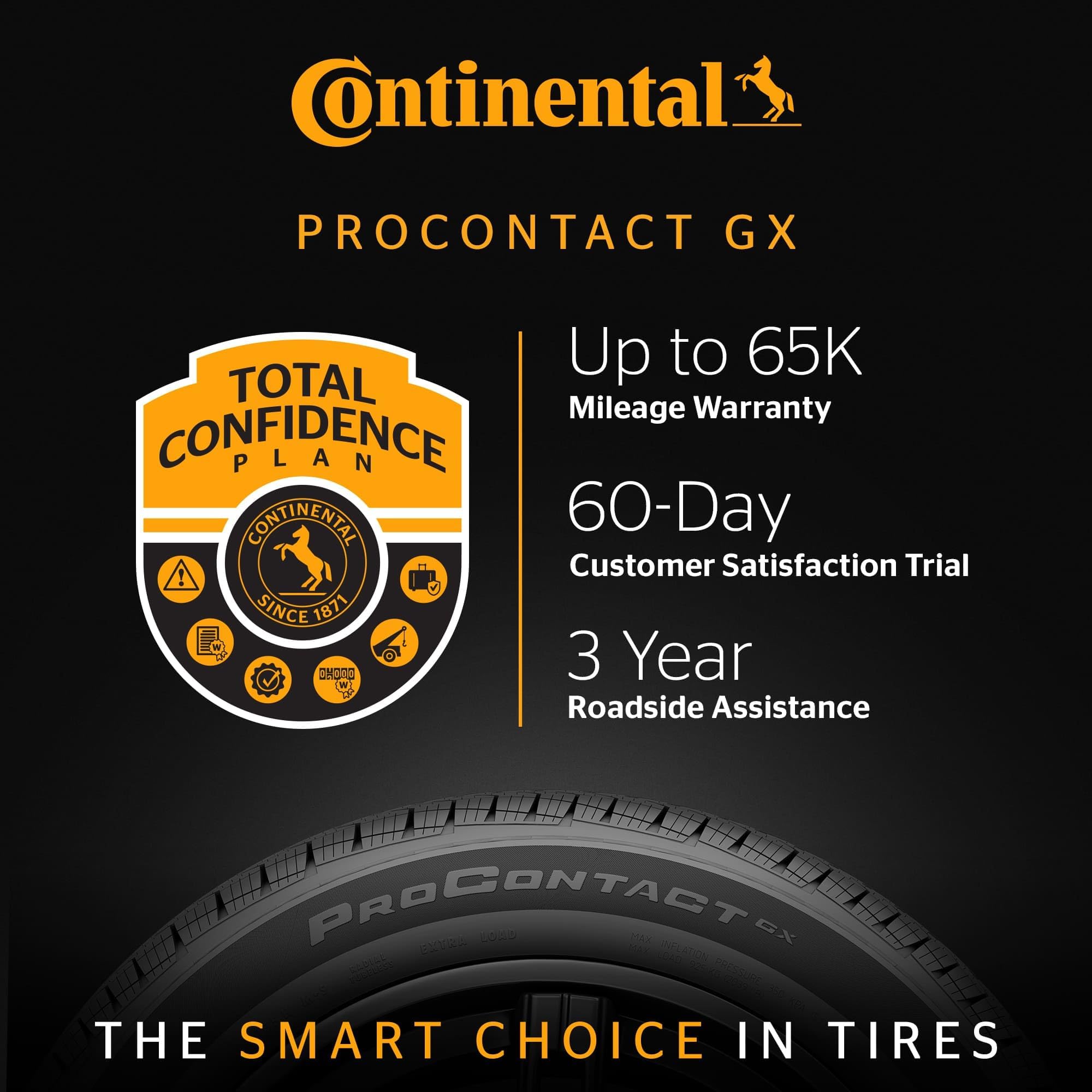
Continental ProContact GX
Continental hits the sweet spot across all three UTQG categories: strong treadwear without sacrificing wet grip or heat management. The ProContact GX is an OE fitment on many European sedans, which means it was engineered to balance ride comfort, noise, and longevity from the factory. A good example of how UTQG grades can reveal a well-rounded tire that does not chase any single extreme.
Pros
- Balanced UTQG scores across all three categories
- OE fitment on BMW, Mercedes, and VW models
- Excellent wet and dry handling balance
- Quiet ride -- noise-canceling tread design
- 70,000-mile warranty
Cons
- Not the cheapest in its size range
- Winter performance is adequate but not exceptional
- Sizes skew toward European vehicles

Cooper Discoverer EnduraMax
For SUV and crossover owners, load index becomes a critical sidewall number. The EnduraMax is available in higher load index ratings designed for heavier vehicles that carry passengers and cargo regularly. Understanding that load index must meet or exceed your vehicle specification prevents the dangerous mistake of underrating your tires for the weight they carry.
Pros
- Available in high load index ratings for SUVs
- 65,000-mile treadwear warranty
- Strong wet traction performance
- Durable construction for heavier vehicles
- Competitive mid-range pricing
Cons
- Road noise increases at highway speeds
- Limited performance tire feel
- Treadwear not quite premium tier
- Fewer size options than major brands
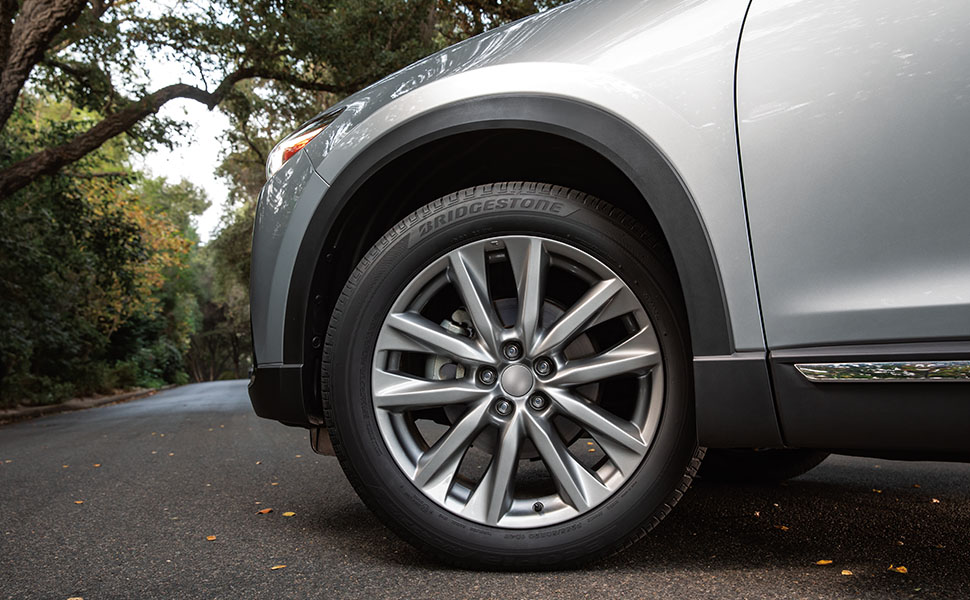
Bridgestone Turanza QuietTrack
The QuietTrack demonstrates why an H speed rating (130 mph) paired with comfort-focused engineering often makes more sense than chasing a V or W rating. By optimizing for ride quality and noise reduction instead of top-speed performance, Bridgestone delivers one of the quietest touring tires available. The speed rating you actually need is almost always lower than the one you are being sold.
Pros
- Among the quietest tires in its category
- H speed rating keeps price reasonable
- 80,000-mile warranty
- Excellent wet braking (AA traction grade)
- Comfort-tuned sidewall construction
Cons
- Not sporty -- prioritizes comfort over handling
- Premium pricing for the touring category
- Some sizes on backorder
- Tread can feel vague during aggressive cornering

General AltiMAX RT45
General Tire is owned by Continental, and the AltiMAX RT45 borrows tread technology from its parent company at a significantly lower price point. Its UTQG treadwear rating punches well above its price tier, and the A traction grade confirms acceptable wet performance. This is the tire that proves you do not need to spend premium money to get strong sidewall numbers.
Pros
- Continental-owned brand with borrowed technology
- Strong UTQG treadwear for the price
- A traction grade -- adequate wet grip
- 75,000-mile warranty at a budget price
- Wide size availability
Cons
- Road noise above average
- Wet braking not as sharp as premium competitors
- Ride comfort is acceptable, not plush
- Brand perception below Michelin and Continental
Goodyear Assurance MaxLife
Goodyear backs the MaxLife with an 85,000-mile warranty -- one of the longest available. Combined with its strong UTQG treadwear rating, this tire puts real money behind the longevity claim printed on its sidewall. When two tires show similar treadwear numbers but only one has a strong mileage warranty, the warranty is what separates confidence from marketing.
Pros
- 85,000-mile warranty -- among the longest available
- Strong UTQG treadwear rating
- A traction grade
- Good fuel efficiency
- Available in a wide range of sizes
Cons
- Handling is functional but not engaging
- Road noise increases after 40,000 miles
- Not recommended for spirited driving
- Winter grip is average

Hankook Kinergy PT
Hankook's Kinergy PT is available in an exceptionally wide range of sizes and aspect ratios, making it a practical choice for buyers who now understand what those sidewall numbers mean. The 90,000-mile warranty is aggressive for the mid-range price tier, and UTQG scores are solid across the board. A smart pick for drivers who want reliable performance without premium pricing.
Pros
- 90,000-mile warranty at a mid-range price
- Available in extensive size range
- Solid UTQG scores across all three categories
- Quiet comfortable ride
- Good wet traction for the price
Cons
- Tread compound is harder -- less grip in cold weather
- Handling feel is numb compared to premium options
- Brand recognition lower than Michelin or Goodyear

Pirelli P Zero All Season Plus 3
For performance sedan and sports car owners, a higher speed rating is not optional -- it is part of the vehicle's engineering. The P Zero All Season Plus 3 carries a W speed rating (168 mph) because it is designed for vehicles that generate significant heat during spirited driving. If your vehicle shipped with a V or W rated tire, this is a case where downgrading the speed rating could compromise safety.
Pros
- W speed rating for performance vehicles
- Excellent dry handling and grip
- Strong wet braking performance
- All-season versatility for sports cars
- 50,000-mile warranty -- good for a performance tire
Cons
- Higher price than touring alternatives
- Treadwear shorter than comfort-focused tires
- Road noise above touring tires
- Winter grip limited despite all-season designation
Frequently Asked Questions
What do the numbers on a tire sidewall mean?
Example: P225/65R17 95H. P = passenger vehicle. 225 = tire width in millimeters. 65 = aspect ratio (sidewall height as % of width). R = radial construction. 17 = wheel diameter in inches. 95 = load index (1,521 lbs per tire). H = speed rating (130 mph max). The most important numbers for buying are the size (225/65R17) -- this must match what your vehicle requires.
What is a UTQG rating on a tire?
UTQG (Uniform Tire Quality Grading) has three parts: Treadwear (a number like 400-700 indicating relative longevity), Traction (A/B/C rating for wet stopping distance), and Temperature (A/B/C rating for heat resistance at speed). For most drivers, look for Treadwear 400-700, Traction A or AA, and Temperature A. These ratings are on every tire sidewall.
How do I know if a tire is too old to buy?
Check the DOT code on the sidewall. The last four digits indicate manufacture date: "2523" means week 25 of 2023. Tires degrade from UV and ozone even unused. Do not buy tires manufactured more than 2 years ago, and replace any tire over 6 years old regardless of tread remaining. Old rubber compounds harden and lose grip.
Does tire speed rating matter for everyday driving?
Not for the speed itself (no one legally drives 149 mph), but speed rating affects handling. Higher speed ratings (H, V, W) indicate better high-speed stability, cornering grip, and heat dissipation. For highway driving, an H rating (130 mph) is the minimum. For city-only driving, T (118 mph) is sufficient. Never downgrade below your vehicle manufacturer recommendation.
What does the M+S marking mean on a tire?
M+S stands for Mud and Snow. It indicates the tire has a tread pattern suitable for light mud and snow. However, M+S is a self-certified designation with no standardized test. For real winter performance, look for the three-peak mountain snowflake (3PMSF) symbol instead -- this means the tire passed actual snow traction testing.
Should I inflate my tires to the number on the sidewall?
No. The number on the sidewall is the maximum pressure the tire can safely hold, not the recommended pressure. The correct pressure is listed on a sticker inside the driver door jamb or in your owner manual. This is the pressure the vehicle manufacturer determined for optimal handling, ride comfort, and tire life. Over-inflating to the sidewall number causes harsh rides and uneven center wear.
Can I put a different size tire on my car?
Within limits, yes. You can typically go 10-20mm wider or narrower and one aspect ratio up or down as long as the overall tire diameter stays within 3% of original. Check a tire size calculator online. Going too far from stock size affects speedometer accuracy, ABS function, and may rub on fenders. Never change wheel diameter without consulting a professional.
Not sure where to start?
Follow the path that matches where you are in your decision. Each guide builds on the last.
You can start at any stage. Each article stands on its own, but reading in order gives you the full picture. Want to know when prices drop? See our Best Time to Buy Tires pricing calendar.
Best Time to Buy Tires
Never Miss the Best Price
Get buying guides and deal alerts timed to when prices actually drop lowest.
Get Monthly Deal Alerts