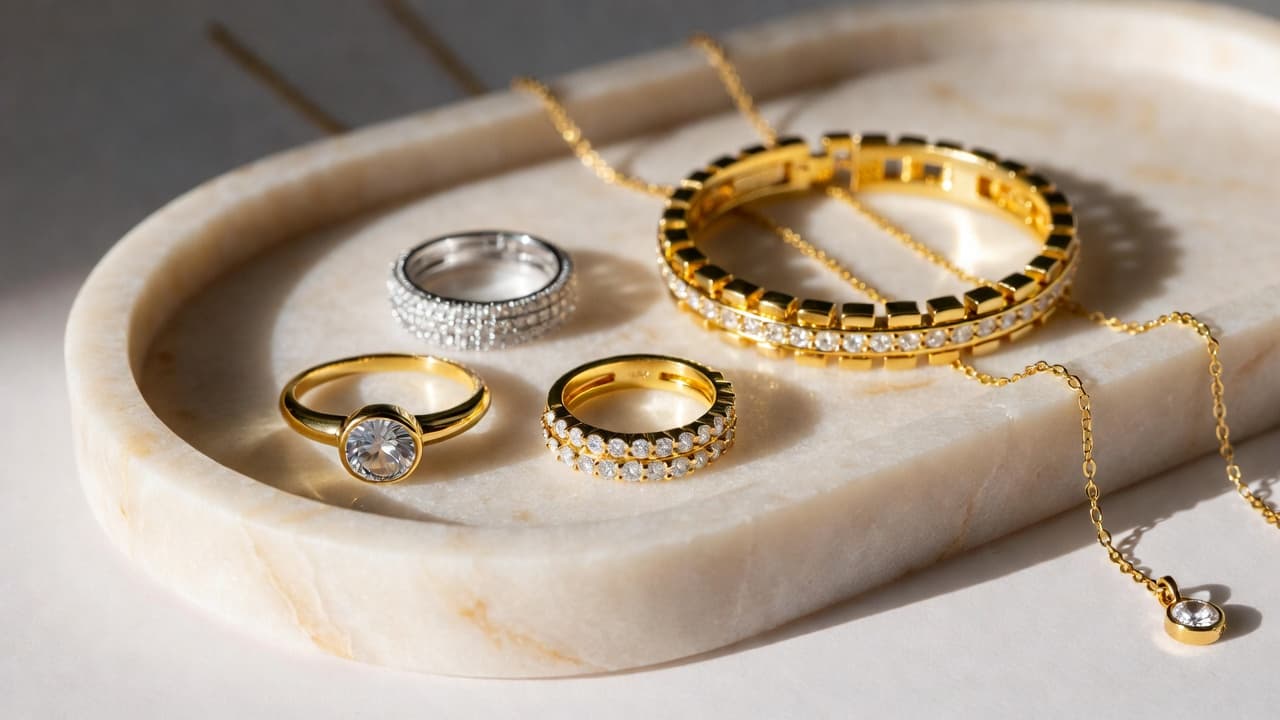
Best Time to Buy Jewelry

2026 Buying Guide

Best Time to Buy Jewelry

Best in July20-35% off
Quick Answer

July is the best month to buy jewelry, when retailers discount 25-50% during the summer sales slump after wedding season ends and before the holiday rush begins. January post-holiday clearance is a close second, with 30-60% off at both brick-and-mortar and online jewelers. Avoid buying in February and December when markups are at their highest.

Best MonthJuly
Top Savings20-35% off

Jewelry pricing is driven by two powerful forces: manufactured urgency and seasonal demand. In February (Valentine's Day) and December (holidays and proposals), jewelers mark up prices by 10-20% above their already-high margins because demand surges and buyers are emotionally motivated. The smartest time to buy is during the opposite end of the cycle -- when jewelers are desperate for traffic.

The rise of online diamond retailers like Blue Nile and James Allen has fundamentally changed how to shop for fine jewelry. These companies operate with 20-40% lower overhead than traditional jewelers, passing savings to buyers year-round. Combining off-season timing with online shopping can save 30-60% compared to buying at a mall jeweler in December.

Month-by-Month Price Calendar

When prices are lowest throughout the year

Jan
Great
30-60%Post-holiday clearance delivers deep discounts on unsold holiday inventory across all jewelry categories
Feb
--
0%Valentine's Day drives the highest markups of the year; avoid buying jewelry this month entirely
Mar
Wait
5-15%Post-Valentine's markdowns on some fashion jewelry; fine jewelry returns to standard pricing
Apr
Wait
5-10%Quiet month for jewelry deals; some pre-Mother's Day promotions begin late in the month
May
Great
20-35%Post-Mother's Day clearance and Memorial Day sales create good buying opportunities
Jun
OK
15-25%Wedding season winding down; some retailers begin summer clearance events
Jul
Best
25-50%Best month to buy jewelry; summer demand slump forces genuine deep discounts across the boardBest
Aug
OK
15-25%Summer clearance continues but selection narrows; still better than peak-season pricing
Sep
OK
15-20%Labor Day sales and end-of-summer clearance at department stores; solid for fashion jewelry
Oct
Wait
5-10%Pre-holiday inventory buildup begins; few promotions as retailers prepare for peak season
Nov
Great
20-40%Black Friday and Cyber Monday deliver the best online deals before holiday markups begin
Dec
--
0%Holiday and engagement season with peak demand; prices are at or above full retail
Best Great OK Wait

Best Months to Buy Jewelry

July: Summer Sales Slump (25-50% off) -- July is the single best month to buy jewelry. Wedding season winds down, Valentine's Day and Mother's Day are months away, and the holiday season has not yet ramped up. Foot traffic in jewelry stores drops dramatically, and retailers respond with steep discounts to meet quarterly sales targets. Blue Nile and James Allen run summer sales with 20-30% off settings and select diamonds. Department stores like Macy's and Nordstrom discount fashion jewelry by 40-50%. Even independent jewelers are open to negotiation in July because their cases need to turn over before fall restocking. Amazon Prime Day in July also brings deals on gold, silver, and gemstone jewelry.

January: Post-Holiday Clearance (30-60% off) -- New Year's Sales and Winter Clearance events make January the second-best month. Retailers aggressively clear holiday inventory that did not sell. Pieces that were full price in December are suddenly 30-60% off. This is particularly strong for fashion jewelry, colored gemstones, and designer pieces. Fine jewelry (diamonds, gold) sees smaller but still meaningful markdowns of 15-25%. Online retailers run their lowest prices on engagement ring settings.

November: Black Friday Online (20-40% off) -- Black Friday and Cyber Monday have become major jewelry buying events, especially online. Blue Nile typically offers 25-30% off settings plus reduced diamond prices. James Allen runs similar promotions with 25% off settings. Brilliant Earth discounts select styles by 15-20%. A strategic window if you are planning a December or Valentine's Day proposal and want to avoid the seasonal markup.

When NOT to Buy Jewelry

February: Valentine's Day creates the highest jewelry markup of the year. Retailers know buyers are emotionally committed and time-pressured. Prices on identical pieces run 10-20% higher than off-season, and "sale" prices are often higher than true off-season retail. If you must buy for Valentine's Day, purchase in November or January and hold it.

December: Holiday and engagement season drives the second-highest markup. The ring that costs $3,000 in July may be $3,500+ in December. Popular styles sell out and buyers settle for more expensive alternatives. Buy in November (Black Friday) if you need a December gift.

Secondary Buying Windows

  • May (Memorial Day): Post-Mother's Day clearance begins; fashion jewelry and colored gemstone pieces see 20-35% discounts as spring inventory clears
  • September (Labor Day): End-of-summer clearance at department stores; good for fashion jewelry and watches
  • After Christmas (After Christmas Sales): Clearance begins December 26 and deepens through January; early shoppers get the best selection

What to Buy When

Lab-Grown vs. Natural Diamonds

Lab-grown diamonds are chemically, physically, and optically identical to natural diamonds but cost 60-80% less. A 1-carat lab-grown diamond grading VS1/F runs $800-$1,200 compared to $4,000-$6,000 for a natural equivalent. Brilliant Earth, James Allen, and Blue Nile all offer extensive lab-grown selections. The trade-off: lab-grown diamonds have minimal resale value and prices continue dropping as production scales up, while natural diamond prices hold more steady.

Online Diamond Buying

Online jewelers operate at dramatically lower margins than brick-and-mortar stores. Blue Nile pioneered the model and offers competitive pricing on loose diamonds with a strong setting selection. James Allen differentiates with 360-degree HD video of every diamond, making remote evaluation easier. Brilliant Earth focuses on ethically sourced and lab-grown options. All three offer 30-day return policies and come with independent grading reports (GIA or IGI). Costco is a sleeper pick -- their markup on 1-carat+ diamond rings is remarkably low (typically 15-20% above wholesale versus 50-100%+ at traditional jewelers), and their return policy is among the most generous in retail.

Where to Buy by Jewelry Type

Budget / Everyday Pieces

  • Mejuri: Modern minimalist designs at fair prices year-round; best for everyday gold and silver jewelry
  • Amazon: Wide selection of gold, silver, and gemstone jewelry; Prime Day discounts are strong
  • Department store clearance: Macy's and Nordstrom in January and July for brand-name fashion pieces at 40-60% off

Mid-Range / Engagement Rings

  • Blue Nile and James Allen: The go-to for new engagement rings and fine jewelry; 20-40% below traditional retail year-round
  • Costco: Remarkably low markup on diamond rings and Italian gold chains (pricing tracks close to melt value)

Premium / Estate Pieces

  • Estate sales and consignment shops: 40-60% below retail on vintage and pre-owned fine jewelry
  • Independent jewelers: Best value on colored gemstones; more room for negotiation, especially in July
  • Leibish & Co.: Specialist for fancy colored diamonds
Key Sales Events for Fashion & Luxury

Full calendar

Buying Tips

  • Never buy jewelry at full price in February or December; purchase during off-peak months and hold the gift until the occasion
  • Always request a GIA or IGI grading report for diamonds over 0.5 carats; reports from other labs tend to overgrade by 1-2 clarity or color grades
  • For engagement rings, focus your budget on cut quality above all else; a well-cut diamond with lower color and clarity will look more brilliant than a poorly cut diamond with higher grades
  • Compare online retailer prices (Blue Nile, James Allen) against any in-store quote; the online price establishes a fair market baseline and gives you negotiating leverage
  • Consider lab-grown diamonds if size matters more than resale value; you can get a 2-carat lab-grown for the price of a 1-carat natural diamond
  • Estate sales, consignment shops, and platforms like Worthy.com offer pre-owned fine jewelry at 40-60% below retail with independent appraisals
  • For gold chains and simple gold jewelry, Costco's pricing is often only 15-20% above melt value, compared to 50-100%+ at traditional jewelers

Related Buying Guides

Frequently Asked Questions

July falls in a demand valley between wedding season (spring) and the holiday rush (November-December). Jewelers see their lowest foot traffic and need to move inventory to hit quarterly targets. This creates genuine discounting of 25-50%, unlike the inflated "sales" during high-demand months like February and December.
Yes, established online retailers like Blue Nile, James Allen, and Brilliant Earth are trustworthy. They offer GIA or IGI certified diamonds, 30-day return policies, and competitive pricing (20-40% below traditional retail). James Allen provides 360-degree HD video of every stone. Always verify the independent grading report number against the GIA or IGI database.
The "two months salary" rule was invented by De Beers marketing in the 1980s and has no practical basis. Spend what you can comfortably afford without going into debt. The average engagement ring purchase in the US is $5,000-$6,000, but beautiful rings exist at every price point. A well-chosen 0.8-carat diamond in a simple setting from an online retailer can cost $2,000-$3,000.
Lab-grown diamonds offer excellent value if you prioritize size and appearance over resale value. They cost 60-80% less than natural diamonds and are optically identical. The main downside is poor resale value, and prices continue dropping as production increases. For engagement rings where emotional value matters most, many buyers find the savings compelling.
Costco is an excellent choice for diamond jewelry, particularly rings over 1 carat. Their markup is typically 15-20% above wholesale, compared to 50-100%+ at traditional jewelers. Diamonds come with GIA reports, and Costco's return policy is extremely generous. Selection is limited compared to online specialists, but the value-to-quality ratio is hard to beat.
Compare the "sale" price against online retailers like Blue Nile or James Allen for diamonds, or check gold prices against spot price for gold jewelry. Genuine sales are most common in January, May, July, and November. Be skeptical of February and December "sales" -- many retailers inflate pre-sale prices to create the illusion of a discount during peak demand periods.

Never miss the best price

Get deal alerts timed to when fashion & luxury prices actually drop lowest.

Get Deal Alerts
Last updated: March 2026All Buying Guides