Beyond KitchenAid: Stand Mixers That Deserve Your Counter
KitchenAid dominates with 80% market share. But 20+ confusing models and overlooked alternatives make this harder than it should be.
KitchenAid dominates the stand mixer market with over 80% market share, and for good reason -- they make excellent machines that last 15-25 years. But KitchenAid also sells more than 20 models with confusing names (Classic, Classic Plus, Artisan, Artisan Mini, Professional 5 Plus, Pro 600, Pro Line) and the differences between a $250 Classic and a $450 Professional are not obvious. Outside KitchenAid, Cuisinart, Hamilton Beach, and Ankarsrum offer alternatives that are better values at certain price points and better machines for certain tasks.
We evaluated every major stand mixer on the market and selected 8 models that cover every realistic baking scenario -- from the occasional cookie baker to the weekly bread enthusiast to the professional-grade home kitchen. Each pick was chosen because it outperforms its alternatives at its price point, not because it pays the highest commission. We cross-referenced expert testing from America's Test Kitchen, Wirecutter, and Bon Appetit with thousands of long-term buyer reviews to find models with proven reliability, not just impressive specs.
Not sure if you actually need a stand mixer? Start with our Stand Mixer vs Hand Mixer vs Food Processor comparison -- the answer might surprise you. Want to understand what a stand mixer really costs over its lifetime, including attachments? See The Real Cost of a Stand Mixer. And before you finalize, read the 5 buying mistakes that waste hundreds -- including the $100 KitchenAid upsell trap that catches most buyers.
How We Picked These
We cross-referenced testing results from America''s Test Kitchen, Wirecutter, Consumer Reports, King Arthur Baking, and Serious Eats. Stand mixer testing is unusually demanding -- each outlet mixes bread dough, whips cream, kneads pizza dough, and makes meringue to stress-test the motor, planetary gearing, and bowl clearance across different viscosities. We also analyzed thousands of verified buyer reviews on Amazon, Williams Sonoma, and King Arthur''s own store, with particular attention to reviews from bakers who use their mixers multiple times per week and can speak to 2+ year durability.
Our selection criteria:
- 4.5+ star rating across major retailers with at least 500 verified reviews. Stand mixers are expensive enough that buyers research carefully before purchasing -- maintaining 4.5+ stars with a self-selected, informed buyer base indicates genuine quality.
- 5+ year production run for all primary picks. Stand mixers should last 10-20 years with proper use. Models need a multi-year track record to prove motor longevity, gear durability, and consistent manufacturing quality. The KitchenAid Artisan has been in continuous production since 1937 (with refinements). That is a track record.
- Available replacement parts and attachments. Beaters, dough hooks, wire whips, bowl-lift mechanisms, and motor couplers must be purchasable. KitchenAid''s attachment ecosystem is unmatched -- over 15 powered attachments from pasta rollers to grain mills. Cuisinart and Hamilton Beach offer basic replacement parts but limited powered attachments.
- Motor and gear durability under load. Bread dough and double batches of cookies put massive strain on mixer motors. We prioritized models with documented success kneading stiff bread dough for 8-10 minutes without overheating, stalling, or "walking" across the counter from vibration.
Each pick fills a distinct role. No filler, no overlap -- every model earned its spot for a specific baker, budget, and baking ambition.
Quick Reference: All 8 Picks at a Glance
| Category | Our Pick | Best For |
|---|---|---|
| Best Overall | KitchenAid Artisan (KSM150) | The standard for home baking -- 5-qt, 10 speeds, 60+ colors, unmatched attachment ecosystem |
| Best for Bread | KitchenAid Pro 600 (KP26M1X) | Bowl-lift design, 590W motor, 6-qt bowl -- built for heavy dough |
| Best Alternative | Cuisinart SM-50 | 80% of KitchenAid performance for 40% less money -- the value pick |
| Best Budget | Hamilton Beach Eclectrics (63232) | Solid 400W motor at under $100 -- best entry point for casual bakers |
| Best Compact | KitchenAid Artisan Mini (KSM3311) | 3.5-qt bowl, 20% smaller footprint, full attachment compatibility |
| Best Largest | KitchenAid 7-Quart Pro (KSM7990) | 1.3 HP motor, 7-qt bowl, handles triple batches and commercial-scale dough |
| Best for Beginners | Hamilton Beach Professional (63246) | 5.5-qt bowl, 450W, splash guard -- everything a new baker needs at a low price |
| Best Premium | Ankarsrum Original (AKM 6230) | Swedish engineering, 7-qt, 600W -- the alternative for bakers who want the best |
What to Look For
Tilt-Head vs Bowl-Lift: The Fundamental Design Split
Every stand mixer uses one of two designs, and the choice affects daily usability, dough capacity, and motor power:
Tilt-head mixers (KitchenAid Artisan, Cuisinart SM-50, most models under $400) have a motor housing that tilts backward on a hinge, giving you full access to the bowl from above. Adding ingredients is easy -- tilt back, scrape the sides, tilt forward, resume mixing. The trade-off: the hinge limits how powerful the motor can be before the head bounces during heavy loads. When kneading stiff bread dough, a tilt-head mixer can "walk" across the counter from vibration if the dough is too dense.
Bowl-lift mixers (KitchenAid Pro 600, 7-Quart, Ankarsrum) lock the motor housing in a fixed position and raise the bowl into the beater using a lever mechanism. The fixed head eliminates bounce -- the motor can work harder without the head lifting off heavy dough. Bowl-lift models handle stiffer doughs (whole wheat bread, bagels, pizza) more effectively than tilt-heads. The trade-off: adding ingredients requires lowering the bowl, which is slightly less convenient than tilting the head back.
The rule of thumb: if you primarily bake cookies, cakes, and whip cream, a tilt-head is more convenient and handles those tasks perfectly. If you regularly knead bread dough, make double batches, or want the strongest motor available, a bowl-lift design is more capable under load.
Motor Wattage: What the Numbers Actually Mean
Stand mixer motors are rated in watts, and the numbers vary from 250W (budget) to 800W+ (commercial-grade). But wattage alone does not tell the whole story -- gear design, transmission efficiency, and bowl clearance all affect how effectively that power reaches the dough. A well-designed 325W mixer can outperform a poorly designed 500W mixer.
| Wattage Tier | Typical Power | Handles Well | Struggles With |
|---|---|---|---|
| Budget | 250-350W | Cake batter, whipping cream, cookie dough | Dense bread dough, double batches |
| Mid-Range | 325-500W | All baking tasks, light bread dough, standard batches | Very stiff whole wheat, triple batches |
| Professional | 500-800W | Everything including whole wheat bread, bagels, pizza dough | Nothing in a home kitchen context |
The KitchenAid Artisan runs at 325 watts. This sounds modest next to 500W+ competitors, but KitchenAid''s all-metal gear transmission converts power to torque more efficiently than the plastic gears in many higher-wattage competitors. The Artisan kneads standard bread dough (white, sourdough, challah) effectively despite the lower wattage number. It struggles only with very stiff whole wheat dough and extra-large batches -- tasks where the Pro 600''s 590W motor handles the load without strain.
Bowl Capacity: More Than You Think You Need
Stand mixer bowls are measured in quarts, and the usable capacity is about 60-70% of the listed number (you need room for ingredients to move during mixing). A 5-quart bowl realistically handles a single batch of most recipes. A 6-quart handles larger recipes and comfortable double batches of cookies. A 7-quart handles triple batches and commercial-scale bread dough.
- 3.5-quart (Mini): Single batches of standard recipes. Adequate for a solo baker who rarely doubles. Will not hold a double batch of chocolate chip cookies (the dough overflows).
- 5-quart (Artisan): The sweet spot. Handles single batches of everything and modest double batches of lighter recipes (whipped cream, meringue, cake batter). This is the size most cookbooks and recipe blogs assume.
- 6-quart (Pro 600): Comfortable double batches of almost any recipe. Enough capacity for 2 loaves of bread dough in one mix. The additional quart over the Artisan seems small but makes a meaningful difference for bakers who regularly scale up.
- 7-quart (Pro 7Qt): Triple batches, holiday baking marathons, and cooks who supply bake sales or small-scale cottage food operations. Overkill for most home bakers, but the extra capacity means you never have to split a batch.
Planetary Mixing Action
Planetary mixing means the beater spins on its own axis while simultaneously orbiting around the bowl -- the same motion a planet makes orbiting the sun while spinning on its axis. This creates a spiral mixing pattern that reaches every part of the bowl without requiring the user to stop and scrape the sides. Every quality stand mixer uses planetary mixing; it is the defining feature that separates stand mixers from hand mixers and food processors.
The quality of planetary mixing varies by brand. KitchenAid''s 67-point mixing action (the beater touches 67 distinct points inside the bowl per orbit) is the benchmark. Cuisinart''s planetary action covers slightly fewer points, meaning you may need to scrape the sides once during a long mix. Budget brands like Hamilton Beach cover fewer points still -- adequate for most recipes, but heavy batters can leave unmixed pockets near the bowl edges.
Attachment Hub: The Long Game
The powered attachment hub on the front of a stand mixer is the single feature that justifies buying a quality mixer over a cheap one. It transforms a mixer from a single-purpose tool into a kitchen workstation. KitchenAid''s attachment hub is universal across every model they have ever made -- an attachment from 1950 fits a mixer bought in 2026. This backward compatibility is extraordinary in the appliance world and means the attachment ecosystem is massive:
- Pasta roller and cutter set: Rolls fresh pasta sheets and cuts fettuccine, spaghetti, and linguine. Replaces a $100+ manual pasta machine.
- Food grinder: Grinds meat, makes sausage, processes vegetables. Replaces a standalone meat grinder.
- Grain mill: Mills whole grains into flour. Essential for serious bread bakers who want freshly milled flour.
- Spiralizer: Turns vegetables into noodles, ribbons, and slices. Replaces a standalone spiralizer.
- Ice cream maker: Freeze the bowl insert, attach, and churn ice cream or sorbet directly in the mixer.
Cuisinart offers 3-4 compatible attachments. Hamilton Beach offers none. The Ankarsrum has its own unique attachment system (not compatible with KitchenAid) with a roller and scraper that European bakers praise for bread dough.
If you see yourself expanding beyond basic mixing within the next 3-5 years, the attachment hub alone justifies choosing KitchenAid over cheaper alternatives. The cost of buying separate appliances for pasta, grinding, and spiralizing exceeds the KitchenAid premium quickly.
Weight: Stability vs Portability
Stand mixers are heavy by design -- the weight anchors the machine to the counter during high-speed mixing and heavy kneading. The KitchenAid Artisan weighs 26 pounds. The Pro 600 weighs 29 pounds. The 7-Quart weighs 33 pounds. These are not appliances you move casually.
If you plan to keep the mixer on the counter permanently (which most serious bakers do), weight is an advantage -- heavier mixers vibrate less and walk less during bread dough. If you plan to store the mixer in a cabinet between uses, a 26-pound lift from a low shelf multiple times per week becomes tiresome. Consider this before buying: where will the mixer live? If the answer is "on the counter," weight is irrelevant. If the answer is "in the pantry," a lighter model like the Cuisinart SM-50 (18.5 lbs) or the Hamilton Beach (15 lbs) is more practical.
Color and Resale Value
KitchenAid offers 60+ colors across the Artisan lineup. This is not trivial -- the mixer will sit on your counter for years, and the color becomes a fixture of your kitchen aesthetic. It also affects resale value. Classic colors (Empire Red, Onyx Black, Silver, White) maintain strong resale value on the secondary market because they appeal to the broadest audience. Limited edition and seasonal colors (Pistachio, Hibiscus, Blue Velvet) command premiums when discontinued but are harder to sell quickly because the buyer pool is smaller.
The practical advice: choose a color you love, not one you think will appreciate. You will look at this mixer every day for a decade. A color that brings you joy is worth more than a $30 resale premium on a color you tolerated.
Key Insight
KitchenAid dominates the stand mixer market for good reasons: unmatched attachment ecosystem, 87 years of proven design, 60+ color options, and parts availability that ensures a mixer bought today can be serviced in 2040. But the Cuisinart SM-50 delivers 80% of the KitchenAid experience for roughly 40% less money. If you do not need the powered attachment hub and do not plan to make pasta, grind meat, or mill grain, the Cuisinart is the smarter buy. Save the $150+ difference for ingredients.
The KitchenAid Lineup Explained
KitchenAid makes 8+ stand mixer models. The naming is confusing, and the differences between models are not always obvious. Here is every current model worth considering, what it adds, and who it serves.
KitchenAid Classic (K45SS)
The Classic is KitchenAid''s entry-level stand mixer: 4.5-quart bowl, 275W motor, tilt-head design. It costs roughly $250-$280 -- the cheapest path into the KitchenAid ecosystem.
The honest truth: The Classic exists to hit a price point. The 4.5-quart bowl is a half-quart smaller than the Artisan, which sounds minor but means recipes that fill a 5-quart bowl overflow the Classic. The 275W motor versus the Artisan''s 325W matters when kneading -- the Classic struggles with bread dough and stiff cookie batters that the Artisan handles without strain. For $50-$70 more, the Artisan gives you more capacity, more power, and more color options.
Best for: Budget buyers who specifically want KitchenAid attachment compatibility and will not knead bread dough. If you only make cakes, whip cream, and mix cookie batter, the Classic does those tasks adequately. But the Artisan''s modest premium makes the Classic hard to recommend to anyone willing to stretch their budget slightly.
KitchenAid Artisan (KSM150)
The Artisan is the best-selling stand mixer in the world, and it has held that position for decades. The 5-quart stainless steel bowl, 325W motor, 10-speed control, tilt-head design, and 59-point planetary mixing action are the benchmark against which every competitor is measured.
Genuine strengths:
- The largest color selection of any kitchen appliance: 60+ colors, plus limited edition seasonal releases. This is the mixer that matches any kitchen aesthetic.
- Full compatibility with every KitchenAid powered attachment ever made. The hub design has not changed since the original model. A pasta roller from 2005 works on a mixer from 2026.
- All-metal gear transmission that converts 325W to effective torque better than plastic-geared 500W competitors. The gears are the reason these mixers last 15-20 years -- metal does not strip under load the way plastic does.
- The most extensively reviewed and documented stand mixer in existence. Every recipe, technique, and troubleshooting question has been answered by the community thousands of times.
- Strong resale value. Used Artisans in good condition sell for 50-65% of retail on the secondary market. Few kitchen appliances hold value this well.
Honest downsides:
- The 325W motor can struggle with very stiff whole wheat bread dough, especially in double batches. The motor does not stall, but it slows noticeably and the head can bounce on the hinge. For regular bread baking, the Pro 600''s 590W motor is a meaningfully better tool.
- The price has crept upward: $330-$400 at retail depending on color, up from $300 five years ago. The Cuisinart SM-50 at $180-$200 makes the Artisan premium harder to justify for bakers who do not need the attachment ecosystem.
- At 26 pounds, moving it in and out of a cabinet is impractical. Plan to give it a permanent counter home.
Best for: The default recommendation for anyone who bakes at least once a week and wants a mixer that will last 10-20 years. The attachment ecosystem, the color range, and the proven durability make this the mixer most people should buy.
KitchenAid Artisan Mini (KSM3311)
The Mini is the Artisan shrunk by 20% -- a 3.5-quart bowl, 250W motor, and a footprint that saves roughly 3 inches of counter width. It uses the same tilt-head design, the same all-metal gears, and it is fully compatible with every KitchenAid powered attachment.
Genuine strengths:
- The smallest KitchenAid with full attachment compatibility. If you want pasta rollers and meat grinders but have limited counter space, this is the only option.
- At 18 pounds (vs 26 for the Artisan), it is the most portable KitchenAid. Storing in a cabinet between uses is feasible.
- The 3.5-quart bowl handles single batches of all standard recipes. For a baker who never doubles, the reduced capacity is not a limitation.
Honest downsides:
- The 250W motor is the weakest in the KitchenAid lineup. Bread dough is not recommended. Even stiff cookie batters (oatmeal raisin, peanut butter) can cause the motor to labor visibly.
- The 3.5-quart bowl cannot hold a double batch of most recipes. If you ever bake for more than two people, you will wish you had the 5-quart Artisan.
- The price is only $30-$50 less than the full Artisan. The modest savings do not justify the capacity and power reduction unless counter space is the primary constraint.
Best for: Small kitchens, apartments, and solo bakers who want KitchenAid quality and attachment compatibility in the smallest possible footprint. Not recommended for bread bakers or anyone who regularly bakes for groups.
KitchenAid Professional 600 (KP26M1X)
The Pro 600 is where KitchenAid gets serious. Bowl-lift design, 590W motor, 6-quart stainless steel bowl. This is the mixer that bread bakers, holiday marathon bakers, and semi-professional home cooks graduate to.
Genuine strengths:
- The 590W motor handles every dough you can throw at it: whole wheat bread, bagels, pizza dough, stiff sourdough. The bowl-lift design keeps the head locked and stable even under maximum load. No bouncing, no walking across the counter.
- The 6-quart bowl comfortably holds double batches of cookies, two loaves of bread dough, or a triple batch of frosting. The additional quart over the Artisan makes a meaningful difference for scaling recipes up.
- The direct-drive, all-metal gear transmission is built to handle the 590W motor''s output for decades. This is the mixer bakeries buy (many commercial kitchens use the Pro 600 alongside their $3,000 Hobart floor mixers for smaller tasks).
- Full KitchenAid attachment compatibility. The powered hub is identical to the Artisan''s.
Honest downsides:
- Bowl-lift access is slightly less convenient than tilt-head for adding ingredients mid-mix. You must lower the bowl lever, which requires two hands when the bowl is full.
- At 29 pounds and a wider footprint than the Artisan, this mixer demands permanent counter placement. Moving it into a cabinet is unrealistic for regular use.
- Fewer color options than the Artisan lineup: typically 6-8 colors versus 60+. Color selection is more limited because the Pro 600 sells in lower volume.
- The retail price of $400-$500 is a significant step up from the Artisan''s $330-$400. The premium is justified only if you regularly knead bread dough or bake in large batches.
Best for: Bread bakers, frequent bakers who double or triple recipes, and anyone whose baking regularly exceeds what a 325W tilt-head motor can handle comfortably.
KitchenAid 7-Quart Pro (KSM7990)
The largest consumer KitchenAid. 1.3 HP (roughly 970W) DC motor, 7-quart bowl, bowl-lift design built for the maximum demands a home kitchen can produce. This is the mixer for cottage food businesses, bakers who supply farmers markets, or households that regularly bake at scale for large families and gatherings.
Genuine strengths:
- The DC motor is a different technology than the AC motors in every other KitchenAid. DC motors deliver consistent torque at all speeds -- even speed 1 (stir) provides enough power to incorporate stiff dough. AC motors lose torque at low speeds, which is why the Artisan can stall on speed 1 with heavy loads.
- 7-quart capacity handles triple batches, massive bread dough, and commercial-scale recipes without splitting into multiple mixes.
- The softest start of any KitchenAid model. The DC motor ramps up gradually, eliminating the flour cloud that happens when an AC motor lurches to full power on startup.
Honest downsides:
- At $650-$800 retail, this is a commercial investment. It is difficult to justify for bakers who are not producing at scale.
- 33 pounds. This mixer does not move once placed.
- The 7-quart bowl is too large for small batches -- whipping 2 egg whites or making a single batch of frosting does not work well because the ingredients do not reach the beater in an oversized bowl. You will need a smaller bowl (sold separately) for everyday tasks.
Best for: Semi-professional bakers, cottage food businesses, and households that bake at scale. If your baking never exceeds what the Pro 600 handles, the 7-Quart adds cost and bulk without proportional benefit.
The KitchenAid Artisan has been in continuous production since 1937.
Every powered attachment ever made still fits current models. The all-metal gear transmission lasts 15-20 years with normal use. Parts are available for mixers decades old. No other kitchen appliance manufacturer offers this level of backward compatibility and longevity.
The Alternatives Worth Considering
Cuisinart SM-50: The 80% Solution
The Cuisinart SM-50 is a 5.5-quart, 500W stand mixer with a tilt-head design and three included attachments (flat beater, dough hook, wire whip). At $180-$220, it costs roughly 40% less than the KitchenAid Artisan while delivering 80% of the performance. The 500W motor actually exceeds the Artisan''s 325W on paper, though KitchenAid''s all-metal gear transmission converts lower wattage to effective torque more efficiently.
The honest comparison: the Cuisinart kneads bread dough adequately (not as smoothly as the KitchenAid), whips cream identically, mixes cookie batter identically, and makes cake batter identically. For the core baking tasks that 90% of home bakers perform, the Cuisinart is indistinguishable from the KitchenAid in results. The differences emerge in attachment compatibility (Cuisinart offers 3-4 attachments vs KitchenAid''s 15+), build longevity (Cuisinart''s nylon gears may wear faster than KitchenAid''s metal gears over 10+ years), and the intangible quality of the machine''s feel during use.
If you do not plan to buy pasta rollers, meat grinders, or grain mills -- and you are honest that you probably will not -- the Cuisinart saves $150+ that you can spend on better ingredients, bakeware, or a stand mixer-compatible kitchen scale.
Ankarsrum Original: The European Alternative
The Ankarsrum is a 600W, 7-quart Swedish mixer that uses a fundamentally different design: a rotating bowl with a stationary roller and scraper. Instead of a beater spinning inside a fixed bowl (planetary action), the bowl rotates while a roller pushes the dough and a scraper pushes it back. This mimics hand-kneading more closely than any planetary mixer and produces exceptional bread dough -- open crumb, well-developed gluten, minimal heat buildup during kneading.
The Ankarsrum is the best bread-kneading stand mixer available at any price. It is also $650-$750, roughly double the Artisan, and its attachment ecosystem is entirely proprietary (incompatible with KitchenAid or Cuisinart accessories). For dedicated bread bakers who bake 3+ loaves per week and prioritize dough quality above all else, the Ankarsrum is worth the premium. For general-purpose baking, the KitchenAid Artisan or Pro 600 is more versatile.
How to Get the Best Price
KitchenAid stand mixers follow a predictable discount cycle driven by two annual events: Black Friday and Prime Day. The Artisan typically drops from $330-$380 to $250-$280 during Black Friday week -- a savings of $80-$100. Select colors drop even lower as seasonal editions are cleared out. The Pro 600 drops from $450-$500 to $350-$380. These are the two best windows of the year for stand mixer purchases.
Beyond sales events, KitchenAid''s refurbished program sells factory-reconditioned Artisans for $200-$250 year-round with a full manufacturer warranty. These are returned units that KitchenAid inspects, replaces worn parts, and repackages. The savings versus new are significant, and the warranty means the risk is minimal. Check KitchenAid''s official refurbished store or Amazon Renewed for availability.
For the complete month-by-month pricing calendar, see our Best Time to Buy a Stand Mixer guide.
What We Recommend
Based on our research, these are our top picks. Prices change frequently -- click through to see the latest.
- 1.KitchenAid Artisan Series 5-Quart Stand Mixer (KSM150PS) -- Best for home bakers who want the most versatile, well-supported stand mixer with the largest attachment ecosystem
- 2.KitchenAid Professional 600 Series 6-Quart (KP26M1X) -- Best for bakers who make bread weekly and need a motor that handles stiff doughs without strain
- 3.Cuisinart Precision Master 5.5-Quart (SM-50) -- Best for bakers who want strong performance at half the KitchenAid price and do not need the attachment ecosystem
- 4.Hamilton Beach 7-Speed Stand Mixer 4-Quart (63391) -- Best for occasional bakers on a budget who want planetary mixing without the KitchenAid price
- 5.KitchenAid Artisan Mini 3.5-Quart (KSM3311X) -- Best for small kitchens or apartments where counter space is limited but KitchenAid quality is desired
- 6.KitchenAid 7-Quart Bowl-Lift Stand Mixer (KSM70SKXX) -- Best for large families, holiday bakers, and anyone who regularly makes double or triple batches
- 7.Hamilton Beach Professional All-Metal 5-Quart (63240) -- Best for beginners investing in baking who want proven performance without the KitchenAid price
- 8.Ankarsrum Original Stand Mixer (AKM 6230) -- Best for dedicated bread bakers and sourdough enthusiasts who want the ultimate kneading machine

KitchenAid Artisan Series 5-Quart Stand Mixer (KSM150PS)
The gold standard. 325W motor, 10 speeds, 59-point planetary mixing action. Handles cookie dough, cake batter, and occasional bread. 20+ color options. Compatible with 10+ hub-powered attachments. Every major review site names it best overall.
Pros
- The standard by which all stand mixers are judged
- 59-point planetary mixing for thorough coverage
- 20+ color options to match any kitchen
- 10+ hub-powered attachments available
- 24,800+ reviews with 4.7 stars
Cons
- 325W motor struggles with very stiff bread dough
- Tilt-head can wobble at high speeds with heavy loads
- Premium price (wait for Black Friday)
- Heavy -- 22 lbs is hard to move frequently

KitchenAid Professional 600 Series 6-Quart (KP26M1X)
575W motor with bowl-lift design -- nearly double the power of the Artisan. Handles stiff whole-wheat and rye doughs without strain. PowerKnead Spiral Dough Hook included. Recommended by King Arthur Baking and America's Test Kitchen for bread.
Pros
- 575W motor handles any bread dough
- Bowl-lift design is more stable than tilt-head
- 6-quart capacity for large batches
- PowerKnead Spiral Dough Hook included
- Recommended by King Arthur and ATK for bread
Cons
- Bowl-lift is less convenient to access than tilt-head
- Fewer color options than Artisan
- Heavier and larger footprint
- Overkill for occasional bakers
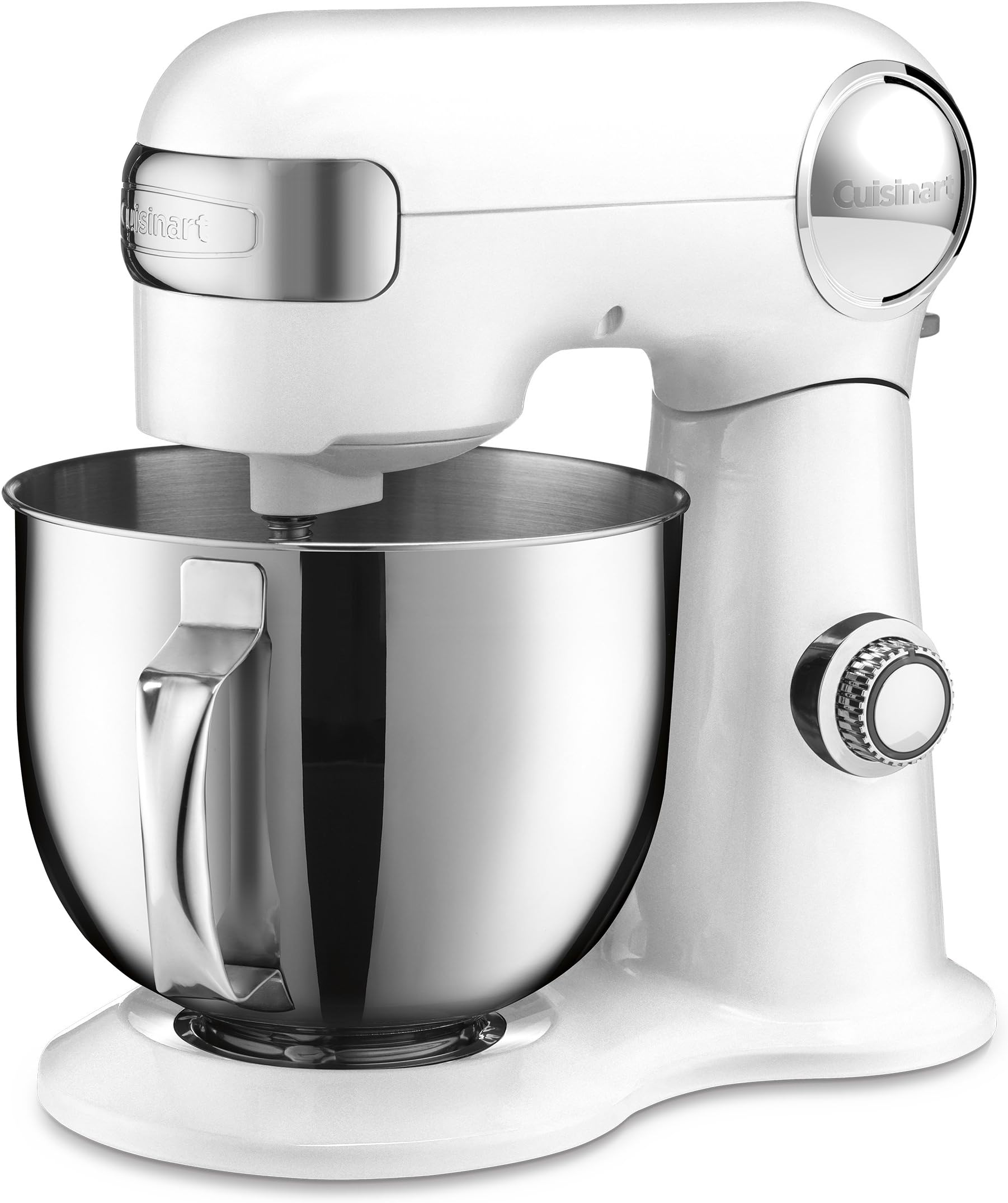
Cuisinart Precision Master 5.5-Quart (SM-50)
500W motor (more powerful than KitchenAid Artisan), 12 speeds, 5.5-quart bowl, die-cast metal construction -- at roughly half the KitchenAid price. The most credible KitchenAid alternative.
Pros
- 500W motor -- more powerful than KitchenAid Artisan
- 12 speeds vs KitchenAid's 10
- Half the price of a KitchenAid Artisan
- Die-cast metal construction
- Quiet operation
Cons
- Smaller attachment ecosystem than KitchenAid
- Lower resale value
- Can vibrate at high speeds due to lighter weight
- Fewer color options

Hamilton Beach 7-Speed Stand Mixer 4-Quart (63391)
Reviewed's "Best Value" pick. 300W motor, 7 speeds, planetary mixing action, 4-quart bowl. Created the loftiest egg whites in the fastest time in testing. A fraction of KitchenAid price with surprisingly competitive performance.
Pros
- Under $80 -- a fraction of KitchenAid price
- Planetary mixing action at this price point
- Created loftiest egg whites in testing (Reviewed)
- Lightweight and compact
- Top handle for easy lifting and storage
Cons
- 4-quart bowl limits batch size
- 300W motor struggles with stiff dough
- Head bobbles when kneading heavy mixtures
- Not as durable as premium brands
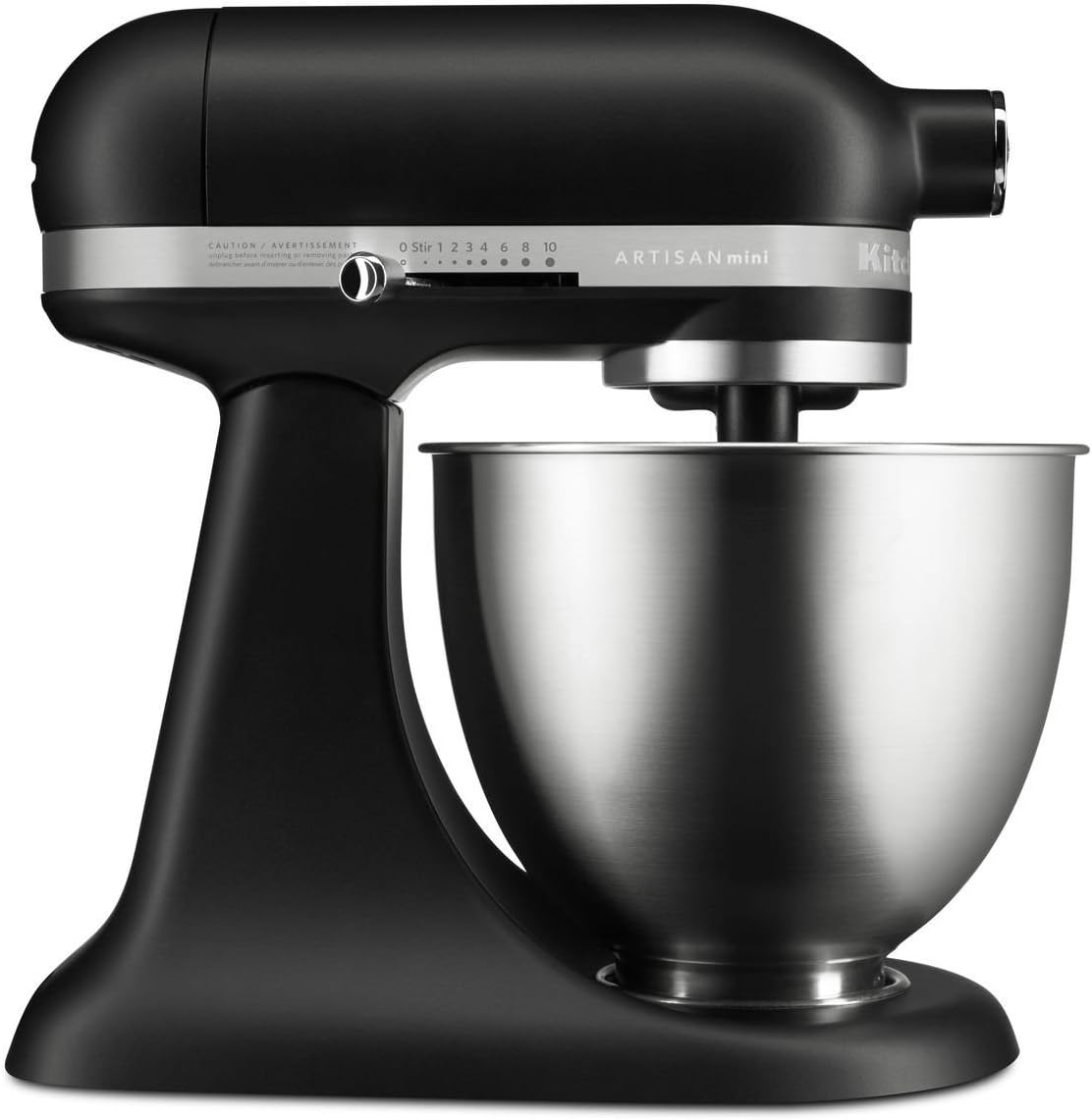
KitchenAid Artisan Mini 3.5-Quart (KSM3311X)
25% smaller footprint and 20% lighter than the full Artisan. Same KitchenAid build quality and accepts all hub-powered attachments. Makes up to 5 dozen cookies per batch. Ideal for apartments and small kitchens.
Pros
- 25% smaller and 20% lighter than standard Artisan
- Accepts all KitchenAid hub attachments
- Same build quality as full-size models
- Multiple color options
- Performs nearly on par in recipe testing
Cons
- 3.5-quart bowl limits batch size
- 250W motor is less powerful
- Similar price to the full-size Artisan
- Fewer reviews than the standard model

KitchenAid 7-Quart Bowl-Lift Stand Mixer (KSM70SKXX)
The biggest KitchenAid for home bakers. 7-quart bowl handles 13 dozen cookies or 8.5 lbs of bread dough. Redesigned 500W motor, 11 speeds, Double Flex Edge Beater unique to this model.
Pros
- 7-quart capacity -- largest KitchenAid available
- 500W redesigned motor
- Unique Double Flex Edge Beater
- 3-point locking bowl-lift design
- Handles 13 dozen cookies per batch
Cons
- Large and heavy
- Premium price
- Newer model with fewer reviews
- Overkill for most home bakers
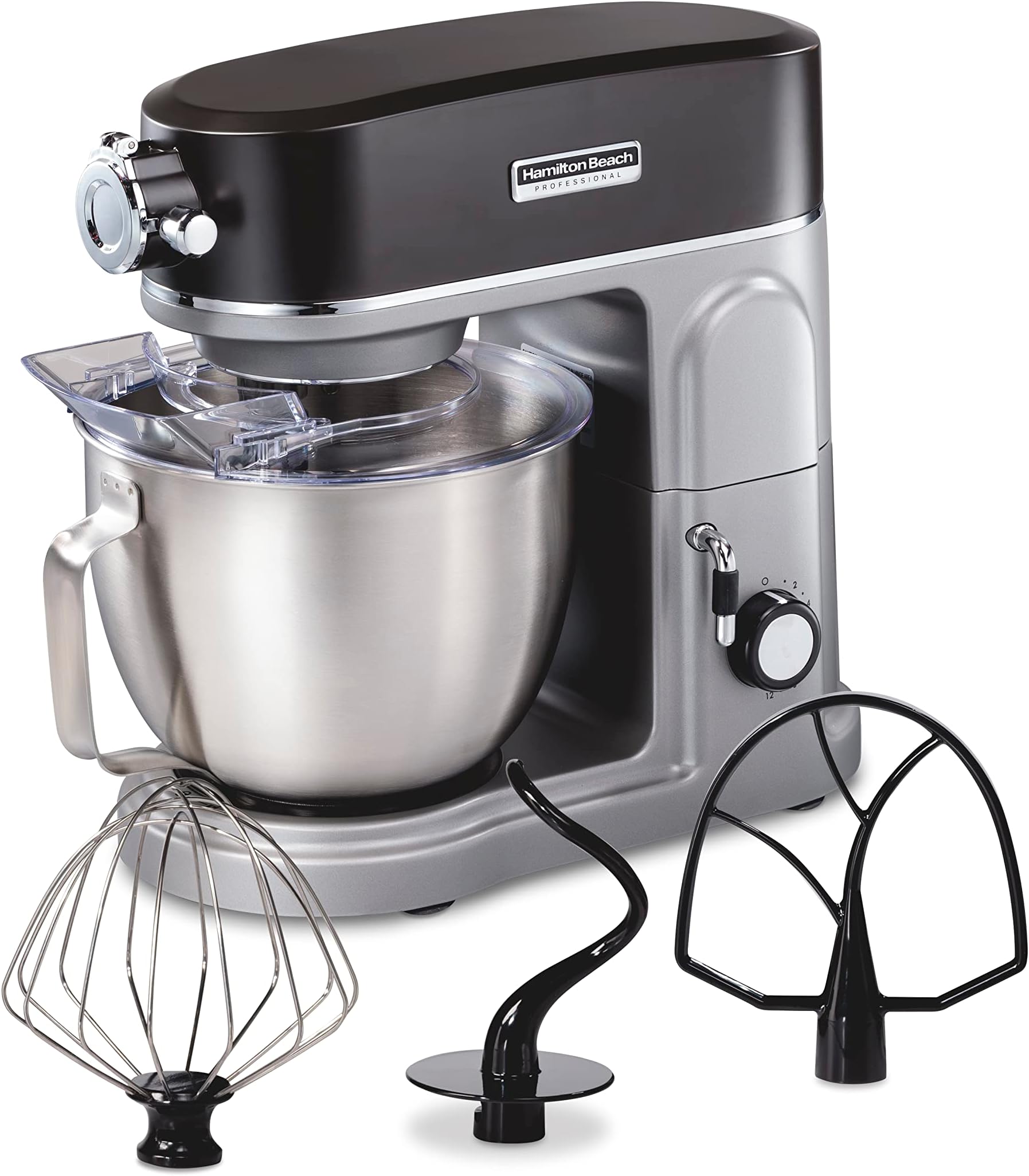
Hamilton Beach Professional All-Metal 5-Quart (63240)
Consumer Reports rates it equally good at whipping and kneading as top KitchenAid models. 450W motor, 12 speeds, all-metal construction, 5-quart bowl. Power hub accepts optional attachments. The sweet spot between budget and premium.
Pros
- Consumer Reports rates it on par with KitchenAid for mixing
- 450W motor with all-metal construction
- 12 speeds and planetary mixing
- Power hub accepts optional attachments
- Under $200 -- half the price of KitchenAid
Cons
- Smaller attachment ecosystem than KitchenAid
- Less brand cachet and resale value
- Not as many color options
- Build quality is good but not lifetime-grade

Ankarsrum Original Stand Mixer (AKM 6230)
America's Test Kitchen top pick for bread. Swedish-engineered with a unique bottom-mounted 600W motor that spins the 7.4-quart bowl against a fixed arm -- mimics hand-kneading. Handles 21 cups of flour. 7-year warranty. Worth every penny for dedicated bread bakers.
Pros
- America's Test Kitchen top pick for bread baking
- Unique dough roller mimics hand-kneading
- 600W bottom-mounted motor -- extremely stable
- 7.4-quart capacity handles 21 cups of flour
- 7-year warranty
- Most accessories included of any mixer
Cons
- Premium price
- Niche brand with limited retail availability
- Learning curve for the unique bowl-and-arm design
- No tilt-head -- different workflow than KitchenAid
Frequently Asked Questions
KitchenAid Artisan vs Professional: which should I buy?
Artisan (tilt-head, 5-quart, $350-400) for most home bakers. It handles standard recipes comfortably and is easier to access (lift the head, add ingredients). Professional (bowl-lift, 6-quart, $400-500) only if you regularly make large batches or stiff bread dough. The bowl-lift design is more stable under heavy loads but less convenient for everyday use.
Is a Cuisinart stand mixer as good as KitchenAid?
The Cuisinart SM-50 ($250) performs nearly as well as the KitchenAid Artisan ($350-400) for standard baking tasks: cookies, cakes, whipping cream. Where KitchenAid wins decisively is the attachment ecosystem (pasta roller, food grinder, ice cream maker) and 25+ year proven longevity. If you just want to mix and bake, Cuisinart saves $100-150. If you want a long-term kitchen investment with expandability, KitchenAid is worth the premium.
What is the difference between tilt-head and bowl-lift?
Tilt-head (KitchenAid Classic, Artisan): the head tilts back for bowl access. Easier to add ingredients and scrape the bowl. Limited to 5-quart bowls. Bowl-lift (KitchenAid Professional, 7-quart): the bowl raises and lowers via a lever. More stable for heavy doughs. Harder to access mid-mix. Choose tilt-head unless you regularly work with stiff bread dough or 6+ quart batches.
How long do KitchenAid stand mixers last?
15-25 years with normal home use. The most common repair is the worm gear (a $5 part designed to fail before the motor does), which may need replacing after 10-15 years of heavy use. KitchenAid mixers from the 1990s and even 1980s are still in active use. This longevity is the core justification for the premium price.
What color KitchenAid has the best resale value?
Empire Red, Pistachio, and Ice Blue consistently command the highest resale prices. Standard colors (white, black, silver) sell for less on the used market. Limited edition and discontinued colors (Hibiscus, Boysenberry) can actually appreciate in value. If you might sell it someday, avoid white and black.
What KitchenAid attachments are actually worth buying?
The pasta roller and cutter set ($120-150) is the most-used attachment among owners who buy it. The food grinder ($50-60) is excellent for grinding meat for burgers and sausage. The spiralizer ($80-100) is popular but most people use it a few times then stop. Skip the ice cream maker, juicer, and grain mill unless you have a specific, regular use case.
Can I buy a refurbished KitchenAid?
Yes. KitchenAid sells factory-refurbished mixers through their website and Amazon at 20-30% off retail with a 6-month warranty. These are returned units that were tested, repaired if needed, and repackaged. They are functionally identical to new. Costco also occasionally sells refurbished KitchenAid bundles at significant discounts.
Not sure where to start?
Follow the path that matches where you are in your decision. Each guide builds on the last.
You can start at any stage. Each article stands on its own, but reading in order gives you the full picture. Want to know when prices drop? See our Best Time to Buy a Stand Mixer pricing calendar.
Best Time to Buy a Stand Mixer
Continue Reading
The KitchenAid Tax: What a Stand Mixer Really Costs Over 20 Years
Machine, attachments, the worm gear repair at year 10, and the per-use math that decides if your investment pays off.
14 min readThe $100 KitchenAid Upsell Trap (and 4 Other Stand Mixer Errors)
Classic vs Artisan vs Professional -- the wrong model for your baking costs more than the price difference.
12 min readYou Might Not Need a Stand Mixer. Here Is How to Tell.
80% of buyers would be fine with a $35 hand mixer. The other 20% will use a KitchenAid for decades. Which group are you?
11 min readNever Miss the Best Price
Get buying guides and deal alerts timed to when prices actually drop lowest.
Get Monthly Deal Alerts