The Men's Shoe Shortlist: 8 Picks From Boot to Oxford
Eight men's shoes that cover every situation -- work, weekend, weather, and formal.
Note: This guide covers men's dress shoes and boots. See our Women's Sneaker Edit for women's picks, with women's dress shoe and boot guides on the way.
The best men's shoe wardrobe isn't the biggest -- it's the most useful. You need a small number of well-chosen pairs that cover the situations your life actually puts you in: work, weekend, weather, formal occasions, and travel. This guide picks 8 specific shoes across those scenarios, with a bias toward pieces that age well, last years, and can be resoled.
Our picks weight three things heavily: Goodyear-welt construction (so they can be resoled), quality leather (so they develop a patina instead of cracking), and versatility (so each pair earns its place). Prices move weekly, so we've left them out of the copy -- tap "Check Current Price" on any product to see the live number.
Still figuring out which categories matter? Start with the category guide. Want to understand cost-per-year math? See the real cost of quality shoes.
How we picked
Every shoe here earned its spot by doing one thing better than the alternatives in its category. We prioritized:
- Construction quality. Goodyear-welt where possible, with one exception (the Clarks desert boot, which uses cement construction but has 75 years of track record).
- Leather grade. Full-grain leather only. No corrected, bonded, or synthetic uppers.
- Cobbler network. Brands whose shoes can actually be resoled at a standard U.S. or European cobbler, not just the manufacturer.
- Long-term feedback. Reddit menswear subs, Stridewise long-term reviews, Stitchdown, and direct owner feedback over 3+ years.
- Value at the tier. The best shoe at each price point, not the "best" shoe overall.
Quick Match: Your Situation → Our Pick
| If you need... | Our pick | Why |
|---|---|---|
| A versatile everyday boot | Thursday Captain | Best value Goodyear-welt cap-toe |
| A heritage boot that gets better with age | Wolverine 1000 Mile Cap-Toe | Horween Chromexcel, original pattern from 1914 |
| A dressier slip-on boot | Thursday Cavalier Chelsea | Sleek silhouette, dresses up easily |
| Something for rain, snow, or muddy commutes | Blundstone 587 | Rustic black leather, all-weather, slip-on |
| A proper dress Oxford | Beckett Simonon Dean Oxford | Italian calfskin, closed-lace, mid-tier price |
| A low-maintenance weekend boot | Clarks Original Desert Boot | Beeswax leather, crepe sole, the classic |
| A premium travel loafer | Grant Stone Traveler Penny | Goodyear-welt loafer, Italian leather |
| A budget starter dress shoe | Clarks Tilden Cap Oxford | Under-budget Derby with Ortholite comfort |
The shortlist, explained
Product cards below have the full breakdown -- materials, pros, cons, best-for -- for each pick. A short note here on why each one made the cut.
Thursday Captain: best value everyday boot
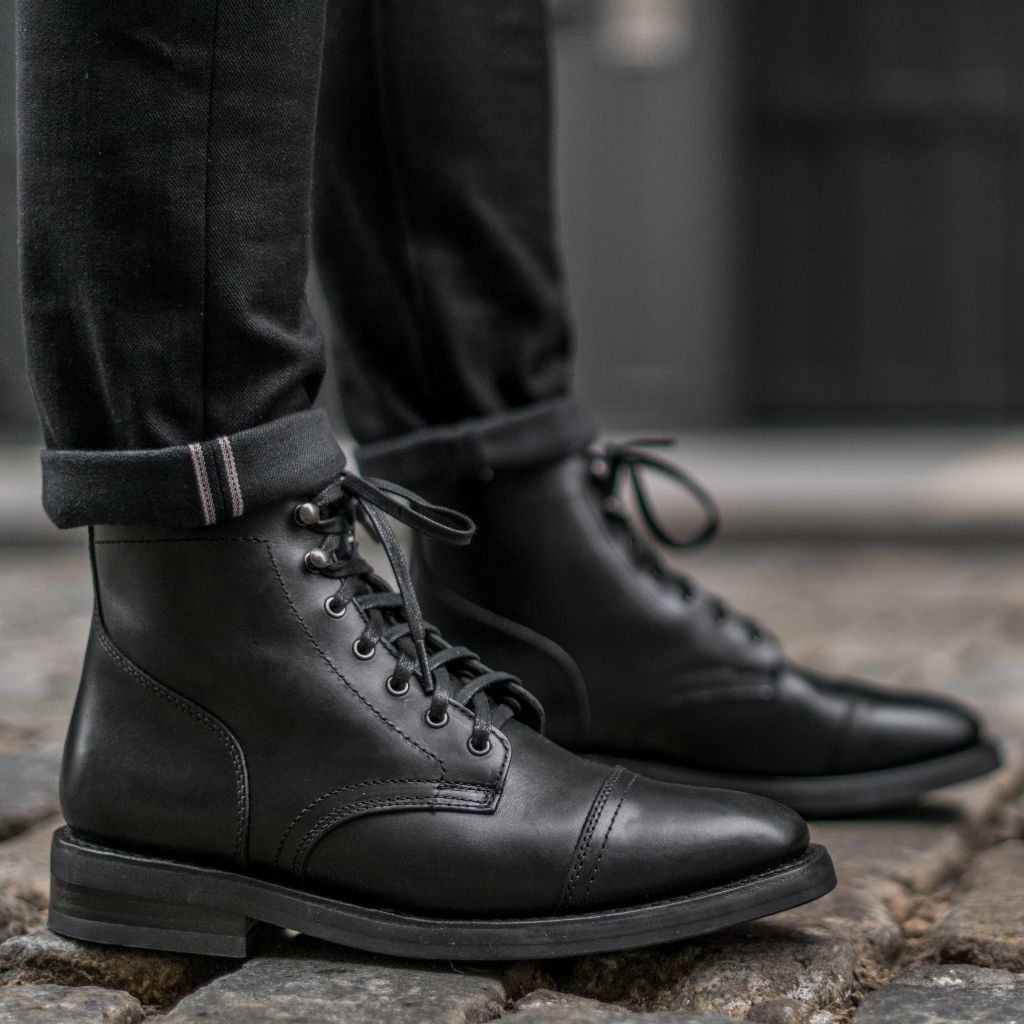
The Captain is the most recommended entry-level Goodyear-welt boot online, and the recommendation is earned. Full-grain leather from a U.S. tannery, Goodyear-welt construction, a cork-bed midsole that molds to your foot, and a silhouette that pairs equally well with jeans and chinos. Available in seven leather colors and finishes. If you only own one leather boot, this is the one we'd start with.
Wolverine 1000 Mile Cap-Toe: heritage pick
Wolverine has been making the 1000 Mile pattern since 1914, and the current cap-toe version uses Horween Chromexcel leather -- the same oiled, pull-up leather that develops the richest patina of any boot leather on the market. This boot starts looking better the moment you stop babying it and just wear it. A premium step up from the Thursday Captain that rewards the extra money with a boot that visibly improves over years.
Thursday Cavalier Chelsea: dressier slip-on
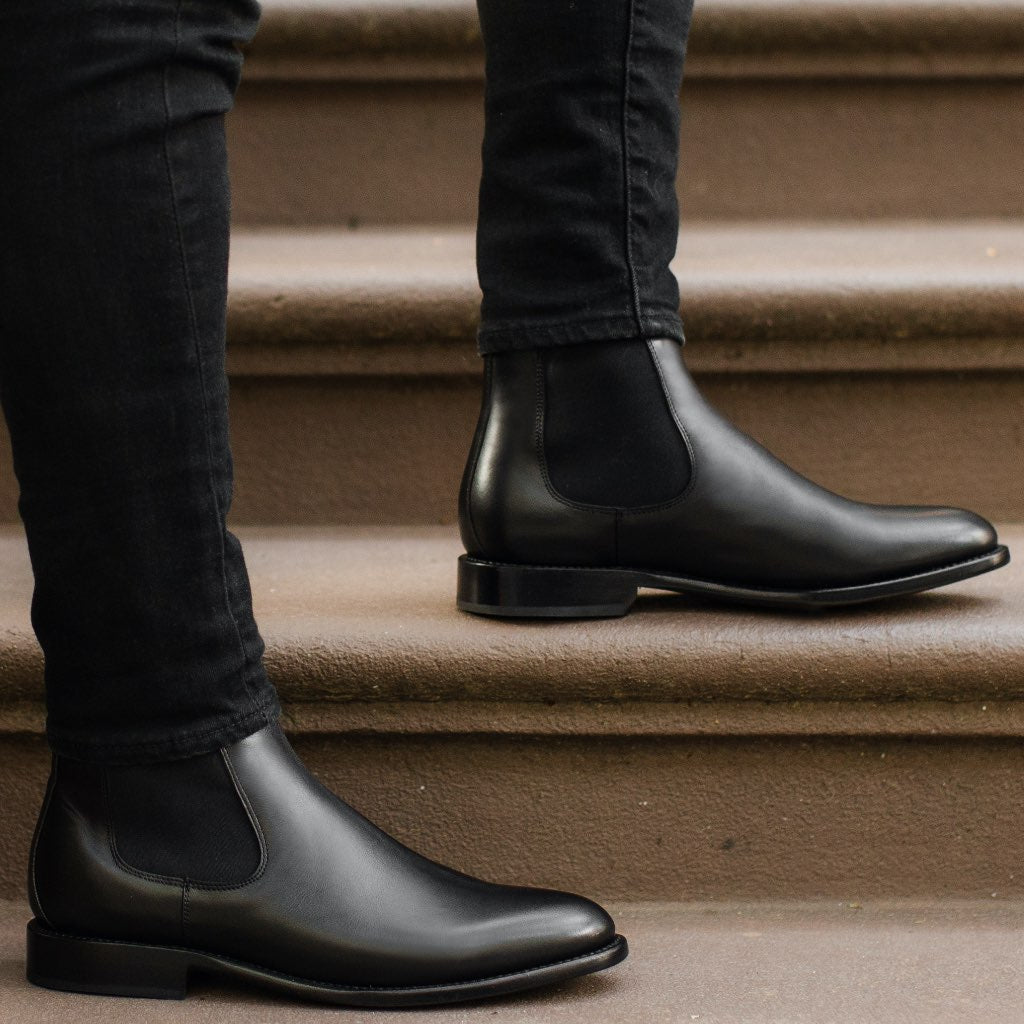
A Chelsea boot should feel effortless to put on and polished to wear. The Cavalier nails both. Goodyear-welt construction (rare at this price), full-grain leather upper, cork-bed midsole, and elastic side panels that actually stay elastic over years of use. Pair with dark jeans, chinos, or a suit -- it works across a surprising range.
Blundstone 587: the all-weather workhorse
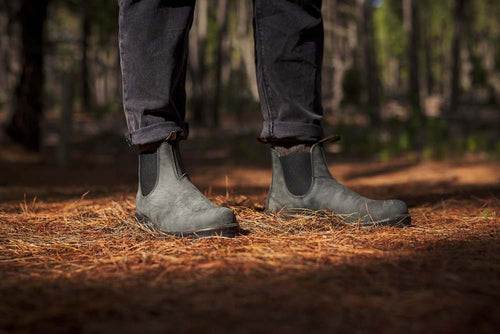
The 587 (rustic black) is the most recognizable slip-on boot in the world for a reason. Waterproof leather upper, an oil-resistant rubber outsole, removable footbed, and a slip-on design that means you're out the door in five seconds on a rainy morning. Not Goodyear-welted -- so not a boot you'll resole three times -- but the value is in how many years it handles sloppy commutes before it wears out. The go-to for a single all-weather boot.
Beckett Simonon Dean Oxford: mid-tier dress shoe
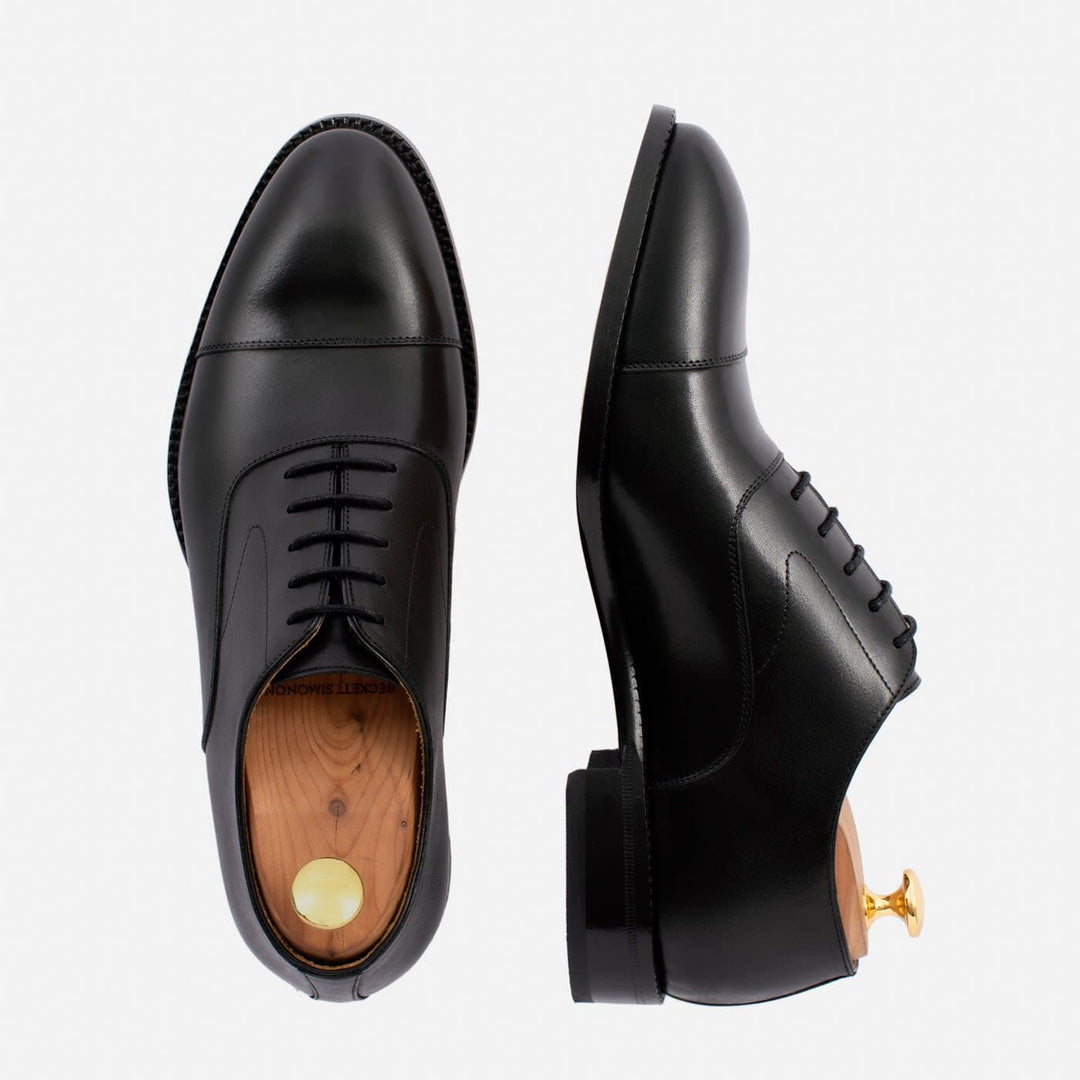
Beckett Simonon's direct-to-consumer model lets them deliver a Goodyear-welt Oxford in full-grain Italian calfskin at a price tier where most competitors are selling cemented shoes. The trade-off is a 10 to 12 week wait after ordering (they make to order). Closed-lace cap-toe Oxford in black is the most versatile formal shoe a man can own -- job interviews, weddings, funerals, formal offices -- and the Dean is the best value example we know of.
Clarks Original Desert Boot: the classic casual
Nathan Clark designed the Desert Boot in 1949 after seeing British officers' rough Cairo boots, and the shoe hasn't really needed updating since. Suede or beeswax leather upper, two eyelets, and a crepe rubber sole that's quiet on floors and easy on joints. Not Goodyear-welted, not waterproof, and not rugged -- but unmatched as a casual dress-down shoe that's also genuinely comfortable out of the box.
Grant Stone Traveler Penny Loafer: premium loafer pick
A well-made penny loafer is one of the most versatile shoes a man can own -- dressy enough for a business meeting, casual enough for Saturday errands. Grant Stone's Traveler uses Italian baby calfskin or Horween Chromexcel, Goodyear-welt construction, and their Alexander last (more room in the toe box than most loafers). The price is higher than the Thursday Lincoln or Cole Haan equivalents, but the construction and leather put it in a different league.
Clarks Tilden Cap Oxford: budget dress shoe
A real dress shoe under a tight budget is rare. The Tilden Cap is not Goodyear-welted, not premium leather, and won't last a decade. What it is: a clean black cap-toe Oxford with built-in Ortholite insoles that's comfortable, appropriate for interviews and formal occasions, and costs a fraction of what a Goodyear-welt competitor costs. A good starter dress shoe when you need one fast and cheap.
Why Cheap Shoes Are Actually Expensive
Cost-per-wear math, resoling economics, and why a Goodyear-welted boot beats three pairs of disposable ones.
See the math →What to check before you buy
Measure both feet today
Feet swell through the day and differ between left and right. Measure both in the afternoon, size to the larger one, and leave a thumb's width of room at the longest toe. Sizing is brand-specific -- a Thursday Captain in size 10 fits differently from a Wolverine 1000 Mile in size 10. Check each brand's size guide.
Confirm the construction
For any boot or dress shoe you expect to keep more than two seasons, confirm it's Goodyear-welted, Blake-stitched, or hand-welted. If the product description doesn't say "Goodyear welt" or "Blake stitch," assume it's cemented. Cemented is fine for casual weekend shoes but not for something you want to resole.
Check the leather grade
"Full-grain leather" is the top tier: the entire hide, grain intact, ages with a patina. "Top-grain" leather is sanded and refinished, looks uniform but doesn't age as well. "Genuine leather" is a marketing term that usually means split leather -- avoid. "Bonded leather" is scraps glued together -- do not buy.
Plan for break-in
Quality leather boots take 1 to 4 weeks of regular wear to break in. Thursday and Clarks break in fastest; Red Wing, Wolverine, and Alden take the longest. Do not wear a brand-new leather boot to an event that requires 8 hours of walking -- you'll regret it.
Care basics
- Cedar shoe trees inside every pair when not in use. They absorb moisture, preserve shape, and can double the lifespan of a leather shoe.
- Rotate pairs. Never wear the same leather shoes two days in a row -- leather needs 24+ hours to dry out completely between wearings.
- Condition the leather every 2 to 3 months with a good leather conditioner. Bick 4 or Saphir is plenty.
- Waterproof before the wet season. Beeswax or silicone-based waterproofing applied annually extends leather life significantly.
- Clean after getting muddy. Brush dry dirt off, wipe with a damp cloth, re-condition when dry. Never dry leather near direct heat.
Where to go next
If you want the category-level argument for why 3 to 5 shoes cover most of life, read our category guide. To understand why quality shoes are cheaper per year than disposable ones, see the real cost of quality shoes. And before you buy, run through the shoe buying mistakes guide.
What We Recommend
Based on our research, these are our top picks. Prices change frequently -- click through to see the latest.
- 1.Thursday Boot Captain -- Men buying their first quality leather boot who want the best value in Goodyear-welt construction.
- 2.Wolverine 1000 Mile Cap-Toe -- Boot enthusiasts who want a piece of footwear they can own, wear, and resole for decades.
- 3.Thursday Cavalier Chelsea Boot -- Men who want a versatile dress boot that works for business casual, dinner out, or dressing up jeans.
- 4.Blundstone 587 -- Anyone who wants a single leather boot that handles rain, snow, mud, and cold commutes without fuss.
- 5.Beckett Simonon Dean Oxford -- Men who need a real dress shoe for formal offices, interviews, or weddings without paying Allen Edmonds prices.
- 6.Clarks Original Desert Boot -- Casual weekend wear, travel, and anyone who wants a timeless leather boot with zero break-in time.
- 7.Grant Stone Traveler Penny Loafer -- Men who want a premium loafer they can wear to work, dinner, or travel for decades.
- 8.Clarks Tilden Cap Oxford -- Men who need a formal dress shoe fast on a tight budget -- interviews, weddings, occasional formal events.
Thursday Boot Captain
The Captain is the most recommended entry-level Goodyear-welted boot online, and the recommendation is earned. Full-grain leather from a U.S. tannery, Goodyear-welt construction, a cork-bed midsole that molds to your foot over time, and a silhouette that pairs equally well with jeans and chinos. Available in seven leather colors and finishes. If you only own one leather boot, this is the one to start with.
Pros
- Goodyear-welt construction at a sub-premium price
- Full-grain U.S.-tannery leather
- Cork-bed midsole molds to foot
- Multiple color options
- Resoleable for 15+ years of use
Cons
- Break-in takes 1 to 2 weeks
- Leather darkens significantly with wear
- Slightly heavy compared to dress boots
Wolverine 1000 Mile Cap-Toe
Wolverine has been making the 1000 Mile pattern since 1914, and the current cap-toe version uses Horween Chromexcel leather -- the same oiled, pull-up leather that develops the richest patina of any boot leather on the market. This boot starts looking better the moment you stop babying it and just wear it. A premium step up from the Thursday Captain that rewards the extra money with a boot that visibly improves over years of wear.
Pros
- Horween Chromexcel leather develops exceptional patina
- Goodyear-welt, fully resoleable
- Original 1914 pattern (heritage design)
- Made in USA
- Lasts 20+ years with care
Cons
- Premium price tier
- Long break-in (3+ weeks)
- Leather sole needs protection in bad weather
Thursday Cavalier Chelsea Boot
A Chelsea boot should feel effortless to put on and polished to wear. The Cavalier nails both. Goodyear-welt construction (rare at this price point), full-grain leather upper, cork-bed midsole, and elastic side panels that actually stay elastic over years of use. Pair with dark jeans, chinos, or a suit -- the Cavalier works across a surprising range of outfits.
Pros
- Goodyear-welt construction
- Sleek, dressy silhouette
- Elastic panels hold up long-term
- Pairs with jeans, chinos, or suits
- Resoleable
Cons
- Tight around higher insteps
- Not waterproof for wet weather
- Black leather shows dust easily
Blundstone 587
The 587 (rustic black) is the most recognizable slip-on boot in the world for a reason. Waterproof leather upper, an oil- and slip-resistant rubber outsole, removable cushioned footbed, and a slip-on design that means you're out the door in five seconds on a rainy morning. Not Goodyear-welted, so not a boot you'll resole three times -- but the value is in how many years it handles sloppy commutes before it wears out.
Pros
- Slip-on convenience in all weathers
- Waterproof leather upper
- Removable and replaceable footbed
- No break-in period
- Go-to for rain, snow, muddy commutes
Cons
- Not Goodyear-welted, so not resoleable
- Elastic panels can stretch over time
- Chunkier silhouette than dress Chelseas
Beckett Simonon Dean Oxford
Beckett Simonon's direct-to-consumer model lets them deliver a Goodyear-welt Oxford in full-grain Italian calfskin at a price tier where most competitors are selling cemented shoes. The trade-off is a 10 to 12 week wait after ordering (they make to order). Closed-lace cap-toe Oxford in black is the most versatile formal shoe a man can own, and the Dean is the best value example we know of.
Pros
- Goodyear-welt at a mid-tier price
- Full-grain Italian calfskin
- Clean cap-toe Oxford silhouette
- Resoleable for decades
- Legitimately formal-office appropriate
Cons
- 10 to 12 week wait to ship (made to order)
- Longer break-in than soft leather shoes
- Not comfortable for day-long walking

Clarks Original Desert Boot
Nathan Clark designed the Desert Boot in 1949 after seeing British officers' rough Cairo boots, and the shoe hasn't really needed updating since. Suede or beeswax leather upper, two eyelets, and a crepe rubber sole that's quiet on floors and easy on joints. Not Goodyear-welted, not waterproof, and not rugged -- but unmatched as a casual dress-down shoe that's genuinely comfortable out of the box.
Pros
- Comfortable from day one -- no break-in
- Classic silhouette that never dates
- Crepe sole is quiet and joint-friendly
- Many leather and suede options
- Easy to wear with most casual outfits
Cons
- Crepe sole wears quickly on concrete
- Suede versions stain easily
- Not waterproof or weather-resistant
- Not resoleable
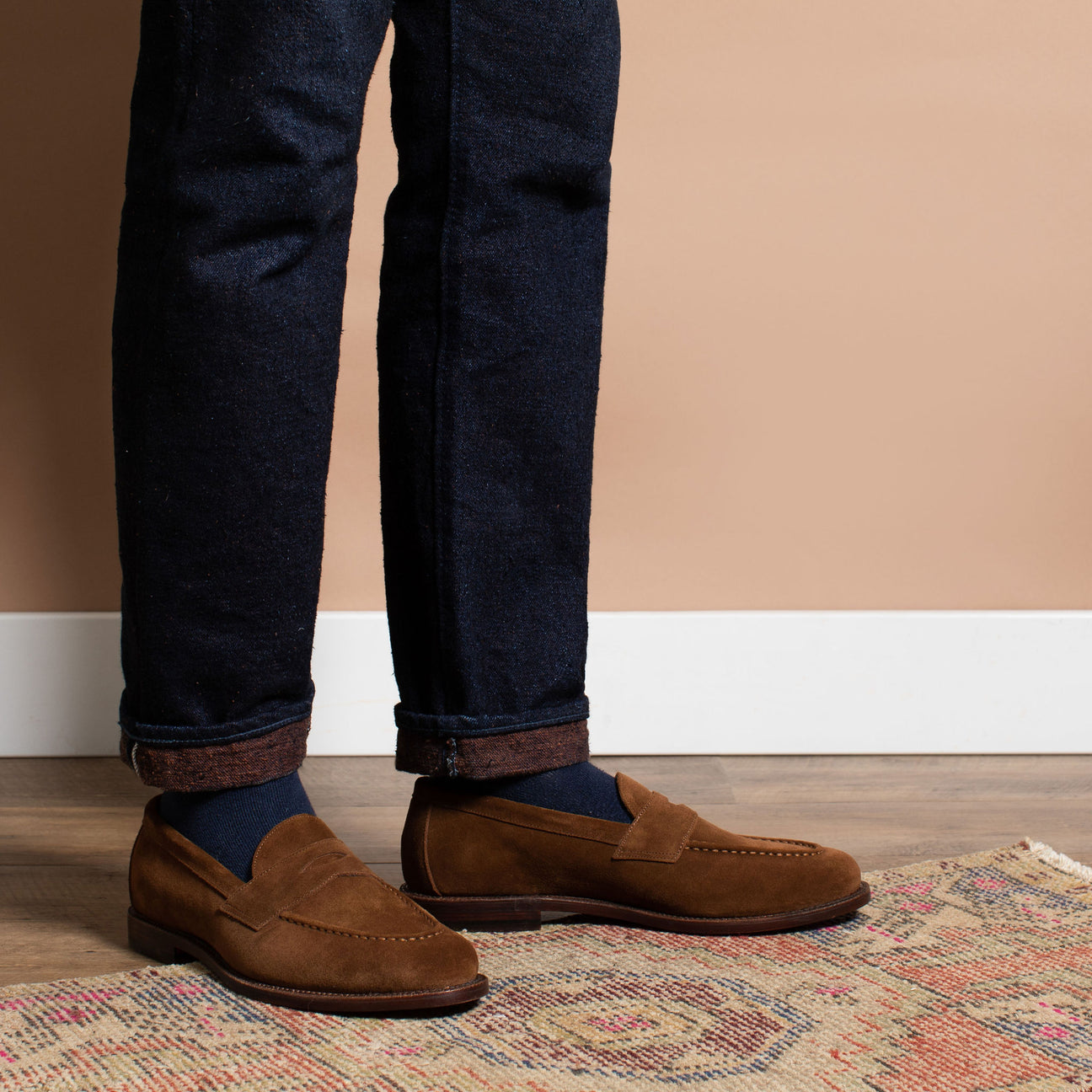
Grant Stone Traveler Penny Loafer
A well-made penny loafer is one of the most versatile shoes a man can own -- dressy enough for a business meeting, casual enough for Saturday errands. Grant Stone's Traveler uses Italian baby calfskin or Horween Chromexcel, Goodyear-welt construction, and their Alexander last (more room in the toe box than most loafers). Higher priced than Thursday Lincoln or Cole Haan equivalents, but the construction and leather put it in a different league.
Pros
- Goodyear-welt loafer -- rare at this tier
- Premium Italian or Horween leather options
- Alexander last has roomier toe box
- Resoleable
- Versatile across formal and casual
Cons
- Premium price
- Slip-on fit can feel loose until broken in
- Leather sole needs protection in wet weather
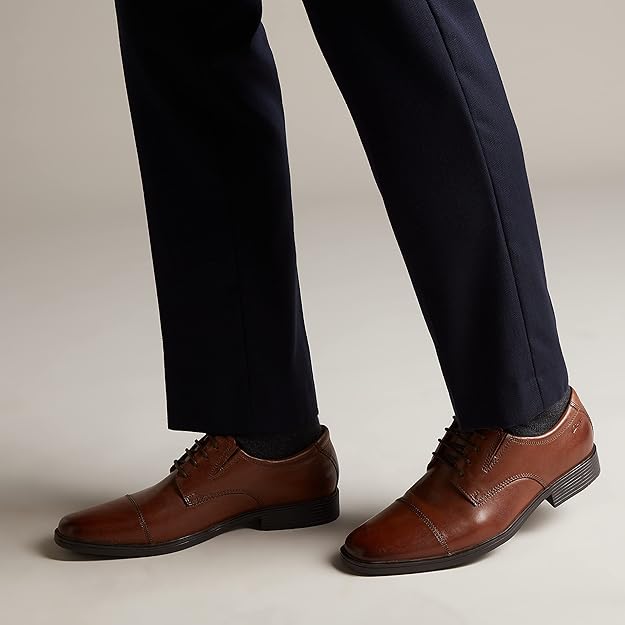
Clarks Tilden Cap Oxford
A real dress shoe under a tight budget is rare. The Tilden Cap is not Goodyear-welted, not premium leather, and won't last a decade. What it is: a clean black cap-toe Oxford with built-in Ortholite insoles that's comfortable, appropriate for interviews and formal occasions, and costs a fraction of what a Goodyear-welt competitor costs. A solid starter dress shoe when you need one fast and cheap.
Pros
- Real leather at a budget price
- Comfortable Ortholite insoles
- Clean black cap-toe silhouette
- Available in multiple widths
- Good enough for interviews and formal events
Cons
- Cemented -- not resoleable
- Leather is not top-tier
- Lifespan is 2 to 3 years of regular wear
- Not suitable for daily formal office wear
Frequently Asked Questions
How long should quality leather boots last?
A Goodyear-welted boot from a quality maker (Thursday, Wolverine, Alden, Allen Edmonds, Red Wing) can last 10 to 25 years with reasonable care and 2 to 4 resoles along the way. The upper is the limiting factor -- leather eventually cracks from dryness or takes damage from regular wear. Cedar shoe trees, occasional conditioning, and rotating between pairs roughly doubles lifespan. Cheap cemented boots usually last 1 to 3 years before the sole separates from the upper.
Can I resole all leather shoes?
Only Goodyear-welted, Blake-stitched, or hand-welted shoes can be resoled. Cemented (glued) shoes cannot. Goodyear welt is the most resoleable -- 3 to 5 resoles is typical. Blake stitch can usually be resoled 1 to 3 times depending on the cobbler's skill. Check the product description for 'Goodyear welt' before buying if you want a shoe that can be rebuilt. A good independent cobbler charges a fraction of the shoe's replacement cost for a full resole.
Are Chelsea boots okay for winter?
Yes -- if they're the right kind. A Blundstone-style Chelsea with a rubber sole and waterproof leather handles winter fine, including light snow and salted sidewalks. A dressy Chelsea with a leather sole (Thursday Cavalier, Crockett & Jones) is slippery on snow and ice and will take water damage from salted streets. If you live somewhere with real winter, own a dedicated all-weather boot alongside a dressier Chelsea.
What's Horween Chromexcel leather and why do boot nerds obsess over it?
Chromexcel is a specific leather produced by Horween Leather Company in Chicago. It's full-grain, tanned with a combination of chrome and bark tannage, then hot-stuffed with oils and waxes. The result is leather that starts looking slightly beat-up and develops a deep, rich patina with use. Every mark and scratch becomes part of the character. Boots made from Chromexcel (Wolverine 1000 Mile, Alden, Grant Stone) are prized because the leather visibly improves with age in a way most leathers don't.
Do I need more than one pair of dress shoes?
Only if you wear dress shoes often. If your formal footwear needs are occasional -- interviews, weddings, funerals -- one pair of black cap-toe Oxfords is enough. If you wear a suit to work daily, you want two pairs (one black, one brown) so each can rest between wearings; leather lasts significantly longer with rotation. Men who wear dress shoes occasionally can get 10+ years from a single good pair with care.
Are cheap Amazon boots ever worth it?
Rarely. The common failures of cheap Amazon leather boots are: bonded or corrected-grain leather that cracks in under a year, cemented soles that separate from the upper under stress, fake Goodyear welt that doesn't actually hold up, and sizing that doesn't match the listed size. The exceptions exist but require reading hundreds of reviews to filter. For the same money as a pair of no-name Amazon boots, you can often find real Red Wings or Wolverines on eBay or secondhand.
Best Time to Buy Shoes
Continue Reading
Seven Men's Shoe Mistakes That Quietly Drain Your Wallet
Seven expensive errors with men's leather shoes, and the checklist that helps you avoid them.
8 min readBoots, Dress Shoes, or Casual: Building a Men's Shoe Wardrobe
The minimum-viable men's shoe wardrobe: three categories that cover every situation from boardroom to weekend.
10 min readWhy Cheap Men's Shoes Are Actually the Expensive Option
The math on resoleable boots vs disposable shoes, and why paying more up front costs less per year.
9 min readNever Miss the Best Price
Get buying guides and deal alerts timed to when prices actually drop lowest.
Get Monthly Deal Alerts