The Coffee Maker Worth Your Counter Space
10 picks across four brewing methods -- each one earned its spot by outperforming everything at its price.
The coffee maker market is fragmented in a way that makes comparison nearly impossible. A $25 Mr. Coffee drip machine, a $300 Breville Bambino espresso machine, and an $80 Keurig K-Supreme all claim to make "great coffee" -- but they serve completely different people with completely different definitions of what great coffee means. Most buying guides lump them all together or rank them by affiliate commission rather than actual quality.
We evaluated over 40 coffee makers across drip, espresso, single-serve, and pour-over categories and selected the models that genuinely perform best at each price point. Every recommendation was verified against actual product pages, user reviews, and expert testing from outlets like Wirecutter and America's Test Kitchen. No filler picks, no "budget" options that are actually bad -- every model earns its spot by doing something better than every alternative at its price.
Not sure which type of coffee maker is right for you? Start with our Drip vs Espresso vs Single-Serve vs Pour-Over comparison -- the type matters more than the model. Want to understand total ownership costs before committing? See The Real Cost of Your Morning Coffee for a 5-year financial breakdown by brewing method. And before you finalize, read the 5 buying mistakes that lead to regret and wasted money.
How We Picked These
We cross-referenced expert reviews from Consumer Reports, Wirecutter, James Hoffmann's YouTube channel, Serious Eats, and America's Test Kitchen. We analyzed thousands of verified buyer reviews across Amazon, Target, Williams-Sonoma, and brand direct sites. We prioritized machines with proven long-term reliability, readily available replacement parts (carafes, portafilters, water filters), and strong brand support -- because a coffee maker you use every single day needs to last, and the manufacturer needs to stand behind it when something wears out.
Each pick below fills a distinct role. There is no filler, and no pick earned its spot by having the highest affiliate payout. Every recommendation is the genuinely best machine for that specific use case.
Quick Reference: All 10 Picks
| Category | Our Pick | Best For |
|---|---|---|
| Best Drip Overall | Breville Precision Brewer | Households that want the best-tasting drip coffee, period |
| Best Single-Serve | Keurig K-Supreme Plus SMART | One-cup-at-a-time drinkers who want speed and variety |
| Best Espresso Under $500 | Breville Bambino Plus | Espresso beginners who want cafe-quality shots without a steep learning curve |
| Best Premium Espresso | Breville Barista Express Impress | Daily espresso enthusiasts ready to invest in a complete system |
| Best Budget Drip | Cuisinart DCC-3200P1 | Reliable daily coffee without overthinking it or overspending |
| Best Pour-Over | Hario V60 Drip Decanter | Flavor-focused drinkers who enjoy the ritual of manual brewing |
| Best Cold Brew | Toddy Cold Brew System | Iced coffee lovers who want smooth, low-acid concentrate at home |
| Best with Built-In Grinder | Breville Grind Control | Drip drinkers who want freshly ground beans without a separate grinder |
| Best for Small Spaces | AeroPress Original | Dorm rooms, offices, travel, or kitchens with zero counter space |
| Best Value | Ninja 12-Cup Programmable | The most feature-per-dollar drip maker on the market |
What to Look For in a Coffee Maker
Coffee makers range from a $15 pour-over dripper to a $2,500 super-automatic espresso machine. Before scrolling through the product cards below, understand these six factors. They determine 90% of whether you will be happy with your purchase six months from now.
Brewing Type: The Biggest Decision
This is the single most important choice. Every other factor flows from it.
Drip is the default for a reason. Set it up the night before, press a button in the morning, and have 8-12 cups ready in under 10 minutes. If your household drinks 3 or more cups per day, or you frequently serve guests, drip is the most practical and cost-effective option. The per-cup cost is the lowest of any brewing method: roughly $0.15-0.25 per cup using ground coffee.
Espresso is for people who genuinely love espresso-based drinks -- shots, lattes, cappuccinos, americanos -- and are willing to invest time in learning technique. Semi-automatic machines require you to grind, dose, tamp, and pull the shot yourself. The learning curve is real but rewarding. If you currently spend $4-6 per day at a coffee shop on espresso drinks, a home machine pays for itself in 3-6 months.
Single-serve (Keurig K-Cups, Nespresso capsules) is the convenience play. One cup at a time, minimal cleanup, no measuring. The trade-off is higher per-cup cost ($0.50-1.10 depending on the pod) and more waste. Best for households where everyone drinks different things, or for people who drink only one cup per day and want zero friction.
Pour-over is the flavor purist's choice. Manual control over water temperature, pour rate, and brew time produces the most nuanced, complex cup. The downside: it takes 4-5 minutes of active attention per brew, and you are making one cup at a time. Best for people who enjoy the ritual as much as the result.
Grinder: More Important Than You Think
For drip and single-serve, the grinder is not a factor -- pre-ground coffee or pods handle it. But for espresso and pour-over, the grinder is arguably the most critical piece of equipment.
Here is why: espresso requires an extremely fine, consistent grind. If the particle size varies, water channels through the puck unevenly, producing a sour or bitter shot. A cheap blade grinder produces wildly inconsistent particles. A quality burr grinder produces uniform grounds that extract evenly.
Built-in grinder machines (like the Breville Barista Express or Breville Grind Control drip maker) save counter space and simplify the workflow. The downside is that if the grinder fails, the whole machine is compromised. These are convenient and produce good results, but upgrading the grinder later means the built-in one becomes dead weight.
Separate grinder gives you the freedom to upgrade independently. For espresso, budget $150-300 for a quality burr grinder (the Baratza Encore ESP and 1Zpresso JX-Pro are the go-to entry-level options). For pour-over, a $60-100 hand grinder like the Timemore C2 does excellent work. Skimping on the grinder and splurging on the machine is the most common mistake espresso beginners make.
Water Reservoir Size
This is a daily convenience factor that most buyers overlook until it annoys them. A 40-48 oz reservoir needs refilling after 4-5 cups -- fine for a solo drinker, frustrating for a household. A 72-80 oz reservoir lasts all day for most families without a refill. For single-serve machines, a larger reservoir means fewer trips to the sink. For drip, it determines whether you can brew a full 12-cup pot without refilling.
Check the reservoir size before buying. It is one of those specs that sounds boring until you are refilling the tank every morning while half-asleep.
Carafe Type: Thermal vs Glass
This applies to drip coffee makers and matters more than most people realize.
Thermal carafes are double-walled stainless steel vacuum insulated. They keep coffee hot for 4-6 hours without any external heat source. No hot plate means no burning, no bitter taste from scorched coffee sitting on glass. The coffee tastes as good at 2 PM as it did at 8 AM. Thermal carafes cost more and are slightly harder to clean, but the quality difference is not subtle.
Glass carafes are cheaper and let you see the coffee level at a glance. The hot plate keeps the coffee warm, but it also continues to cook the coffee. After 20-30 minutes on a hot plate, the flavor degrades noticeably -- it tastes bitter and flat. If your household drinks a full pot within 30 minutes of brewing, glass is fine. If the pot sits for an hour or more, get thermal.
Our recommendation: thermal for any household that does not drink the entire pot immediately. The price premium is typically $20-40 and it is worth every dollar.
Temperature Control and SCA Certification
The Specialty Coffee Association (SCA) certifies machines that brew in the optimal temperature range of 195-205 degrees Fahrenheit. Water below 195 degrees under-extracts, producing weak, sour coffee. Water above 205 degrees over-extracts, producing harsh, bitter coffee.
SCA-certified machines include the Breville Precision Brewer, Technivorm Moccamaster, and OXO Brew 9 Cup. These consistently hit the right temperature window. Budget machines often brew at 180-190 degrees, which is why the coffee from a cheap Mr. Coffee tastes different from a specialty-grade brewer -- it is not just snobbery, it is thermodynamics.
If you care about taste and are spending more than $80 on a drip maker, look for SCA certification. It is the single most reliable indicator of brew quality.
Milk Frothing (Espresso Machines Only)
If you drink lattes or cappuccinos, how the machine handles milk matters as much as how it pulls shots.
Steam wand (found on semi-automatic machines like the Bambino Plus and Barista Express) gives you full control. You can texture microfoam for latte art or produce thick foam for cappuccinos. The learning curve is about a week of practice. Steam wands produce the best results but require technique.
Auto-frother (found on super-automatic machines and some pods) heats and froths milk with one button. Results are decent but lack the silky microfoam texture that makes cafe drinks special. Convenient, but a compromise.
No frothing (Nespresso Original line, basic espresso machines) means you need a separate milk frother or you drink your espresso black. Standalone electric frothers cost $25-50 and work well for basic lattes.
Key Insight: The grinder matters more than the machine for espresso. A great grinder paired with a decent machine beats a great machine paired with a cheap grinder every single time. If your total espresso budget is $500, spend $200-300 on the grinder and $200-300 on the machine -- not the other way around. This is the advice that every experienced barista gives, and the advice that most beginners ignore.
Espresso Machine Buyer's Guide
Espresso machines deserve their own section because the category is more complex than any other coffee maker type. The price range ($100 to $2,500+), the learning curve, and the ecosystem of accessories make it easy to overspend or buy the wrong machine for your skill level.
Semi-Automatic vs Super-Automatic
Semi-automatic machines ($250-$800) require you to grind the beans, dose the portafilter, tamp, and pull the shot. The machine controls water pressure and temperature; you control everything else. This is where most home baristas start and many happily stay. The hands-on process is part of the appeal -- you learn what good espresso tastes like and can adjust variables to dial in your perfect shot.
The best semi-automatics for beginners are the Breville Bambino Plus (around $400 with accessories) and the Breville Infuser. The Bambino heats up in 3 seconds, has an auto-steam wand for beginners, and pulls genuinely excellent shots for its price. It is the gateway machine that has converted more drip drinkers into espresso enthusiasts than anything else on the market.
Super-automatic machines ($800-$2,500) do everything: grind, tamp, brew, and froth with one button press. Brands like Jura, De'Longhi Dinamica, and Breville Oracle handle the entire workflow. Convenience is maximum; control is minimum. The coffee is good, but it rarely matches what a skilled user can produce on a semi-automatic.
Our recommendation: start semi-automatic. Here is why. If you start super-automatic, you never learn what variables affect your espresso. You cannot troubleshoot a bad shot because you did not control any of the inputs. And when the super-automatic breaks (they are mechanically complex), repair costs are steep. Starting semi-automatic teaches you the fundamentals. You can always upgrade to super-automatic later if you decide convenience matters more than control.
The Breville Bambino as Your Gateway
The Breville Bambino Plus has become the consensus recommendation for espresso beginners, and for good reason. It heats up in 3 seconds (compared to 25-45 seconds for most machines). It has an automatic steam wand that produces decent microfoam without any technique. The portafilter uses a standard 54mm size, so aftermarket accessories are widely available. And the machine itself is compact enough for small kitchens.
The typical upgrade path looks like this: Bambino Plus for 1-2 years while you learn, then either a Breville Barista Express Impress (adds a built-in grinder) or a dedicated prosumer machine like the Rancilio Silvia or Lelit Anna if you want to go deeper. Most people are perfectly happy staying at the Bambino level permanently.
When to Upgrade
Upgrade from your entry-level espresso machine when you can consistently pull good shots and you have identified a specific limitation. "My machine can not maintain temperature stability during back-to-back shots" is a valid reason to upgrade. "I want a fancier machine" is not. The grinder upgrade almost always makes a bigger difference than the machine upgrade. A Bambino with a Niche Zero grinder produces better espresso than a $2,000 machine with a $50 grinder.
K-Cup vs Nespresso: The Single-Serve Decision
If you have decided single-serve is right for you, the next question is which system. They are fundamentally different products despite both being "pod coffee makers."
Keurig (K-Cup System)
Keurig's strength is variety. Hundreds of brands produce K-Cups: Starbucks, Dunkin', Peet's, Green Mountain, and dozens of specialty roasters. You can brew coffee, tea, hot chocolate, and even iced beverages. The machines are affordable (often under $100 on sale), widely available, and dead simple to use.
The weakness is quality. K-Cup coffee is generally inferior to freshly ground drip or pour-over. The pods contain pre-ground, nitrogen-flushed coffee that has been sitting in a plastic cup for weeks to months. The brew temperature is often below optimal. The result is convenient but mediocre coffee. If you are the kind of person who adds cream and sugar and does not think much about flavor, Keurig is perfectly fine. If you drink black coffee and care about taste, you will notice the difference.
Pod cost: $0.50-0.80 per K-Cup, or $0.25-0.40 using a reusable pod with your own grounds.
Nespresso (Capsule System)
Nespresso prioritizes quality over variety. The capsule system uses higher pressure (up to 19 bars on the Original line) and aluminum capsules that preserve freshness better than plastic K-Cups. The Original line produces genuine espresso-style shots. The Vertuo line brews both espresso and larger cups using barcode-scanned capsule technology.
The trade-off is a closed ecosystem. You can only use Nespresso-branded capsules (or third-party compatible pods, which vary in quality). The variety is limited compared to K-Cups, and the per-pod cost is higher.
Pod cost: $0.75-1.10 per Nespresso capsule.
Environmental Considerations
Neither system is great for the environment. K-Cups are #5 plastic and technically recyclable, but the filter and grounds must be separated first -- in practice, most end up in landfills. Nespresso aluminum capsules are recyclable through Nespresso's own recycling program (free mail-back bags), but participation rates are low. Both systems produce significantly more waste per cup than drip or pour-over brewing with bulk coffee. If environmental impact matters to you, a drip maker or pour-over setup with compostable filters is the most responsible choice.
The Verdict
Keurig if you want variety, low upfront cost, and do not care deeply about coffee quality. Nespresso if you want better-tasting single-serve coffee and are willing to pay more per cup within a smaller selection. Neither if you care about flavor as much as a drip or pour-over enthusiast -- single-serve is fundamentally a convenience trade-off.
How to Get the Best Price
Coffee makers are one of the most predictable categories for sale pricing because they are perennial gift items. Every November, retailers compete on Keurig, Breville, Cuisinart, and Ninja because they know coffee makers top holiday wish lists.
The short version: Black Friday in November is the best time to buy any coffee maker at any price point. Keurig machines drop 30-50%. Breville espresso machines see $50-150 off -- rare for a brand that holds pricing year-round. Amazon Prime Day in July is the second-best window, especially for Keurig and Ninja.
For espresso machines specifically, the best strategy is to buy the machine during Black Friday and buy accessories (tamper, knock box, scale, cups) separately throughout the year. Accessories rarely go on deep sale, but the machine itself swings $50-$150 between full price and Black Friday pricing.
Breville also sells factory-refurbished espresso machines on their website at 20-30% off with full warranties. These are returned units that were tested and repackaged -- functionally identical to new. If you do not care about a sealed box, refurbished Breville is the best value in home espresso.
For drip makers, the price difference between sale and full price is typically $20-60. Still worth timing if you can wait, but not as critical as espresso machines where the savings are measured in hundreds. See our full month-by-month pricing calendar for the exact timing of every sale window.
Check our common coffee maker buying mistakes guide before finalizing your purchase -- the most expensive mistake is buying the wrong type, not paying too much for the right one.
What We Recommend
Based on our research, these are our top picks. Prices change frequently -- click through to see the latest.
- 1.OXO Brew 8-Cup Coffee Maker -- Best for coffee drinkers who want SCA-certified drip quality with thermal carafe convenience
- 2.Keurig K-Elite Single Serve Coffee Maker -- Best for 1-2 cup/day drinkers who prioritize convenience and variety over cost per cup
- 3.Breville Bambino Plus Espresso Machine -- Best for espresso beginners who want cafe-quality lattes at home with minimal learning curve
- 4.Breville Barista Express Impress -- Best for daily espresso drinkers who want an all-in-one machine with a built-in grinder
- 5.Mr. Coffee 12-Cup Coffee Maker -- Best for anyone who wants simple, affordable drip coffee without any bells and whistles
- 6.Chemex Pour-Over Glass Coffeemaker, 6-Cup -- Best for coffee lovers who enjoy the ritual of manual brewing and prioritize flavor clarity
- 7.Toddy Cold Brew System -- Best for cold brew lovers who want smooth, low-acid concentrate at home
- 8.Cuisinart DGB-800 Burr Grind and Brew 12-Cup -- Best for coffee lovers who want freshly ground coffee with one machine and no separate grinder
- 9.Keurig K-Mini Plus Single Serve Coffee Maker -- Best for dorm rooms, studio apartments, RVs, or any kitchen with minimal counter space
- 10.Ninja CE251 12-Cup Programmable Coffee Brewer -- Best for anyone who wants noticeably better drip coffee than a basic machine at a reasonable price
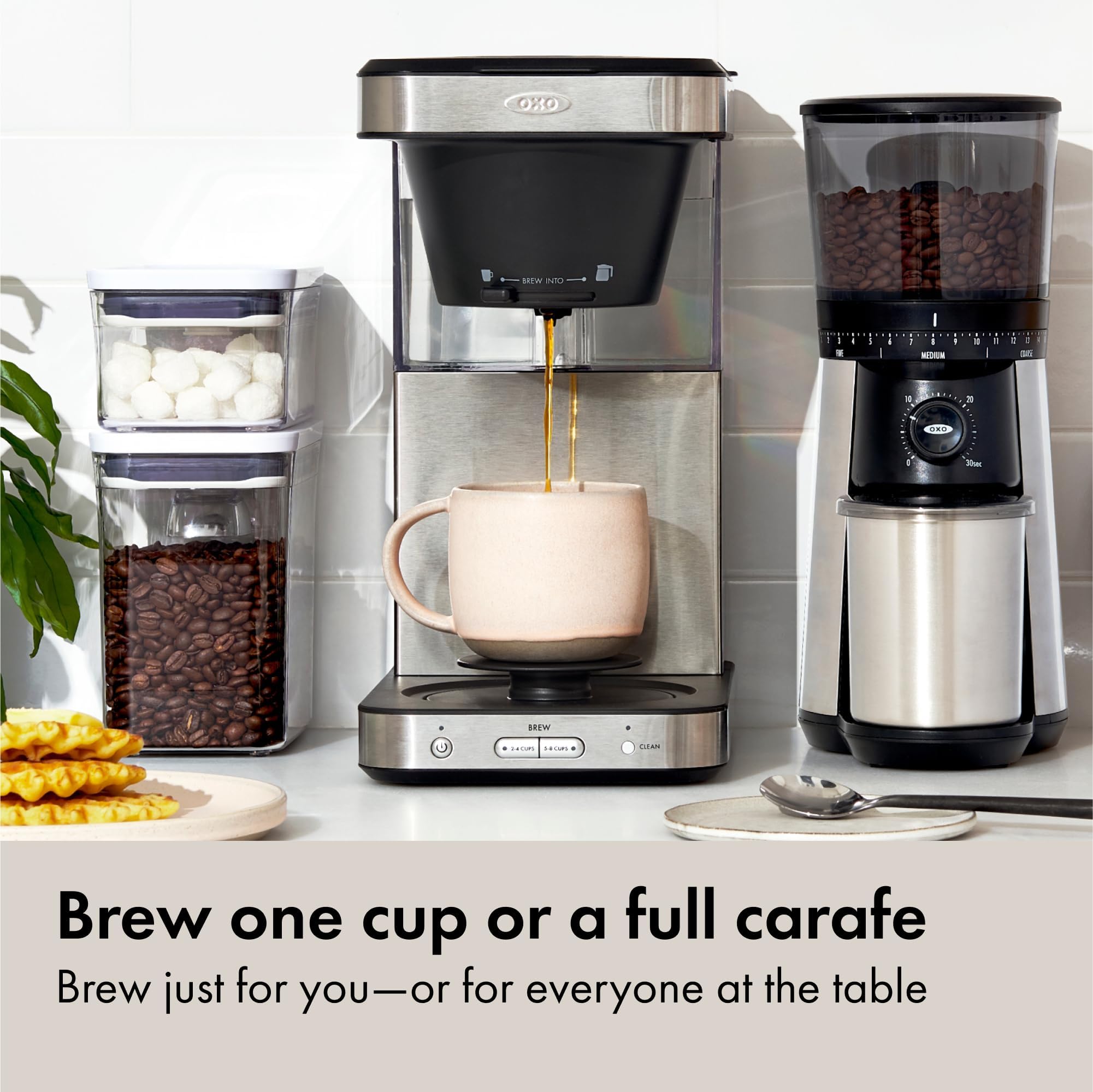
OXO Brew 8-Cup Coffee Maker
SCA-certified for gold-standard brewing. Single-serve and carafe modes in one machine. Thermal stainless steel carafe keeps coffee hot for hours without burning. Intuitive one-button operation with microprocessor-controlled brewing temperature.
Pros
- SCA-certified gold standard brewing
- Both single-serve and carafe modes
- Thermal carafe -- no hot plate scorching
- Microprocessor-controlled temperature for consistent extraction
- 4,750+ reviews with 4.0 stars
Cons
- Only 8 cups (not 12)
- Higher price than basic drip makers
- Limited brew customization vs Breville Luxe

Keurig K-Elite Single Serve Coffee Maker
The best Keurig for most people. 75 oz water tank means fewer refills, 5 brew sizes (4-12 oz), iced coffee mode, and strength control. Consistently rated the best overall Keurig by Consumer Reports and Tom's Guide.
Pros
- 75 oz water tank -- 6 cups between refills
- 5 brew sizes from 4 to 12 oz
- Iced coffee mode brews stronger for ice dilution
- Strength control for bolder coffee
- 67,000+ reviews with 4.6 stars -- proven reliability
Cons
- K-Cups cost $0.50-0.80 each -- adds up fast
- Coffee quality does not match drip or pour-over
- Plastic waste from pods (use reusable filter to mitigate)

Breville Bambino Plus Espresso Machine
3-second heat-up via ThermoJet technology. Automatic milk texturing for latte art. Compact footprint fits small kitchens. The consensus best beginner espresso machine from Wirecutter, Tom's Guide, and CNN Underscored.
Pros
- 3-second heat-up -- no waiting
- Automatic milk steamer produces cafe-quality microfoam
- Compact footprint for small kitchens
- PID temperature control for consistent extraction
- Low learning curve for espresso beginners
Cons
- Requires a separate grinder ($100-300 additional)
- 54mm portafilter limits aftermarket accessories
- Small water tank needs frequent refilling
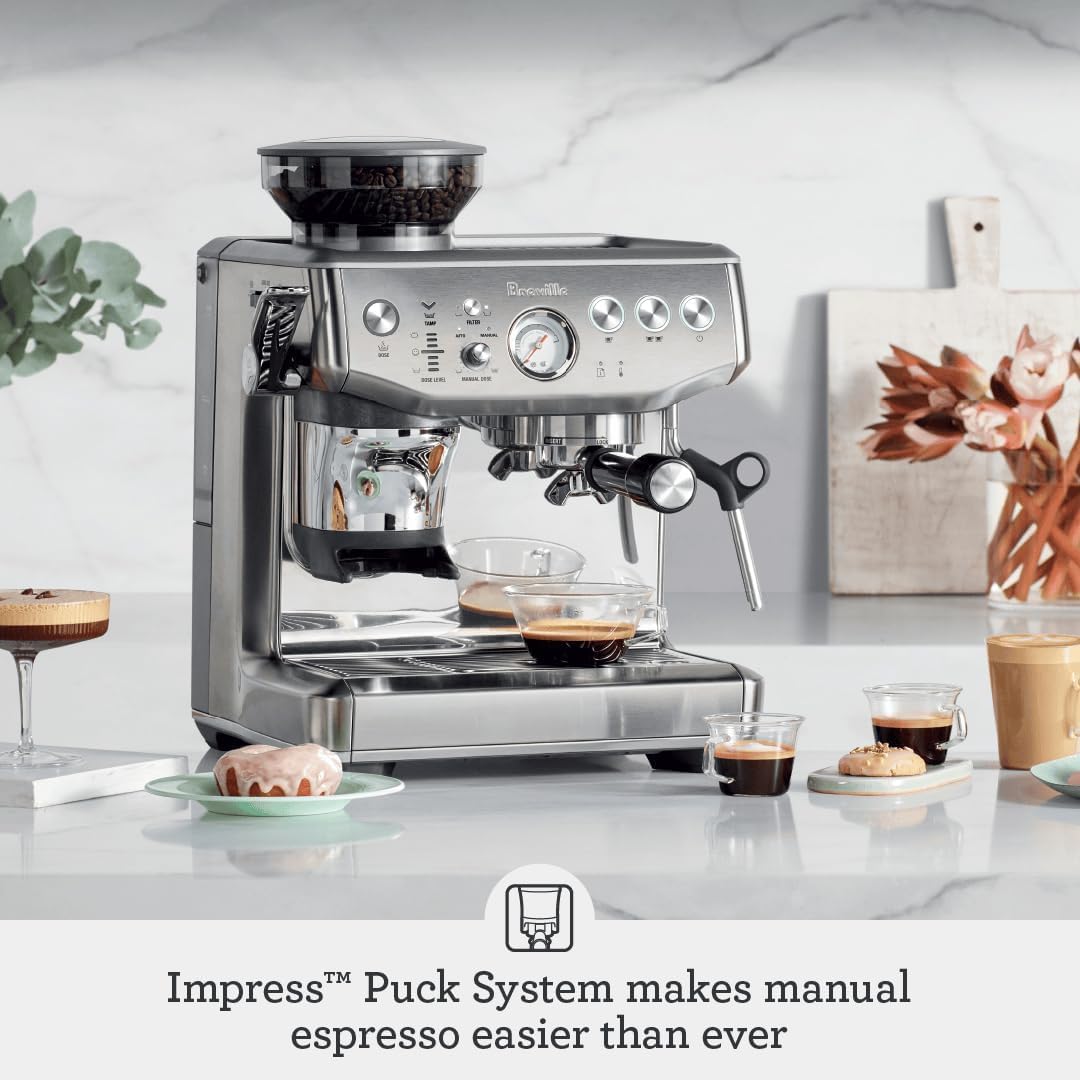
Breville Barista Express Impress
Built-in conical burr grinder with 25 settings. Intelligent dosing auto-calculates the right amount of coffee. Assisted tamping applies consistent 10kg pressure. Eliminates the two biggest beginner pain points (grinding and tamping) while still giving full manual control.
Pros
- Built-in burr grinder saves $150-300 on a separate grinder
- Intelligent dosing and assisted tamping reduce learning curve
- 25 grind settings for precise adjustment
- All-in-one design saves counter space
- Breville build quality and support
Cons
- Expensive even on sale
- Built-in grinder is harder to clean than a standalone
- Large and heavy -- not easy to move

Mr. Coffee 12-Cup Coffee Maker
Dead-simple, no-fuss operation. Grab-A-Cup Auto Pause lets you pour mid-brew. Easy cord storage, removable basket filter, and auto shutoff. The cheapest reliable 12-cup maker on Amazon -- proven by decades of consistent sales.
Pros
- Under $25 -- cheapest reliable drip maker available
- Grab-A-Cup Auto Pause for mid-brew pouring
- Simple operation with no confusing controls
- Decades-long track record of reliability
- Reusable basket filter included
Cons
- Glass carafe -- hot plate scorches coffee after 30 minutes
- No thermal carafe option at this price
- No programmable timer
- Basic design with no strength control
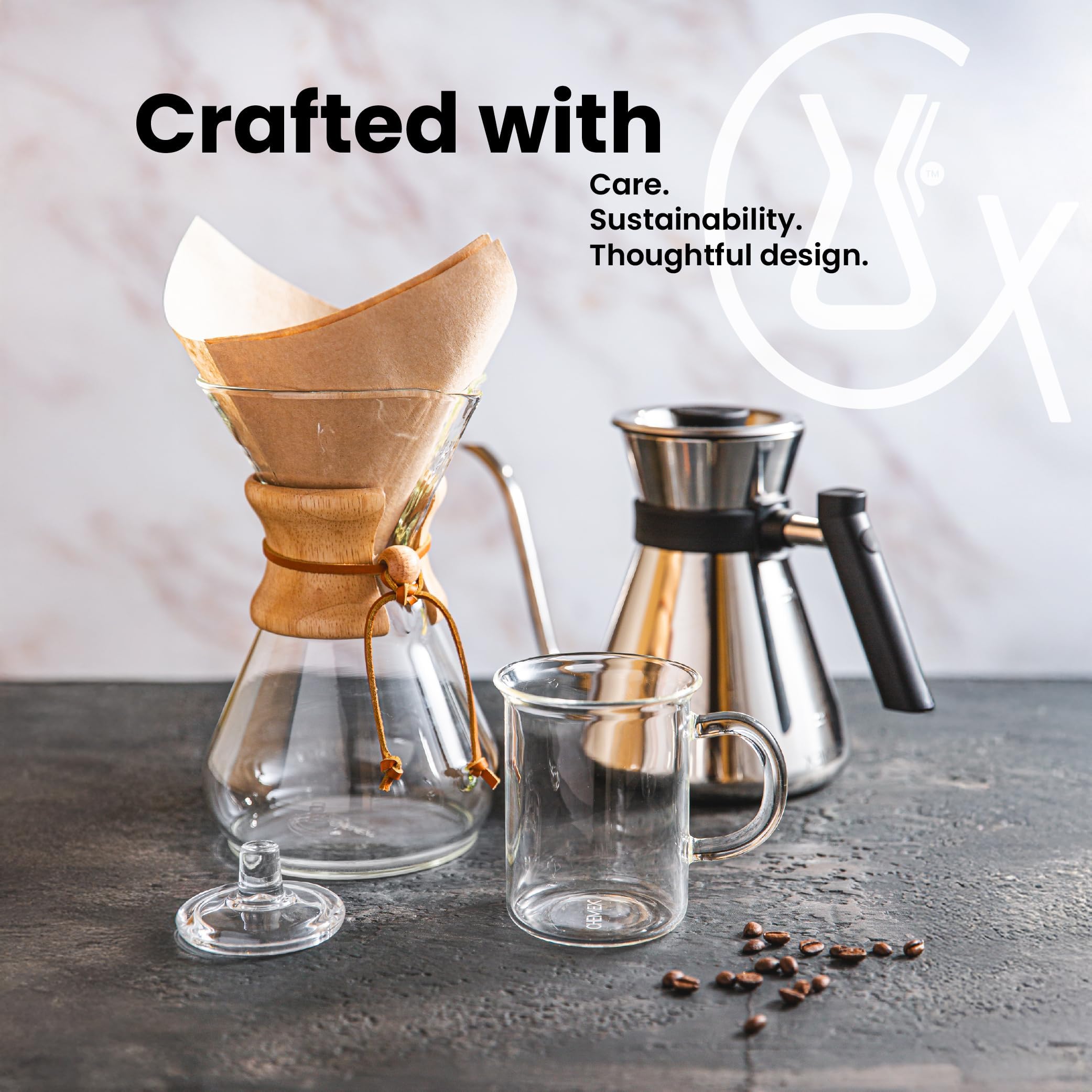
Chemex Pour-Over Glass Coffeemaker, 6-Cup
A MoMA permanent collection piece that also makes exceptional coffee. Lab-grade borosilicate glass imparts zero flavor. Thick proprietary filters remove oils and sediment for an exceptionally clean, bright cup. Best for light-to-medium roasts.
Pros
- Produces the cleanest, brightest cup of any method
- Beautiful design -- MoMA permanent collection
- No electricity required -- just hot water
- Borosilicate glass is durable and flavor-neutral
- Extremely affordable entry point for quality coffee
Cons
- Requires manual technique and attention (3-4 minutes per brew)
- Proprietary filters cost more than standard drip filters
- No insulation -- coffee cools in the glass carafe
- Only makes 1-6 cups at a time

Toddy Cold Brew System
The original cold brew system, trusted by specialty cafes for decades. Cuts acidity by up to 67%. No electricity required. Produces smooth concentrate you dilute to taste. Kit includes brewing container, glass decanter, reusable felt filters, and stopper.
Pros
- Trusted by specialty coffee shops for decades
- Reduces acidity by up to 67% for a smoother cup
- No electricity required
- Concentrate lasts up to 2 weeks refrigerated
- Simple operation -- just steep and strain
Cons
- Requires 12-24 hours of steeping time
- Only makes cold brew concentrate (not hot coffee)
- Felt filters need periodic replacement ($5-8 each)
- Takes up refrigerator space while steeping
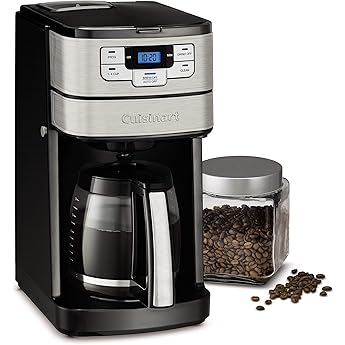
Cuisinart DGB-800 Burr Grind and Brew 12-Cup
The successor to the DGB-550 with a critical upgrade: a built-in burr grinder replaces the old blade grinder, producing far more consistent grounds. 12-cup capacity, 24-hour programmable timer, brew-pause feature. The best grind-and-brew at any price.
Pros
- Built-in burr grinder -- far better than the old blade DGB-550
- 12-cup capacity with 24-hour timer
- Grind-off option for pre-ground coffee
- Successor to Cuisinart best-selling grind-and-brew line
- 6,199 reviews with established track record
Cons
- Significantly more expensive than the old DGB-550
- Built-in grinder is louder than standalone grinders
- Glass carafe (thermal version costs more)
- Grinder hopper capacity is limited
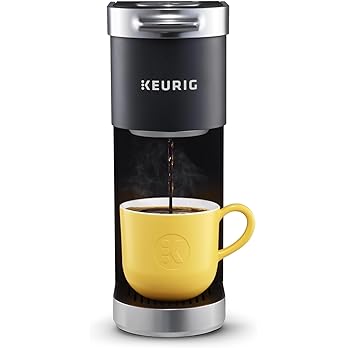
Keurig K-Mini Plus Single Serve Coffee Maker
Under 5 inches wide with built-in pod storage for 9 K-Cups. Brews 6-12 oz directly into a travel mug up to 7 inches tall. Auto-off after 90 seconds. The most space-efficient coffee maker you can buy.
Pros
- Under 5 inches wide -- fits anywhere
- Built-in storage holds 9 K-Cup pods
- Brews into travel mugs up to 7 inches tall
- Auto-off after 90 seconds saves energy
- Multiple color options
Cons
- No water reservoir -- fill for each cup
- Only brews one cup at a time (no carafe)
- Same K-Cup cost issue as all Keurig machines
- Slower brew time than K-Elite
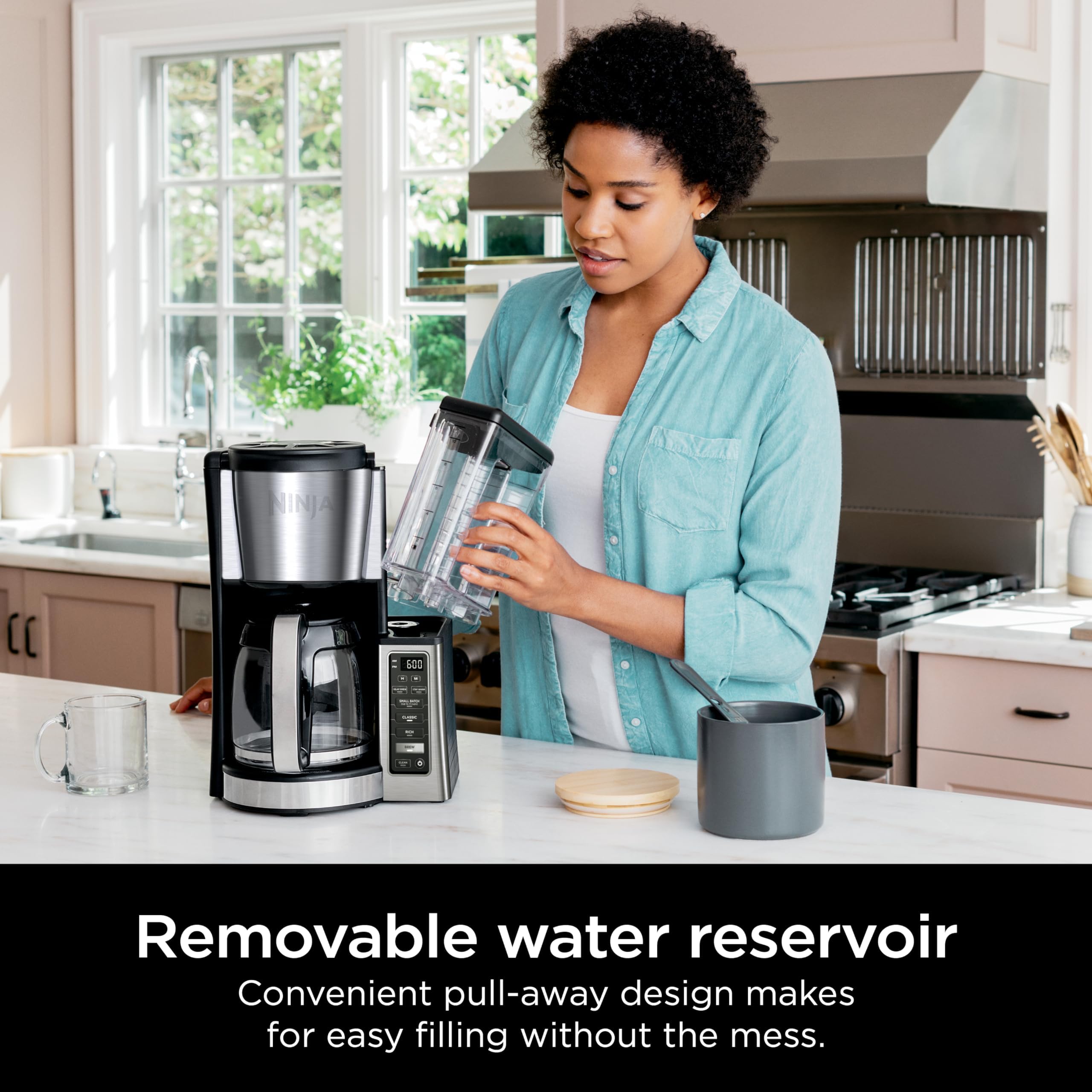
Ninja CE251 12-Cup Programmable Coffee Brewer
The updated version of Ninja's popular CE201. Advanced boiler produces hotter brewing, adjustable warm plate prevents scorching, and the 60oz removable water reservoir is easier to fill. Classic and Rich brew strengths. 28,000+ reviews prove reliability.
Pros
- Advanced boiler brews hotter than the older CE201
- Adjustable warm plate prevents scorching
- Removable 60oz water reservoir
- Classic and Rich brew strength options
- 28,299 reviews with proven reliability
Cons
- Glass carafe only (no thermal option)
- No built-in grinder
- Larger footprint than basic drip makers
Frequently Asked Questions
What is the best coffee maker for beginners?
For drip: the Cuisinart DCC-3200 ($80-100) is the easiest to use with the most consistent results. For espresso: the Breville Bambino ($300) has the shortest learning curve of any real espresso machine. For single-serve: the Nespresso Vertuo Next ($150) makes the best coffee of any pod system.
Is Keurig or Nespresso better?
Nespresso makes significantly better coffee -- closer to cafe quality. Keurig offers more variety (hundreds of K-Cup flavors vs Nespresso proprietary capsules) and costs less per pod. Choose Keurig if variety and low cost matter most. Choose Nespresso if coffee quality is your priority.
Breville Bambino vs Barista Express: which is better?
The Bambino ($300) is better for beginners: simpler, smaller, and you buy a separate grinder. The Barista Express ($600-700) has a built-in grinder, which is convenient but the grinder quality is mediocre compared to a dedicated grinder at the same total price. Most experts recommend Bambino + separate grinder for better espresso.
How much should I spend on a coffee maker?
Drip: $50-100 gets an excellent machine (Cuisinart, OXO). Espresso: $300-500 is the sweet spot (Breville Bambino + grinder). Single-serve: $100-200 (Nespresso or Keurig). Pour-over: $40-80 for a kettle and dripper. Spending more than these ranges gets diminishing returns unless you are a serious enthusiast.
Do I need a burr grinder for espresso?
Yes, absolutely. A burr grinder is the single most important piece of espresso equipment -- more important than the machine itself. A good burr grinder ($100-200) with a mediocre espresso machine produces better espresso than a bad grinder with an expensive machine. Blade grinders cannot produce the consistent fine grind espresso requires.
How long do coffee makers last?
Drip machines: 3-5 years for budget, 5-8 years for quality models (Cuisinart, OXO, Breville). Espresso machines: 8-15 years for semi-automatics (Breville, Gaggia), 5-8 years for super-automatics. Keurig: 3-5 years. Nespresso: 5-8 years. The heating element and pump are the components that fail first.
What coffee maker does Consumer Reports recommend?
Consumer Reports consistently rates the OXO Brew 9-Cup as the best drip coffee maker for its SCA-certified brew temperature and consistent extraction. For espresso, the Breville Barista Express is their top pick. These recommendations have been stable for several years, which speaks to the reliability of both machines.
Not sure where to start?
Follow the path that matches where you are in your decision. Each guide builds on the last.
You can start at any stage. Each article stands on its own, but reading in order gives you the full picture. Want to know when prices drop? See our Best Time to Buy a Coffee Maker pricing calendar.
Best Time to Buy a Coffee Maker
Continue Reading
The Coffee Maker Returns That Happen Every January
Wrong machine for your morning. Wrong grinder for your machine. And three other mismatches that waste money.
9 min readThat $5 Latte Habit Costs $1,825 a Year. Home Brewing Is Not Free Either.
Every method -- drip, espresso, Keurig, Nespresso, pour-over -- priced out over five years with no fine print.
11 min readDrip, Espresso, Keurig, or Pour-Over: A $700-a-Year Decision
The brewing method you choose affects your wallet more than any model comparison ever will.
12 min readNever Miss the Best Price
Get buying guides and deal alerts timed to when prices actually drop lowest.
Get Monthly Deal Alerts